

Restoring Purple Moor-Grass and Rush Pastures for Biodiversity, Net Gain and Nature Recovery
Introduction
Rhos pastures are one of those habitats that rarely shout about their importance. To the untrained eye, they can look wet, rushy and unproductive, yet ecologically they are among the most valuable grasslands we have in Wales. Known scientifically as purple moor-grass and rush pasture, these semi-natural systems support rare wildflowers, declining butterflies, breeding birds and a rich invertebrate community that depends on wet, low-nutrient soils. As an ecologist at Wildahome, I work with these habitats on the ground – restoring them, recreating them and helping people manage them properly. This article brings together the core ecology of Rhos pastures with practical management and explains how we use locally sourced Welsh seed and long-term thinking to make these landscapes work for nature and people.
What Is a Rhos Pasture?
The term Rhos comes from Welsh and broadly refers to wet, marshy grassland. Ecologically, Rhos pasture is classified as purple moor-grass (Molinia caerulea) and rush pasture, a UK priority habitat due to its rarity and the specialist species it supports.
While Wales is associated most closely with Rhos pasture, similar habitats occur elsewhere under different names. In Devon and Cornwall, they are known as Culm grasslands; in the New Forest, as wet lawns; and in parts of eastern England, as fen meadows. What unites them all is poor drainage, acidic soils and long-term extensive management rather than agricultural improvement.
Soil Type and Geography of Rhos Pastures in Wales
Rhos pastures are shaped by water more than anything else. They typically sit on flat or gently sloping land where rainfall is high, and drainage is naturally restricted. The soils are usually acidic, peaty mineral clays derived from glacial deposits, often with an iron-rich layer just below the surface that slows drainage and holds water in the root zone.
These conditions are widespread in Ceredigion, Carmarthenshire, Powys and across the South Wales Valleys. Because these soils are difficult to drain or improve, many sites escaped intensive agriculture, allowing species-rich grassland to survive where it has been lost elsewhere.
Rhos Pasture - Distribution and Extent Across the UK
The UK holds a globally significant proportion of Europe’s purple moor-grass and rush pasture, with Wales forming the core of this resource.
Region | Estimated Extent (ha) | Notes |
Wales (total) | ~35,000 | Stronghold for Marsh Fritillary |
Ceredigion | ~3,859 | High concentration mid-county |
Dartmoor (England) | ~1,200 | Around 20% of England’s resources |
Northern Ireland | ~18,900 | Significant historic losses |
Gwynedd | ~950 | Concentrated in Arfon and eastern Llŷn |
This uneven distribution makes the Welsh Rhos pastures internationally important for conservation.
Botanical Characteristics and Species Richness
A well-managed Rhos pasture is structurally complex. Tall tussocks of purple moor-grass and rush sit alongside shorter grazed areas, damp hollows and species-rich flushes. This structural diversity is essential – high-quality sites can support dozens of plant species within a few square metres.
Characteristic and indicator species include devil’s-bit scabious, meadow thistle, whorled caraway, marsh and heath spotted orchids, ragged robin and meadowsweet. Where springs and seepages occur, even richer communities develop, supporting bog asphodel, butterwort and sundew.

Wildlife Supported by Rhos Pastures

The Marsh Fritillary Butterfly
The marsh fritillary is the flagship species of Rhos pasture in Wales. Its caterpillars feed almost exclusively on devil’s-bit scabious and rely on tall grass tussocks to survive winter.
Crucially, the species exists as a network of linked populations, meaning habitat connectivity across a landscape is just as important as habitat quality within individual fields.
Birds, Mammals and Invertebrates
Rhos pastures support breeding snipe, curlew, skylark and meadow pipit. Raptors such as barn owls and buzzards hunt over them, attracted by abundant voles. Invertebrate diversity is particularly high, with specialist moths, damselflies, and pollinators that depend on late-flowering plants and varied sward structure.
Grazing Management: The Foundation of Healthy Rhos Pastures
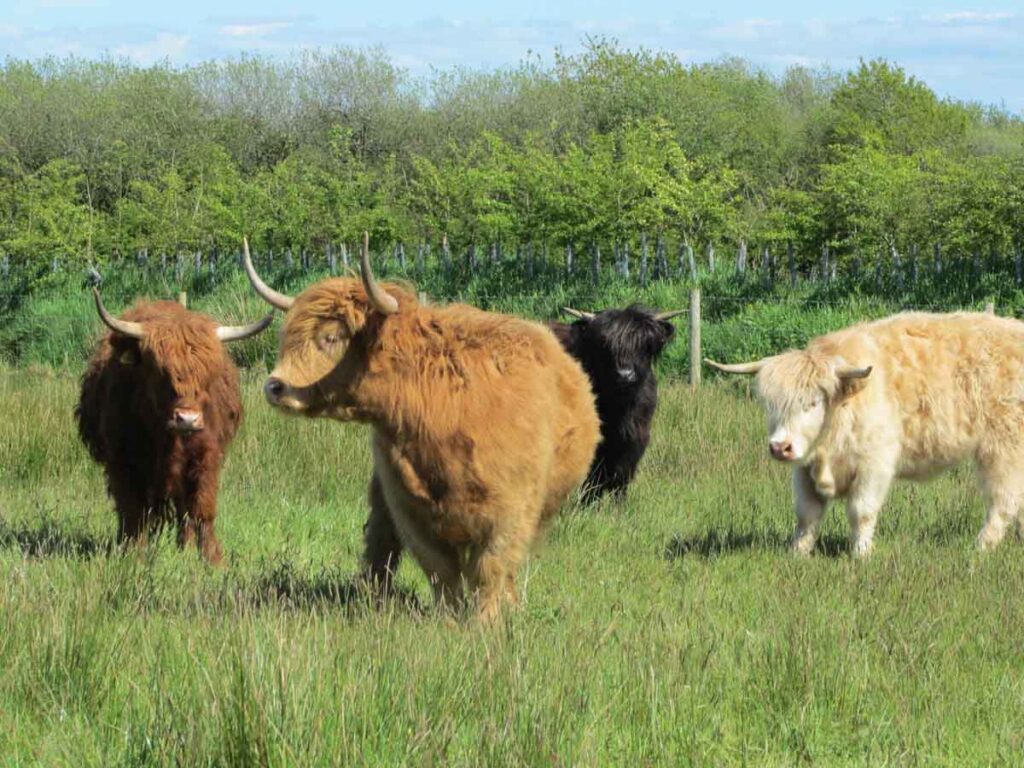
From an ecological perspective, grazing is the single most important management tool for maintaining the Rhos pasture. These are semi-natural habitats – without intervention, they rapidly become rank, dominated by purple moor-grass and rush, and eventually scrub.
Good grazing creates a tussocky, uneven sward. Tall tussocks provide shelter for invertebrates and overwintering marsh fritillary caterpillars, while shorter grazed areas allow light to reach smaller wildflowers. Grazing also breaks up the dense thatch produced by purple moor-grass, preventing it from smothering other species.
Livestock Choice and Grazing Behaviour
Livestock Type | Grazing Style | Ecological Impact |
Cattle | Bulk grazers are less selective | Excellent for breaking up coarse grass and rushes; creates a varied structure |
Hardy ponies | Close but non-selective grazing | Very effective on poor forage; maintain an open sward |
Sheep | Highly selective grazing | Often remove key wildflowers; generally unsuitable |
At Wildahome, we strongly favour traditional cattle breeds or hardy ponies. They cope better with wet ground and low-nutrient forage and naturally create the structural diversity wildlife needs.
Stocking Rates and Timing
Management Aim | Typical Guideline |
Annual stocking rate | ~0.2–0.3 livestock units per hectare |
Grazing period | Often May–September |
Target sward | Mixed heights, roughly 5–25 cm |
Flexibility is essential. Stock should be removed during very wet conditions to prevent poaching, and if the sward becomes uniformly short. Variation, not uniformity, is the goal.
Rush Management: Control Without Simplification
Rushes are a natural component of Rhos pasture, but without management, they can dominate. Ecologically, a 30–50% rush cover is often ideal, providing habitat for birds and insects while leaving space for wildflowers.
Method | Best Use | Key Considerations |
Topping | Moderate rush cover | Cut after the bird nesting season |
Removal of cut material | Essential | Prevents smothering and enrichment |
Weed-wiping | Severe infestations | Highly targeted, minimal impact |
Cutting without removing arisings usually makes the problem worse by enriching the soil.
Scrub Management: Keeping the Balance
Some scrub adds value, but too much quickly destroys open Rhos pasture. Willow and birch establish easily if grazing pressure drops.
Action | Timing | Purpose |
Cutting | October–February | Avoid nesting birds |
Removing arisings | Immediately | Prevent nutrient build-up |
Stump treatment (if needed) | After cutting | Prevent regrowth |
Scrub control is most effective when followed by grazing to keep regrowth in check.
Seed Mixes and Blends for Rhos and Wet Meadow Projects
At Wildahome, we design seed mixes that reflect how these habitats actually work on the ground.
We offer:
- 100% wildflower mixes for high-value conservation sites where grasses are already present
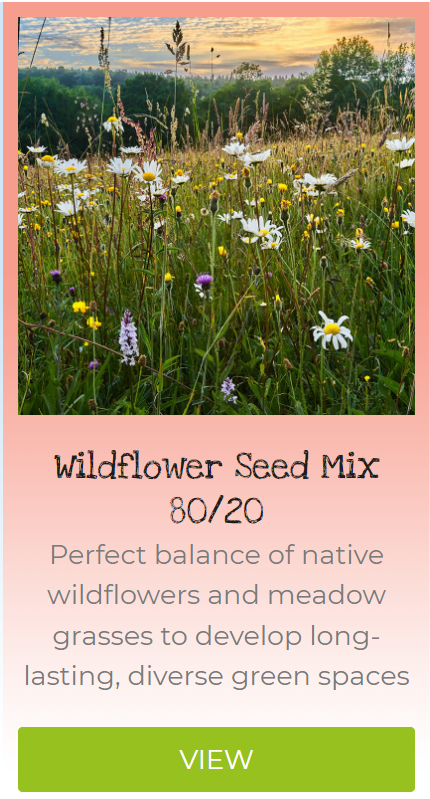
- 80/20 wildflower-to-grass blends for species-rich meadow creation
- 50/50 or 60/40 wildflower-grass mixes for projects needing quicker cover, such as development mitigation or public open space
All mixes are carefully matched to wet, acidic soil types, and wherever possible, we use locally sourced Welsh seed. This protects local genetic diversity and greatly improves long-term success.

Sowing, Establishing and Maintaining Rhos-Style Meadows
Restoring or creating Rhos pasture is not about speed. Seed is best sown in autumn onto low-nutrient soils, ideally after surface disturbance or turf removal. Establishment can be slow, especially on wet ground, but patience is rewarded.
Long-term success comes from management. Light cattle grazing or seasonal cutting prevents dominance by purple moor-grass and rush, opens up space for flowers and maintains the varied structure that wildlife depends on. Fertilisers and drainage should always be avoided.
Working with Planners, Developers and Land Managers
A major part of our work at Wildahome is supporting biodiversity net gain and wider nature recovery. We work directly with planners and developers to design habitats that genuinely function, particularly on low-lying or poorly drained land where conventional landscaping struggles.
We also collaborate with farmers, landowners, parish councils and local wildlife groups to restore existing Rhos pastures and reconnect fragmented sites. Species like the marsh fritillary need habitat networks, not isolated fields.
Notable Rhos Pastures and Wet Meadows in Wales
Rhos Llawr Cwrt, Ceredigion
A nationally important site showing how traditional grazing maintains exceptional botanical diversity, supporting marsh fritillary, orchids and breeding birds.
Elan Valley, Powys
Rhos pastures here sit alongside reservoirs and upland grasslands. Careful cattle grazing maintains a mosaic of sward heights benefiting waders, pollinators and rare plants.
South Wales Coalfield Rhos Pastures
Often overlooked, these pastures persist on reclaimed land. With appropriate management, they now support strong populations of the marsh fritillary, demonstrating nature’s ability to recover.
Rhos Pastures of Carmarthenshire
Home to whorled caraway, these meadows highlight both the cultural and ecological value of Rhos pasture and the importance of local stewardship.
Wildahome and Rhos Pasture Restoration
Everything we do at Wildahome is rooted in practical ecology. We source seed responsibly, advise on soils and hydrology, and help people manage land in ways that work for nature and livelihoods alike. Rhos pastures are challenging habitats, but when managed properly, they deliver outstanding biodiversity, resilience and long-term value.
Conclusion: Protecting Wales’ Precious Wet Grasslands
Rhos pastures may never look tidy, but that is exactly why they matter. These wet, flower-rich grasslands are among Wales’ most valuable habitats, supporting rare species, storing carbon and helping manage water naturally. With thoughtful restoration, locally sourced seed and sensitive long-term management, we can ensure Rhos pastures remain a living part of our landscape for generations to come.

Frequently Asked Questions
What makes Rhos pasture different from other meadows?
Wet, acidic soils and extensive management create conditions for specialist plants and wildlife.
Can the Rhos pasture be created from scratch?
Yes, where soils and hydrology are suitable and locally sourced seed is used.
Why is local seed so important?
It is adapted to local conditions and maintains genetic diversity.
Is grazing always necessary?
In most cases, yes – grazing maintains structure and species richness.
Are Rhos pastures suitable for biodiversity net gain?
Absolutely, particularly on wet or marginal land.
How long does the establishment take?
Several years – Rhos pastures reward patience.
Can Wildahome help with planning applications?
Yes, we regularly support planners, developers and landowners with design, seed supply and management advice.