

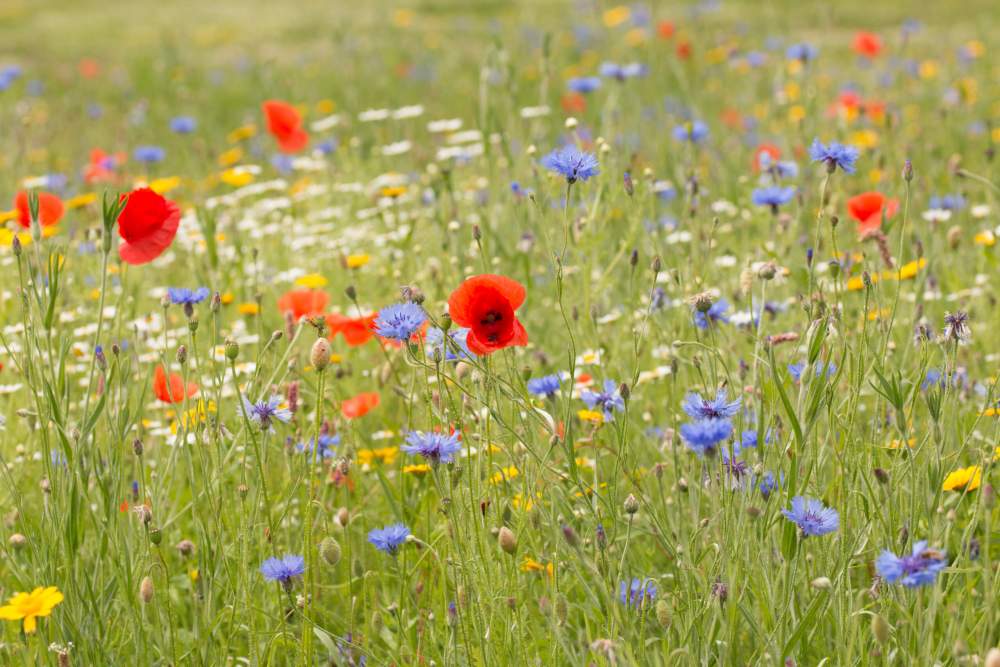
Autumn Wildflower Sowing: The Definitive Guide to Biodiversity Net Gain and Native Restoration
The British landscape is undergoing a quiet revolution. Once viewed purely as an aesthetic choice for rural fringes, wildflower meadows have moved to the centre of UK environmental policy and urban design. For WildaHome, a family-owned UK business, this shift represents more than just a market trend; it is a mission to restore the nation’s natural flora and fauna through locally sourced, native British wildflower seeds.
As we move through 2026, the intersection of traditional land management and modern legislative requirements—specifically, Biodiversity Net Gain (BNG)—has made the “how” and “when” of wildflower sowing more critical than ever. Whether you are a homeowner creating a small “nature-rich space” or a developer meeting a 10% biodiversity uplift, success begins with the soil and the season.
Why Autumn is the Golden Window for Sowing
The Science of Cold Stratification
The difference between a thriving wildflower meadow and a patchy disappointment often comes down to timing. While spring sowing is possible, September through early October offers the optimal window for establishing native meadows that will flourish for decades. Autumn sowing works because it mirrors the natural regeneration cycle of British flora. Many native species are “dormancy-bound” and require cold stratification—prolonged exposure to cold, moist winter conditions—to trigger germination in the spring. When you sow in autumn, winter does the biological heavy lifting for you.
Root Resilience and Drought Resistance
Seeds that undergo this natural wintering process emerge stronger. By the time the summer heat arrives, autumn-sown plants have already developed deeper, more resilient root systems. This allows them to withstand summer drought stress more effectively than spring-sown seedlings, which are often still fragile when the first heatwave hits.
Biodiversity Net Gain (BNG): A New Mandate for Developers
As of February 2024, a minimum 10% Biodiversity Net Gain became mandatory for major developments in England, followed by minor developments in April 2024. Under the Environment Act 2021, developers must demonstrate that their projects leave the natural environment in a measurably better state than before.
How Wildflowers Power the Metric
Wildflower meadows are recognised as high-value habitats within the Statutory Biodiversity Metric used by local planning authorities. By replacing low-value “amenity grassland” (standard turf) with species-rich wildflower meadows, developers can achieve significant on-site “unit” uplifts.
Key BNG Requirements for 2026:
- The 30-Year Rule: Any habitat created for BNG must be maintained and managed for at least 30 years.
- The Hierarchy of Delivery: Developers must prioritise on-site gains first. If the 10% target cannot be met within the development boundary, they must look for off-site units or, as a last resort, purchase statutory credits.
- Upcoming Exemptions: From July 31, 2026, very small sites of 0.2 hectares or below will be exempt from the 10% BNG requirement, though they must still adhere to the National Planning Policy Framework.
- Infrastructure Projects: Mandatory BNG for Nationally Significant Infrastructure Projects (NSIPs) is scheduled to take effect on November 2, 2026.
Preparing Your Site: The WildaHome Method
Site preparation determines success more than any other factor. Wildflowers thrive in low-nutrient environments. If your soil is too fertile, aggressive grasses will outcompete delicate wildflowers, resulting in a green sward with very few blooms.
1. Strip and Cultivate
You must remove existing vegetation completely. Standard garden grass is too competitive for wildflower seedlings. Cultivate the soil thoroughly several times over a 6-8 week period to exhaust the “weed bank” (the seeds of unwanted plants already in the soil).
2. Manage Soil Fertility
If your soil is high in nutrients—typical for former agricultural land or heavily fertilised gardens—consider stripping the top 5-10cm of soil to reach the less fertile subsoil. Alternatively, mixing in washed sand can help dilute the fertility.
3. Create a Fine Seedbed
The surface should be level and firm. Wildflower seeds are tiny and need excellent soil contact to germinate. You should be able to walk across the area without sinking; if it’s too soft, the seeds may fall into deep crevices and fail to reach the light.
Product Innovation: Wildflower Seed Mats
For developers and homeowners seeking efficiency, WildaHome Wildflower Seed Mats offer a “carpet” of biodiversity. These mats are a cost-effective and rapid way to create wildflower lawns or larger areas on housing development sites. The mats ensure even seed distribution and provide a protective layer that helps suppress weeds during the early establishment phase.
Regional Sowing Windows
- Northern England & Scotland: Mid-August to mid-September. The shorter growing season requires an earlier start.
- Central England: Throughout September. This allows roughly 6 weeks of mild weather for initial development.
- Southern England: Can extend into early October, though mid-September remains the sweet spot.
Supporting Our Native Pollinators
Wildflowers are the backbone of our ecosystem. Beyond meeting legal BNG requirements, creating these habitats supports a massive range of native pollinators, including bees, butterflies, hoverflies, and beetles.
Ready to get started?
Shop: Wildflower Seeds for BNG →