


What is a Seed Mat?
What is Improver?
Traditional Wildflower Meadow Mix
£34.80 – £6,960.00Price range: £34.80 through £6,960.00 inc VAT
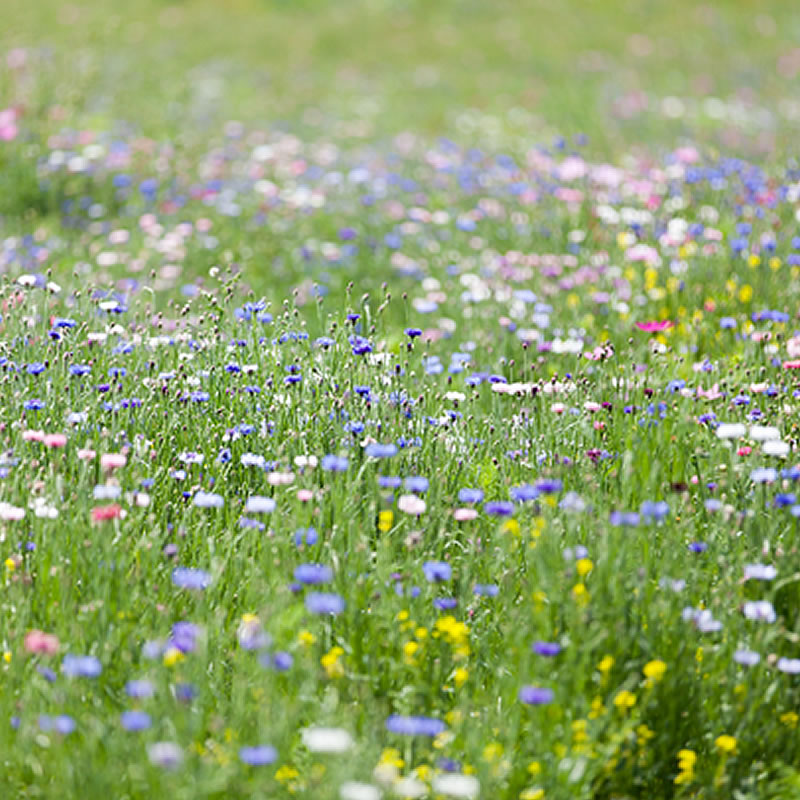
The Traditional Meadow mix captures what a British wildflower meadow should look like — a mix of familiar natives that flower across a long season, supporting bees, butterflies, and the insects that feed the food chain above them.
Twenty-two native wildflower species, predominantly perennials with some annuals and biennials, give structure and consistency year on year. Heights range from 15cm to 150cm. The mix performs well across most well-drained soil types and is one of our most commonly sown for garden meadows, amenity spaces, and habitat restoration.
Sow at 3g per square metre into exposed, low-nutrient soil. Spring (March–May) or early autumn (August–September) are both good windows. Ground preparation matters more than timing — existing grass competes hard, so scarify and expose bare soil before sowing. The mix will improve each year as the perennial root system develops; year two and three typically deliver the strongest display.
Sourced from our own meadows and UK partner farms. 100% wildflowers — no grasses included.
Frequently asked questions
What is the Traditional Wildflower Meadow Mix best used for?
It is one of our most popular mixes for garden meadows, amenity spaces, and habitat restoration. Twenty-two native species, predominantly perennials, suit most well-drained soils and provide a reliable display year on year.
What pollinators does the Traditional Meadow Mix attract?
The mix supports bees, butterflies, hoverflies, and other beneficial insects across its long April to October flowering season. Perennial species provide consistent nectar and pollen sources that build in value as the meadow matures.
When and how should I sow the Traditional Wildflower Meadow Mix?
Sow at 3g per square metre into scarified, low-nutrient, exposed soil. Both spring (March to May) and early autumn (August to September) work well. Thorough ground preparation — removing existing grass and exposing bare soil — is more important than sowing timing.
How long does the Traditional Meadow Mix take to establish?
Some species will flower in year one, but the strongest display typically comes in years two and three as perennial root systems develop. The meadow improves with each passing season when managed with a single late-summer cut.
Bedstraw, Lady’s, (Galium verum), Black Medick, (Medicago lupulina), Burnet, Salad, (Sanguisorba minor), Buttercup, Meadow, (Ranunculus acris), Campion, Red, (Silene dioica), Campion, White, (Silene alba), Carrot, Wild, (Daucus carota), Catchfly, Night-Flowering, (Silene noctiflora), Clary, Wild, (Salvia verbenaca), Cowslip, (Primula veris), Daisy, Ox-eye, (Leucanthemum vulgare), Forget-me-not, Field, (Myosotis arvensis), Foxglove, Wild, (Digitalis purpurea), Goat’s-beard, (Tragopogon pratensis), Knapweed, Common, (Centaurea nigra), Knapweed, Greater, (Centaurea scabiosa), Musk Mallow, (Malva moschata), Self-heal, (Prunella vulgaris), Sorrel, Common, (Rumex acetosa), St John’s-wort, Common, (Hypericum perforatum), Yarrow, (Achillea millefolium), Yellow Rattle, (Rhinanthus minor)
Ground Preparation
Sowing
Aftercare: Year 1 & Once Established
Flower Colours: Varied
Plant Height: up to 1.5 metre
Flowering Season: April to October
Setting: Range of soil types