

What is a Seed Mat?
What is Improver?
Hedgerow & Banks 80/20 Wildflower Mix
£19.50 – £2,121.60Price range: £19.50 through £2,121.60 inc VAT
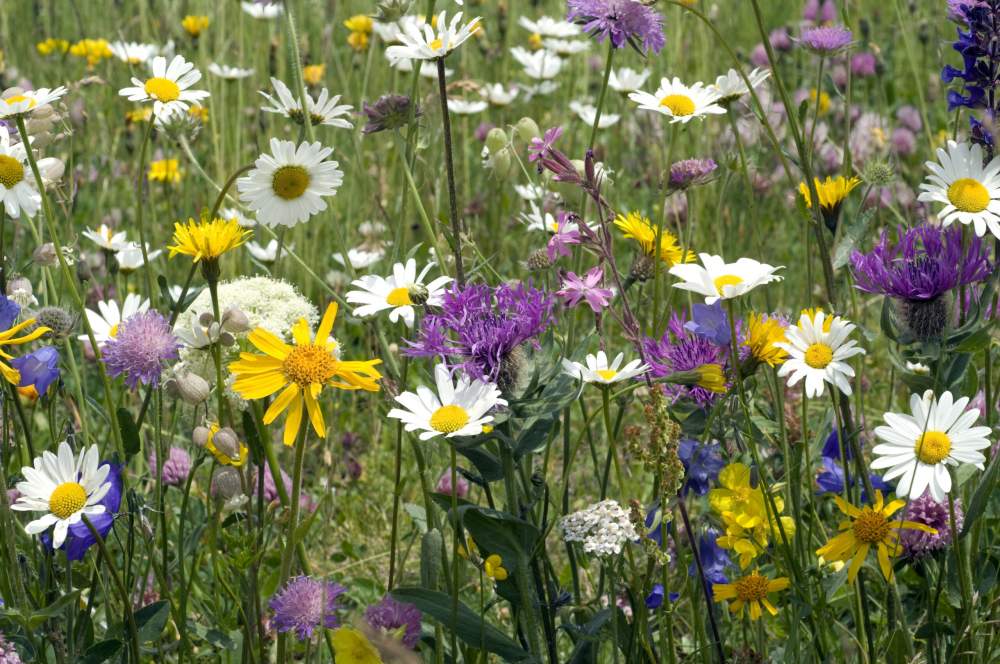
The Hedgerow & Banks 80/20 mix combines shade-tolerant fine native grasses with a 20% native wildflower component, both selected for the challenging conditions found along hedgerow edges and on sloping banks — partial shade, variable moisture, and often compacted or disturbed soil.
The grass matrix provides structural stability on slopes, helping to bind the surface and prevent erosion while the wildflowers establish. It works well along field margins, garden boundary slopes, road embankments, and the base of established hedges. The mix improves wildlife corridor value in one of Britain’s most important linear habitats.
Sow at 5g per square metre into scarified, low-nutrient soil. Firm the seedbed well on slopes to prevent seed wash. Spring or early autumn sowings both work. Avoid mowing the base of hedgerows in the first two growing seasons. The grass establishes first; wildflowers build from year two.
Sourced from UK meadows and partner farms. 100% British native species.
Frequently asked questions
What ground is the Hedgerow and Banks 80/20 mix designed for?
It is designed for hedgerow edges, sloping banks, field margins, road embankments, and the base of established hedges — ground that often has partial shade, variable moisture, and compacted or disturbed soil. Both the grass and wildflower components are selected to tolerate dappled shade and establish on slopes.
Why is the grass component important on banks and slopes?
The 80% native grass matrix binds the soil surface, prevents erosion on slopes, and provides structural stability that helps the wildflower component establish. On steep or loose banks where seed wash is a risk, the grass-rooted sward holds the ground far more effectively than a wildflower-only mix.
How do I sow the Hedgerow and Banks 80/20 mix?
Sow at 5g per square metre into scarified, low-nutrient soil. Firm the seedbed well after sowing on steeper slopes to prevent seed wash. Spring or early autumn sowings both work. Avoid mowing the sward in the first two growing seasons — let the mix establish and set seed before cutting back.
What wildlife value does a hedgerow wildflower mix provide?
Hedgerows are one of Britain's most important wildlife corridors. Adding a wildflower and grass mix to hedgerow edges and banks supports hedgerow insects, nesting birds, and invertebrates that depend on hedgerow structure. The mix increases habitat connectivity between larger wildlife areas.
Angelica, Wild, (Angelica sylvestris), Bedstraw, Hedge, (Galium mollugo), Buttercup, Meadow, (Ranunculus acris), Campion, Red, (Silene dioica), Campion, White, (Silene alba), Cowslip, (Primula veris), Daisy, Ox-eye, (Leucanthemum vulgare), Foxglove, Wild, (Digitalis purpurea), Hedge Parsley, Upright, (Torilis japonica), Knapweed, Common, (Centaurea nigra), Knapweed, Greater, (Centaurea scabiosa), Mullein, Dark, (Verbascum nigrum), Mullein, Great, (Verbascum thapsus), Musk Mallow, (Malva moschata), Mustard, Garlic, (Alliaria petiolata), Self-heal, (Prunella vulgaris), St John’s-wort, Common, (Hypericum perforatum), Teasel, (Dipsacus fullonum), Vetch, Common, (Vicia sativa), Vetch, Tufted, (Vicia cracca), Woundwort, Hedge, (Stachys sylvatica), Yarrow, (Achillea millefolium), Hard fescue, Slender Creeping red fescue, Timothy, Chewing’s fescue, Strong Creeping red fescue, Smooth-stalked meadow , Sheeps fescue, Tall oat, Meadow foxtail,
Ground Preparation
Sowing
Aftercare: Year 1 & Once Established
Flower Colours: Varied
Plant Height: up to 2 metres
Flowering Season: April to October
Setting: Hedgerows, banks, woodland edges & other semi-shade sites