

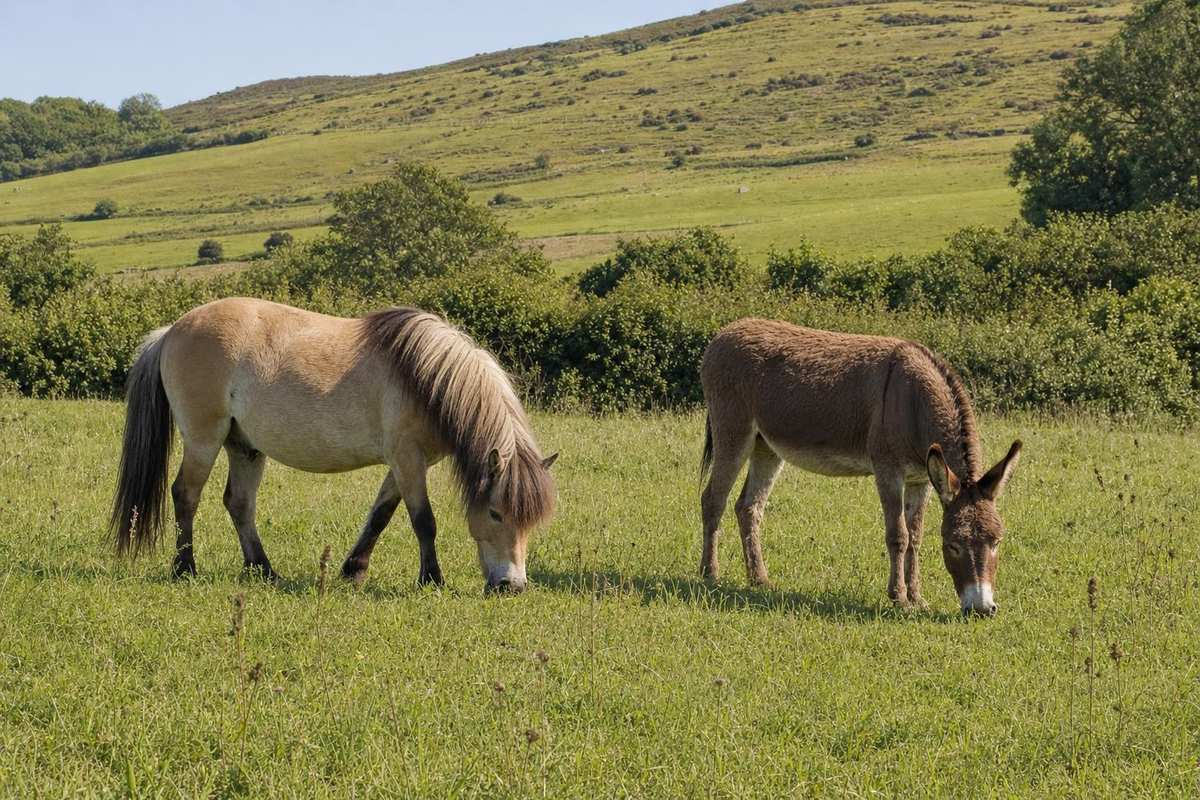
Upland Heritage Horse & Donkey Pasture
£212.00 inc VAT
Our most diverse ryegrass-free pasture: seven grasses plus forage herbs and wildflowers for long-term, species-rich grazing for horses, ponies and donkeys.
🚚 UK delivery £7.96 per order inc VAT for 10–20kg sacks, however many you order (small seed packs £7.14)
Larger area or a bespoke mix? Ask us for a quote →
About this product
Upland Heritage recreates the kind of varied, traditional pasture horses grazed before modern ryegrass leys. Seven grasses, including Timothy, cocksfoot, meadow fescue and several fescues, are blended with a small proportion of forage herbs and wildflowers. The result is a mixed bite through the season and a dense sward that stands up to hooves and wet weather.
It comes in two blends. The light-soil blend leans on drought-tolerant fescues; the medium-to-heavy blend carries more meadow fescue, which copes better with damp, heavier ground.
Suitable for donkeys?
Yes, with managed access. The mix is ryegrass-free, but any established pasture can provide more grass than a donkey needs. Graze donkeys on restricted time or strip-grazed sections, keep straw available, and choose the light-soil blend where your ground allows, as it produces a leaner sward.
What success looks like
Year one is mainly about the grasses rooting in. Herbs and wildflowers show more from year two. Once settled, the paddock should hold a mix of fine and broader grasses with herbs scattered through, and should last for many years with sensible rotation and rest.
Do this / avoid this
- Do rest and rotate paddocks so the herbs and wildflowers can recover
- Do top or cut for hay in year one to encourage tillering
- Avoid heavy fertiliser, which favours coarse grasses over herbs
- Avoid overgrazing to bare soil, which lets weeds in
Frequently asked questions
Can donkeys graze Upland Heritage pasture?
Yes, on restricted grazing. It is ryegrass-free, but donkeys still need limited access to any grass and a straw-based diet. The light-soil blend gives the leaner sward.
Which blend should I choose?
Choose light if your soil is sandy, free-draining or dries out in summer. Choose medium–heavy for loam or clay that stays moist. If unsure, a simple soil test will tell you.
Is this for a new paddock or an existing one?
It is designed for a full new sowing at 13.5kg per acre. For thickening an existing paddock, see our Second Season Paddock Overseeder.
When will I see the herbs and wildflowers?
They make up a small part of the mix and usually show more from the second year, once the grasses have settled.
Light soils: Creeping Red Fescue 21%, Smooth-stalked Meadow Grass 19%, Timothy 17%, Chewings Fescue 15%, Meadow Fescue 7%, Cocksfoot 7%, Slender Creeping Red Fescue 7%, Forage herbs 4%, Wildflowers 3%. Medium–heavy soils: Meadow Fescue 21%, Smooth-stalked Meadow Grass 19%, Creeping Red Fescue 19%, Timothy 13%, Chewings Fescue 10%, Slender Creeping Red Fescue 7%, Cocksfoot 4%, Forage herbs 4%, Wildflowers 3%
Ground Preparation
Sowing
Aftercare: Year 1 & Once Established
Mix Type: Ryegrass-free grass, herb and wildflower pasture
Suitable For: Horses, ponies and donkeys (restricted grazing)
Sowing Rate: 13.5kg per acre
Best Sowing Time: March to May or September to October
Soil Blends: Light or medium–heavy