More help choosing
Why most of our paddock mixes are ryegrass-free
Perennial ryegrass is bred for yield. It establishes fast and grows hard, but it can carry high levels of sugar, especially in spring and on bright, frosty mornings. That suits working stock, but not good-doer horses, native ponies or donkeys that put on weight easily or are prone to laminitis. Ryegrass-free mixes grow more slowly and give a more fibrous, varied bite. Fescues and smooth-stalked meadow grass knit into a dense turf that stands up to hooves, Timothy adds palatability and cocksfoot copes with drought.
Paddock seed for donkeys
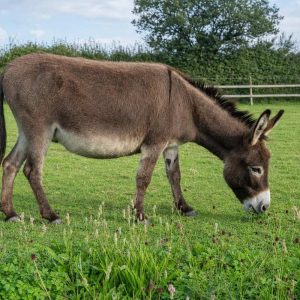
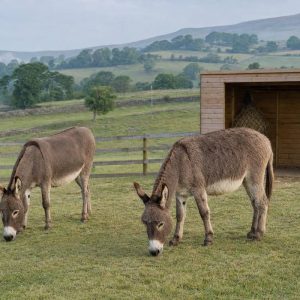
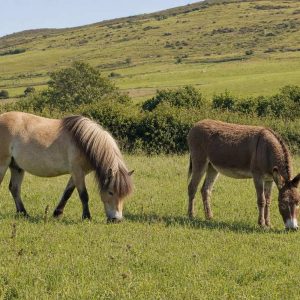
Donkeys evolved on sparse, dry scrubland and need far less grass than horses. The Donkey Sanctuary advises a diet based mainly on straw, with restricted grazing. A paddock for donkeys should give them room to move and browse, not a lush ley to eat. Thin Pickings is our first choice: fine fescues, no ryegrass, no clover. Upland Heritage and Steady Ley also suit donkeys on restricted grazing, and Self-Select Herb Mix adds browsing variety. Whatever you sow, strip-graze or use a track so donkeys only reach part of the paddock at a time.
How much do I need?
One acre is about 4,050 m² (0.4 ha). As a guide:
- New sowing on bare ground: 13–15 kg per acre
- Overseeding an existing paddock: about 10 kg per acre
- Forage herbs: ½–1 kg per acre oversown
- Forage wildflowers: 1–2 kg per acre, or 1.5 g per m² as a strip
Sowing and establishing a paddock
- When: late August to October while the soil is warm, or March to May.
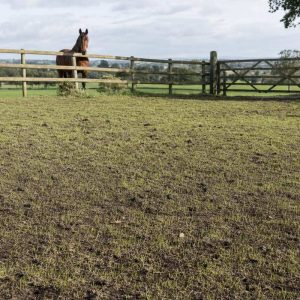
- Prepare: for overseeding, graze or mow short and harrow hard until plenty of bare soil shows. For a new sowing, cultivate to a firm, fine seedbed.
- Sow and roll: broadcast evenly (mixing with dry sand helps), then roll for good seed-to-soil contact.
- Rest: keep animals off until the grass is well rooted and has been topped once, usually 8–12 weeks. Start with short, light grazing.
- Go easy on fertiliser: nitrogen pushes up sugar levels and favours coarse grasses over herbs.
Horses-only mixes
Quickgreen, Quick Patch and Wet Ground contain perennial ryegrass for fast, productive cover. They are for horses in work and difficult wet ground, and we don't recommend them for donkeys or laminitis-prone ponies. Not sure which mix fits your field? Ask us — tell us your soil, acreage and animals and we'll point you to the right seed.
Frequently asked questions
What is the best grass seed for donkeys?
A low-sugar, ryegrass-free mix of fine-leaved grasses such as fescues and bents. Our Thin Pickings Donkey Grazing Mix is designed for this. Donkeys should still have restricted grazing and a straw-based diet.
Is ryegrass bad for horses?
Not for every horse, but perennial ryegrass can carry high sugar levels, so it is best avoided for good-doers, native ponies, donkeys and any animal prone to laminitis. Ryegrass-free mixes give a slower, more fibrous bite.
How much paddock seed do I need per acre?
About 13–15 kg per acre for a new sowing and around 10 kg per acre for overseeding. Forage herbs go in at ½–1 kg per acre and forage wildflowers at 1–2 kg per acre.
When is the best time to sow a horse paddock?
Late August to October, while the soil is still warm and moist, or March to May. Avoid sowing into cold, waterlogged or very dry ground.
Can I overseed a paddock without ploughing?
Yes. Graze or mow short, harrow hard to expose bare soil, broadcast the seed, roll it in and rest the paddock until the new grass has rooted.
How long before horses can graze a newly sown paddock?
Usually 8–12 weeks, once the grass is well rooted and has been topped at least once. Start with short, light grazing so hooves don't pull out young plants.


 Horse & Donkey Paddock Seed Mixes
 Horse & Donkey Paddock Seed Mixes
 Horse & Donkey Paddock Seed Mixes
 Horse & Donkey Paddock Seed Mixes
 Horse & Donkey Paddock Seed Mixes
 Horse & Donkey Paddock Seed Mixes
 Horse & Donkey Paddock Seed Mixes
 Horse & Donkey Paddock Seed Mixes
 Horse & Donkey Paddock Seed Mixes