

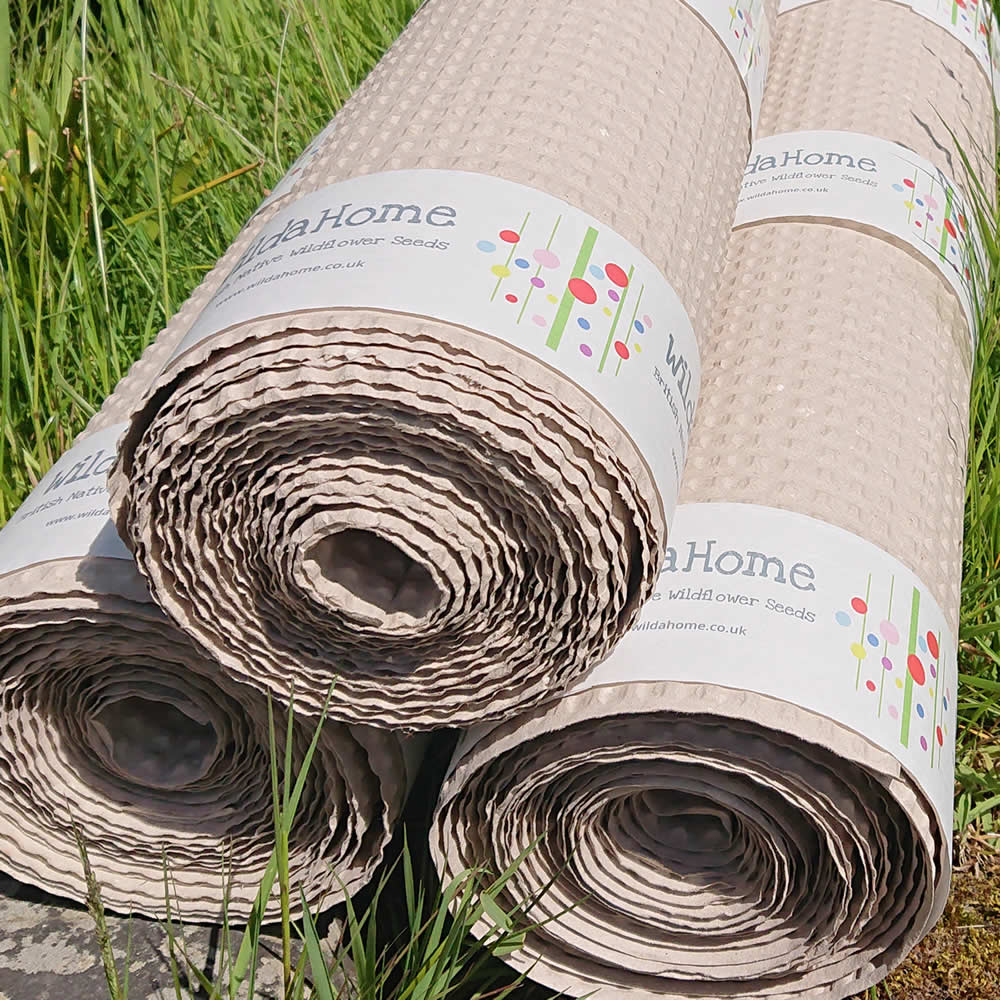
What is a Seed Mat?
What is Improver?
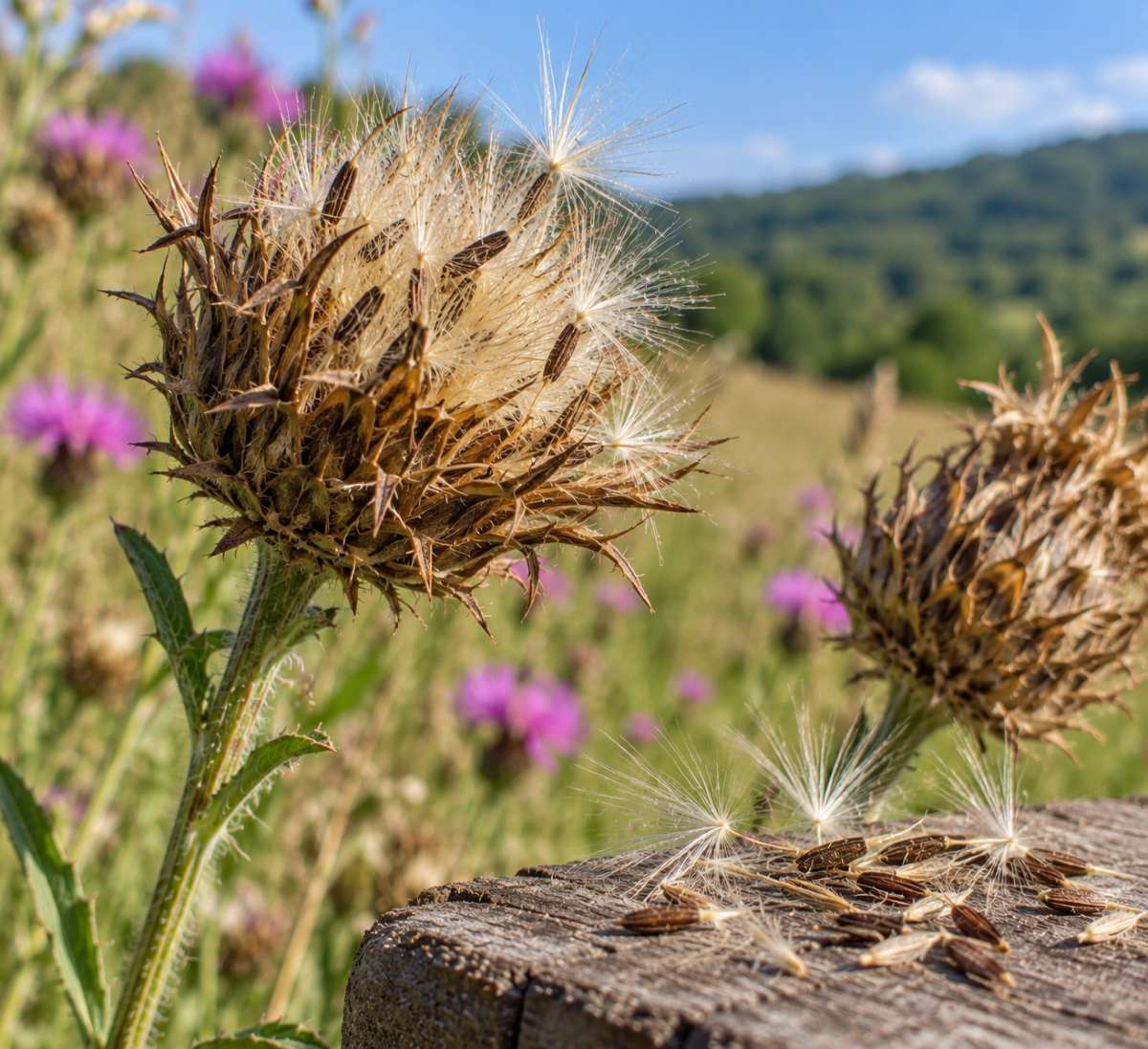
Greater Knapweed Seeds (Centaurea scabiosa)
£57.60 inc VAT
Greater Knapweed is a tall native perennial with large magenta, thistle-like flowers from June to September, a favourite of butterflies and bees on dry grassland.
🚚 UK delivery £5.95 per order
Larger area or a bespoke mix? Ask us for a quote →
About this product
Greater Knapweed (Centaurea scabiosa) is a robust native perennial that grows 40 to 90cm tall, with deeply lobed leaves and stiff, branching stems. From June to September each stem carries a large, thistle-like head of magenta florets, the outer ones spreading into a ragged star. It is a plant of dry grasslands and cliff sides, and is most at home on chalk and limestone.
Few meadow flowers are visited as heavily by butterflies; Marbled Whites, Meadow Browns, skippers and Common Blues all feed on it, alongside bumblebees and hoverflies. In autumn the seed heads are picked over by goldfinches. It is a long-lived, deep-rooted perennial that stands up well in a tall meadow and, once settled, will hold its ground for many years.
It grows on well-drained soil in full sun or partial shade and is best on thin, lime-rich or neutral ground of low fertility. It will manage on heavier soils provided they do not lie wet in winter. Avoid rich, damp ground where grass grows strongly. It suits a chalk bank, a sunny verge, a traditional hay meadow or a garden meadow, and gives late-summer height.
Sow in autumn or spring onto bare or scarified ground, surface-sown and firmed in. Seedlings are slow and most plants flower from their second year, so be patient in the first season. Cut in late summer or early autumn once the heads have set seed, removing the cuttings to keep fertility low. Combine with our 100% wildflower mixes or single species that share the same dry, sunny conditions.
Frequently asked questions
What soil does Greater Knapweed need?
Well-drained soil of low fertility, in sun or light shade. It is particularly good on chalk and limestone and dislikes wet ground.
When do I sow Greater Knapweed?
Autumn or spring, onto bare or scarified ground. Surface-sow and firm the seed in.
Is Greater Knapweed good for butterflies?
Yes. It is one of the best meadow flowers for butterflies and bumblebees, and goldfinches feed on the seed heads in autumn.
How long does it take to flower?
Most plants flower from their second summer. Once established it is a long-lived perennial that persists in a meadow for many years.
Ground Preparation
Choose a sunny or lightly shaded spot on well-drained, low-fertility soil; chalk or limestone is ideal. Clear existing growth or scarify hard to expose bare soil.
Sowing
Sow in autumn or spring, scattering the large seed thinly on the surface and firming it in. Leave uncovered or press in very lightly.
Aftercare: Year 1
Seedlings form a rosette and grow slowly at first. Keep grass short with a cut or two, removing the cuttings, and do not expect flowers until the second year.
Once Established
A long-lived perennial that flowers reliably every year. Cut in late summer or early autumn after seed has set, and leave a few heads standing for finches if you can.
- Type: Perennial
- Height: 40-90cm
- Flowers: June-September
- Best Sown: Autumn or Spring
- Soil Requirement: Well-drained
- Light Requirement: Full sun and partial shade
- Natural Habitat: Grasslands, cliff-sides
- Also known as: Black Top
- Seeds per gram: 130
- Origin: UK native