

What is a Seed Mat?
What is Improver?
Sainfoin Seeds (Onobrychis viciifolia)
£34.56 inc VAT
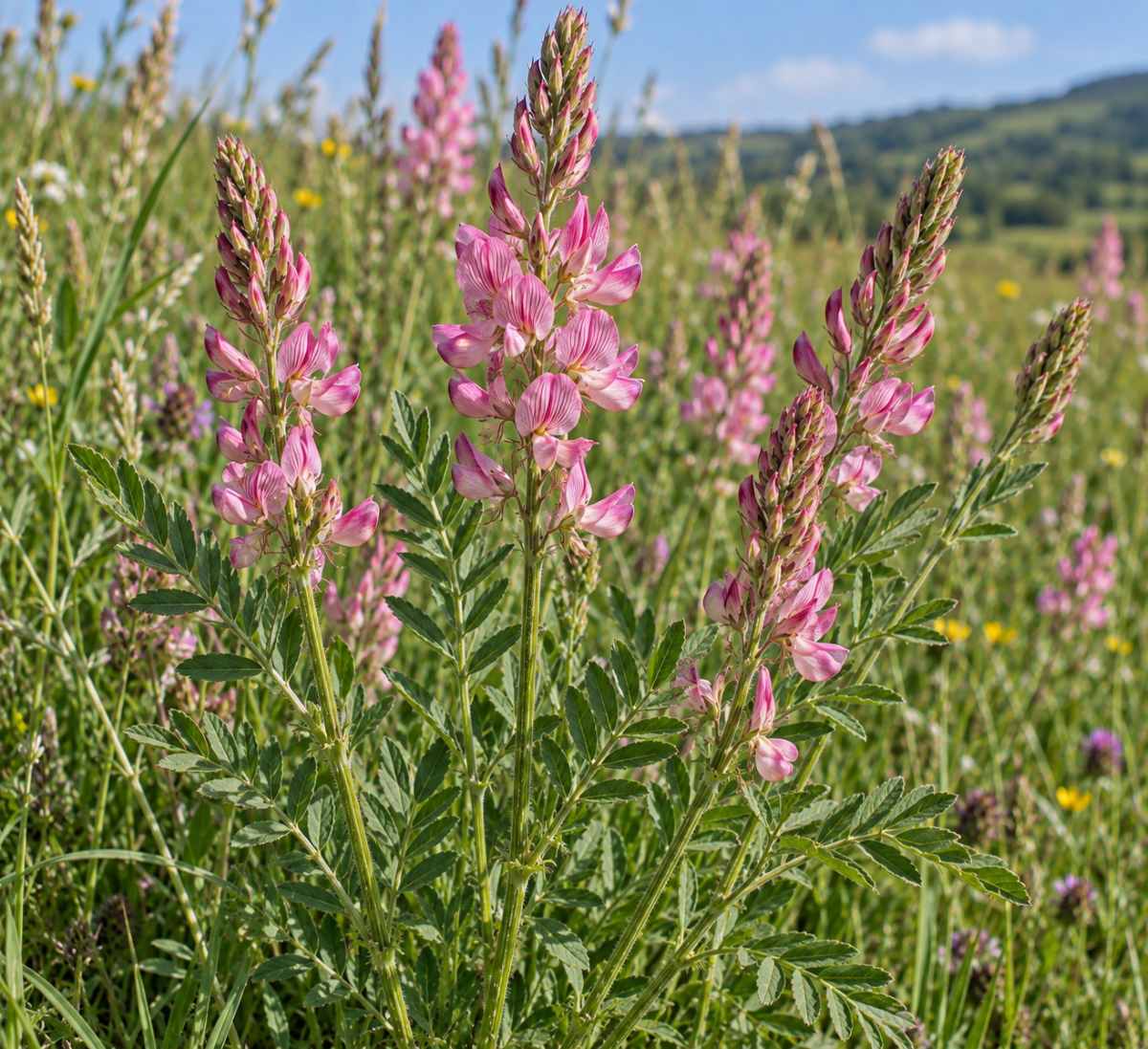
Sainfoin is a bushy perennial legume with conical spikes of pink flowers from July to September on chalky, sunny ground, rich in nectar for bumblebees and butterflies.
🚚 UK delivery £5.95 per order
Larger area or a bespoke mix? Ask us for a quote →
About this product
Sainfoin (Onobrychis viciifolia) is a bushy, deep-rooted perennial of the pea family, growing 40 to 50cm tall with leaves divided into many small leaflets. From July to September it sends up cone-shaped spikes of dark purple buds that open into paler pink pea flowers, aromatic on a warm day. It is found in meadows, on footpaths and along chalk downland tracks, with a long history as a fodder crop on limestone.
The flower spikes are heavily worked by bumblebees, honeybees and butterflies, and it is one of the most productive nectar plants you can add to a chalk meadow. As a legume it fixes nitrogen, and its deep taproot lets it stay green through dry summers. It is a reasonably long-lived perennial that persists best where the sward is kept open and does not become rank.
It needs well-drained, chalky or lime-rich soil in full sun and does poorly on acid, wet or heavy ground. It suits a chalk bank, a downland-style meadow, a dry verge or a pollinator strip on arable land. On the right ground it copes with drought better than most meadow legumes.
Sow in autumn or spring onto bare or scarified ground, surface-sown and firmed in, or pressed in very lightly; the large seed germinates readily. Plants establish in the first season and flower from the second summer. Cut in late summer once seed has set and remove the cuttings, keeping fertility low so grass does not smother it. Combine with our 100% wildflower mixes or single species that share the same chalky, sunny conditions.
Frequently asked questions
What conditions does Sainfoin need?
Full sun and well-drained, chalky or lime-rich soil. It dislikes acid, wet or heavy ground and tolerates drought once its taproot is down.
When should I sow Sainfoin?
Autumn or spring, onto bare or scarified ground. Surface-sow the large seed and firm it in, or press it in very lightly.
Is Sainfoin good for pollinators?
Yes. It is one of the richest nectar plants for bumblebees and honeybees, and butterflies visit the flower spikes from July to September.
Is Sainfoin native to Britain?
Its native status is uncertain. It may be native on some southern chalk, but most British plants descend from crops sown for fodder over several centuries.
Ground Preparation
Choose a sunny site on well-drained, lime-rich or chalky soil; it will not thrive on acid or waterlogged ground. Clear or scarify to expose bare soil and keep fertility low.
Sowing
Sow in autumn or spring, scattering the large seed thinly on the surface and firming it in, or pressing it in very lightly. Spring sowing suits colder sites.
Aftercare: Year 1
Seedlings grow steadily and put down a deep taproot in the first season. Keep competing grass short with a cut or two, removing the cuttings.
Once Established
A reasonably long-lived perennial that flowers from the second year. Cut in late summer after seed has set and clear the cut material to keep the sward open.
- Type: Perennial
- Height: 40–50cm.
- Flowers: July-September
- Best Sown: Autumn or Spring
- Soil Requirement: Well-drained, chalky
- Light Requirement: Full Sun
- Natural Habitat: Meadows, Foot Paths
- Also known as: Esparsette, French Grass, Holy Clover
- Origin: Needs verification — not stated by supplier