

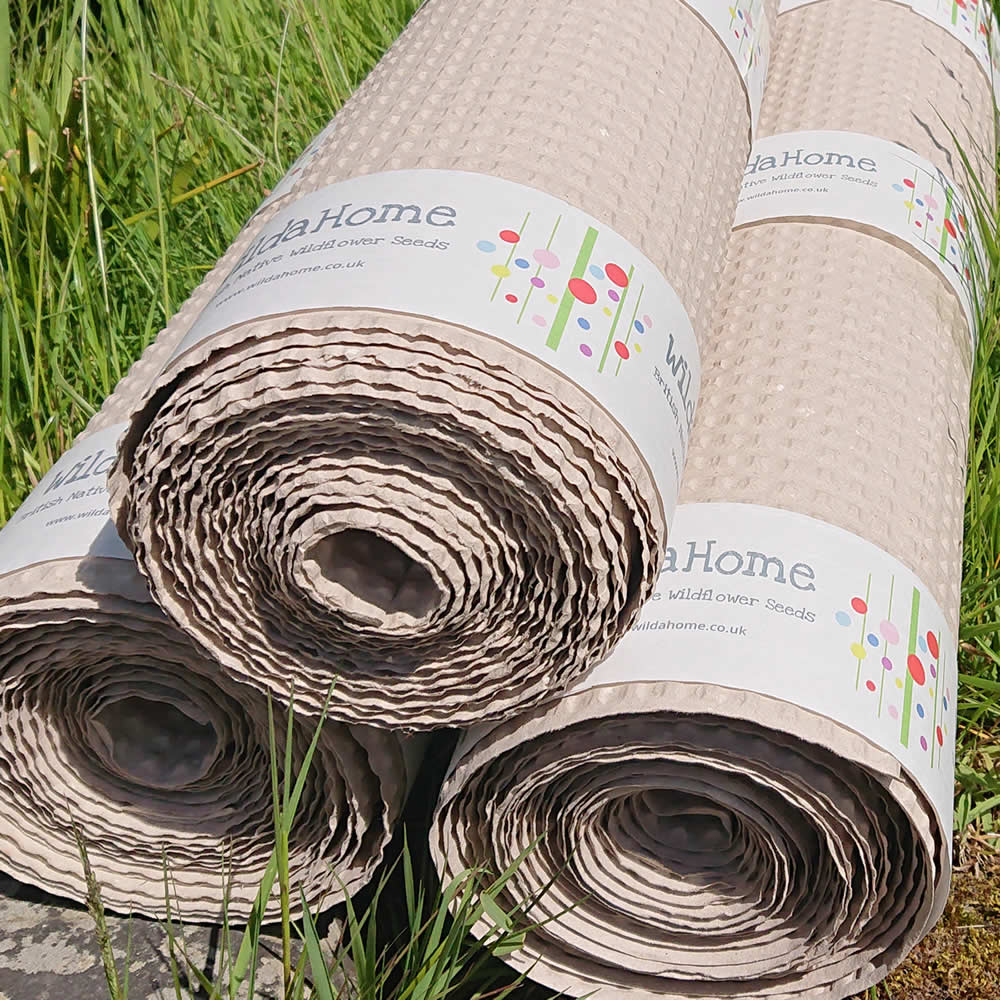
What is a Seed Mat?
What is Improver?
Viper’s Bugloss Seeds (Echium vulgare)
£43.20 inc VAT
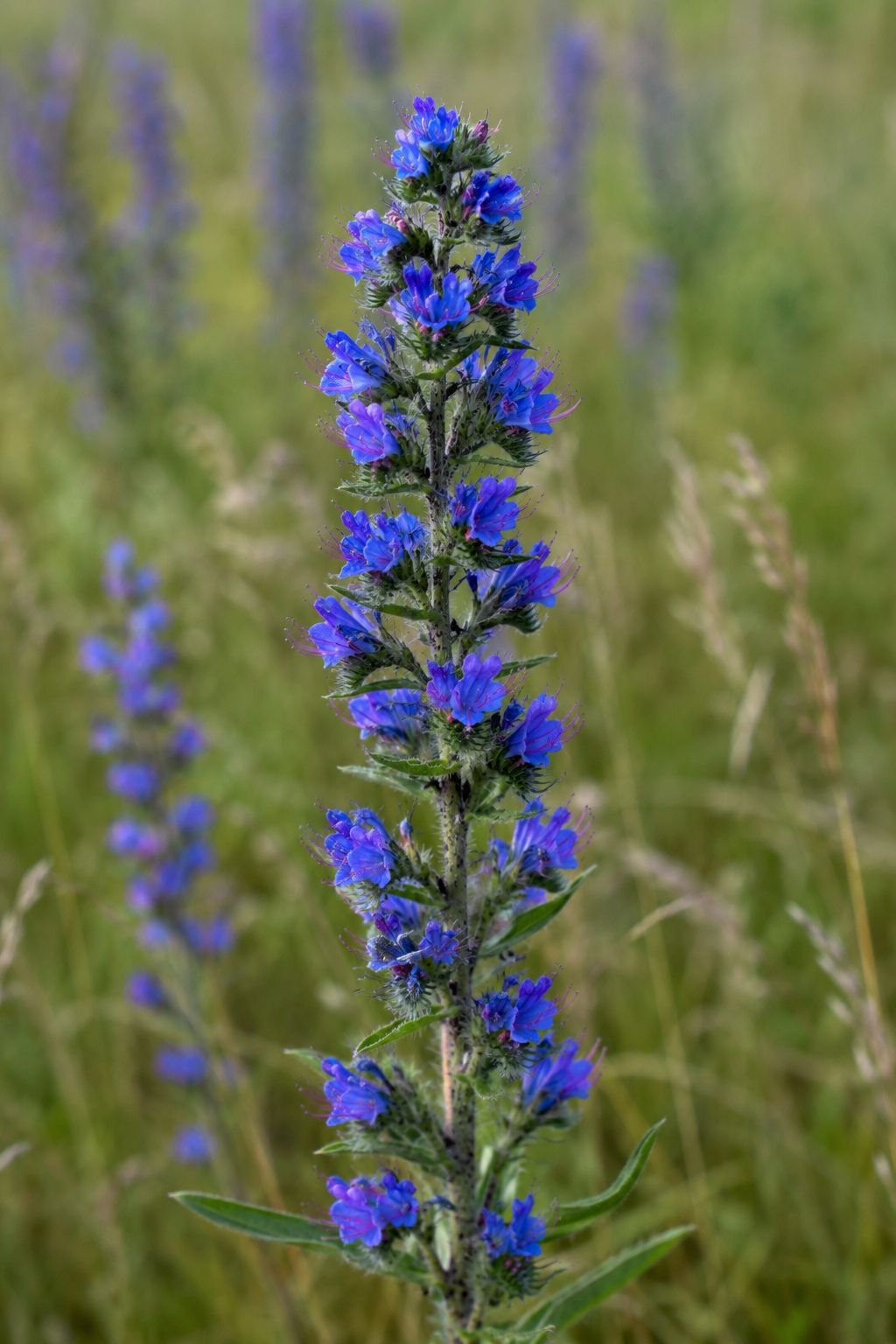
Viper’s Bugloss is a native biennial of dry, sunny ground with bristly spikes of vivid blue flowers and red stamens from June to September, outstanding for bees.
🚚 UK delivery £5.95 per order
Larger area or a bespoke mix? Ask us for a quote →
About this product
Viper’s Bugloss (Echium vulgare) is a native biennial of dry grassland, coastal shingle, dunes and heathland, growing 25 to 75cm tall. It forms a rosette of rough, bristly leaves in its first year and in its second sends up speckled, hairy stems packed with flowers that open pink and turn a strong azure blue, each with long red stamens. It flowers from June to September.
Few British wildflowers are as good for bees. The flowers refill with nectar quickly and are worked continuously by bumblebees, honeybees, solitary bees and butterflies through the summer, and moths visit at dusk. As a biennial it dies after seeding but self-seeds well on open ground, so it renews itself where there is bare soil and full sun. It brings strong colour and height to thin, dry ground.
It needs well-drained, low-fertility soil in full sun and thrives on chalk, sand, gravel and shingle where competition is light. It suits a chalk bank, a sunny gravel area, a coastal garden, a brownfield or new-build site with poor subsoil, or a dry sunny meadow edge. Avoid heavy, wet or fertile ground, and note that the bristly leaves can irritate skin.
Sow in autumn or spring onto bare or scarified ground, surface-sown and firmed in. Rosettes form in the first year and flower spikes follow in the second. Leave plants to shed seed in late summer before cutting, and keep some open ground each year so seedlings can establish. Combine with our dry and chalk mixes or single species that share the same free-draining, sunny conditions.
Frequently asked questions
What conditions does Viper's Bugloss need?
Full sun and well-drained, low-fertility soil such as chalk, sand, gravel or shingle. It will not thrive on heavy, wet or rich ground.
When should I sow Viper's Bugloss?
Autumn or spring, onto bare or scarified ground. Surface-sow and firm in without covering.
Is Viper's Bugloss good for pollinators?
Yes, exceptionally so. Its nectar-rich flowers are visited by bumblebees, honeybees, solitary bees, butterflies and moths from June to September.
Does Viper's Bugloss come back each year?
It is a biennial, flowering in its second year and then dying, but it self-seeds readily on open ground so a colony renews itself.
Ground Preparation
Choose the sunniest, driest spot you have, with thin, free-draining, low-fertility soil. Clear vegetation or scarify to expose bare ground and do not add compost or fertiliser.
Sowing
Sow in autumn or spring, scattering seed on the surface and firming it in. Do not cover.
Aftercare: Year 1
A bristly rosette forms in the first season with no flowers. Keep competing growth short around the rosettes and leave them undisturbed.
Once Established
Flower spikes come in year two, after which the plant dies. Let seed shed before cutting back and keep some bare ground open so new seedlings replace the old plants.
- Type: Biennial
- Height: 25-75cm
- Flowers: June-September
- Best Sown: Autumn or Spring
- Soil Requirement: Well-drained
- Light Requirement: Full sun
- Natural Habitat: Grassland, coastal, heathland
- Also known as: Blue Devil, Cat’s Tail, Snake Flower
- Seeds per gram: 230
- Origin: UK native