

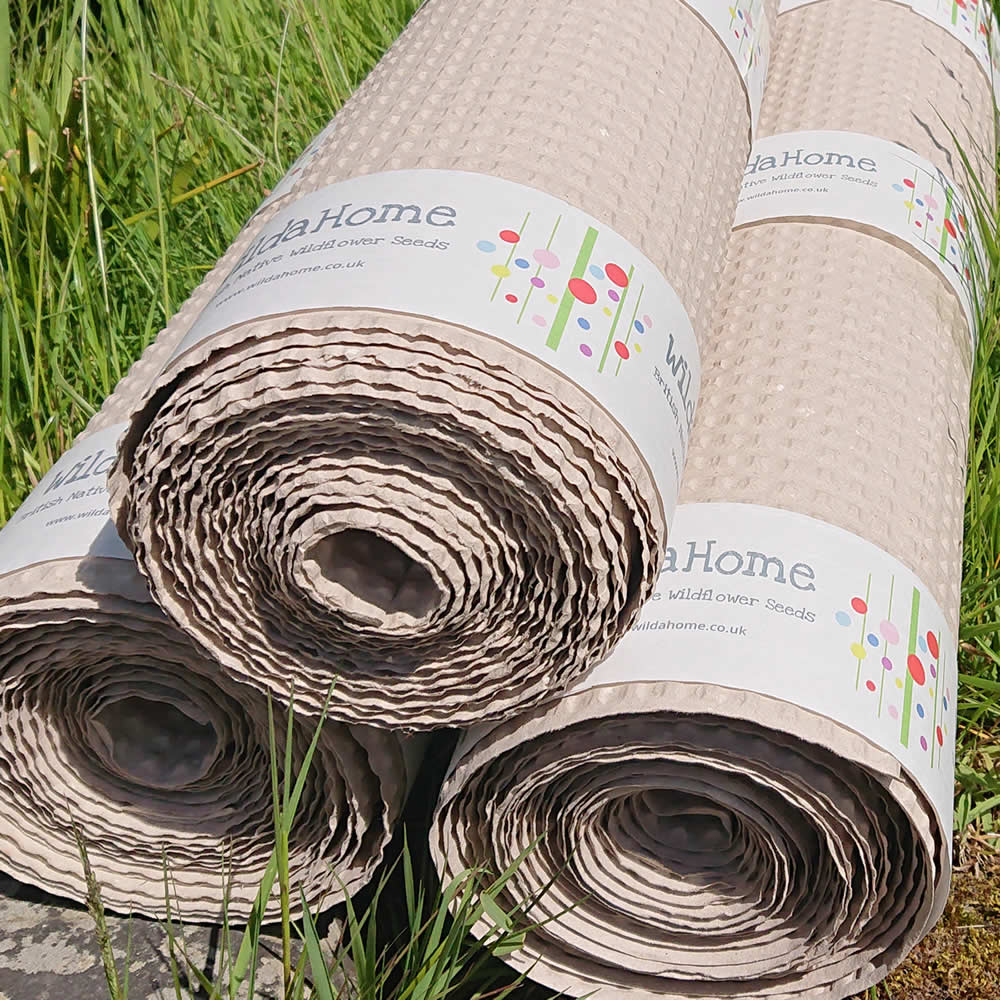
What is a Seed Mat?
What is Improver?
Wild Carrot Seeds (Daucus carota)
£27.00 inc VAT
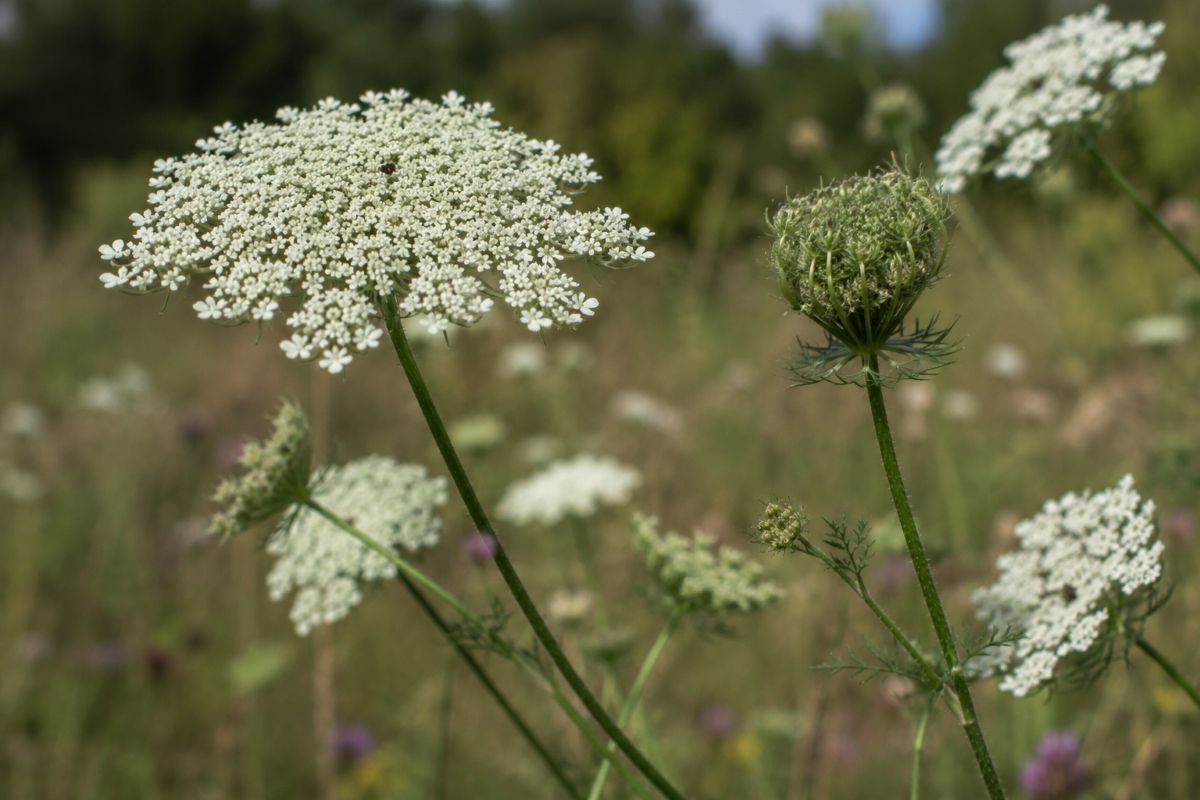
Wild Carrot is a native biennial with lacy white umbels from June to October on dry, sunny ground, valued by hoverflies, solitary bees and many other insects.
🚚 UK delivery £5.95 per order
Larger area or a bespoke mix? Ask us for a quote →
About this product
Wild Carrot (Daucus carota) is a native biennial, better known to some as Queen Anne’s Lace. It sends up a hairy stem with finely divided, feathery leaves, topped from June to October by flat, foam-like umbels of white flowers, often with a single dark red floret at the centre. In the wild it grows on cliff sides, in grassland and along roadsides, and it reaches roughly 30 to 40cm in a meadow sward.
The open, flat flower heads are easy for insects to land on, so Wild Carrot draws hoverflies, solitary bees, beetles and small wasps through the second half of summer. Being a biennial, it forms a leafy rosette in its first year, flowers and sets seed in its second, then dies. It keeps going in a meadow by reseeding into small gaps, so a little bare ground each year helps it persist.
It suits well-drained soil in full sun and is at home on thin, dry, low-fertility ground, including chalk and coastal sites. Avoid rich, damp or shaded ground, where it will be crowded out by grass. It works well in a garden meadow, on a sunny bank or verge, or in an orchard sward that is cut late.
Sow in autumn onto bare or scarified ground, surface-sown and firmed in without covering. Expect rosettes in year one and flowers the following summer. Cut the meadow in late summer or autumn once the seed heads have browned and remove the cuttings to keep fertility low. Combine with our 100% wildflower mixes or single species that share the same dry, sunny conditions.
Frequently asked questions
What conditions does Wild Carrot need?
It wants well-drained soil in full sun and does best on poor, dry ground such as chalk, sand or thin coastal soils. Rich or damp ground lets grass swamp it.
When should I sow Wild Carrot seed?
Autumn is the best time. Sow onto bare or scarified ground, firm the seed in and leave it uncovered.
Is Wild Carrot good for wildlife?
Yes. Its flat white umbels are visited by hoverflies, solitary bees, beetles and other small insects, and the seed heads stand into autumn.
Is Wild Carrot a perennial?
No, it is a biennial: a leafy rosette in year one, flowers and seed in year two. It persists in a meadow by reseeding into bare patches, so allow some gaps each year.
Ground Preparation
Choose a well-drained, sunny spot with low fertility; thin, stony or chalky soil is ideal. Clear existing vegetation or scarify hard to expose at least half bare soil, and do not add compost or fertiliser.
Sowing
Sow in autumn, scattering seed thinly onto the prepared surface and firming it in by treading or rolling. Do not bury the seed; it needs light and firm contact with the soil to germinate.
Aftercare: Year 1
Rosettes will form in the first season and can be easy to miss among grass. Keep the sward short with a cut or two if grass grows strongly, removing the cuttings each time.
Once Established
Plants flower in their second year, then set seed and die, so leave the seed heads to brown before an autumn cut. Removing the cut material and leaving a few gaps in the sward lets it reseed and carry on year after year.
- Type: Biennial
- Height: 30-40cm
- Flowers: June-October
- Best Sown: Autumn
- Soil Requirement: Well-drained
- Light Requirement: Full sun
- Natural Habitat: Cliff sides, grasslands, roadsides
- Also known as: Queen Anne’s Lace
- Seeds per gram: 800
- Origin: UK native