

What is a Seed Mat?
What is Improver?
Wild Foxglove Seeds (Digitalis purpurea)
£27.00 inc VAT
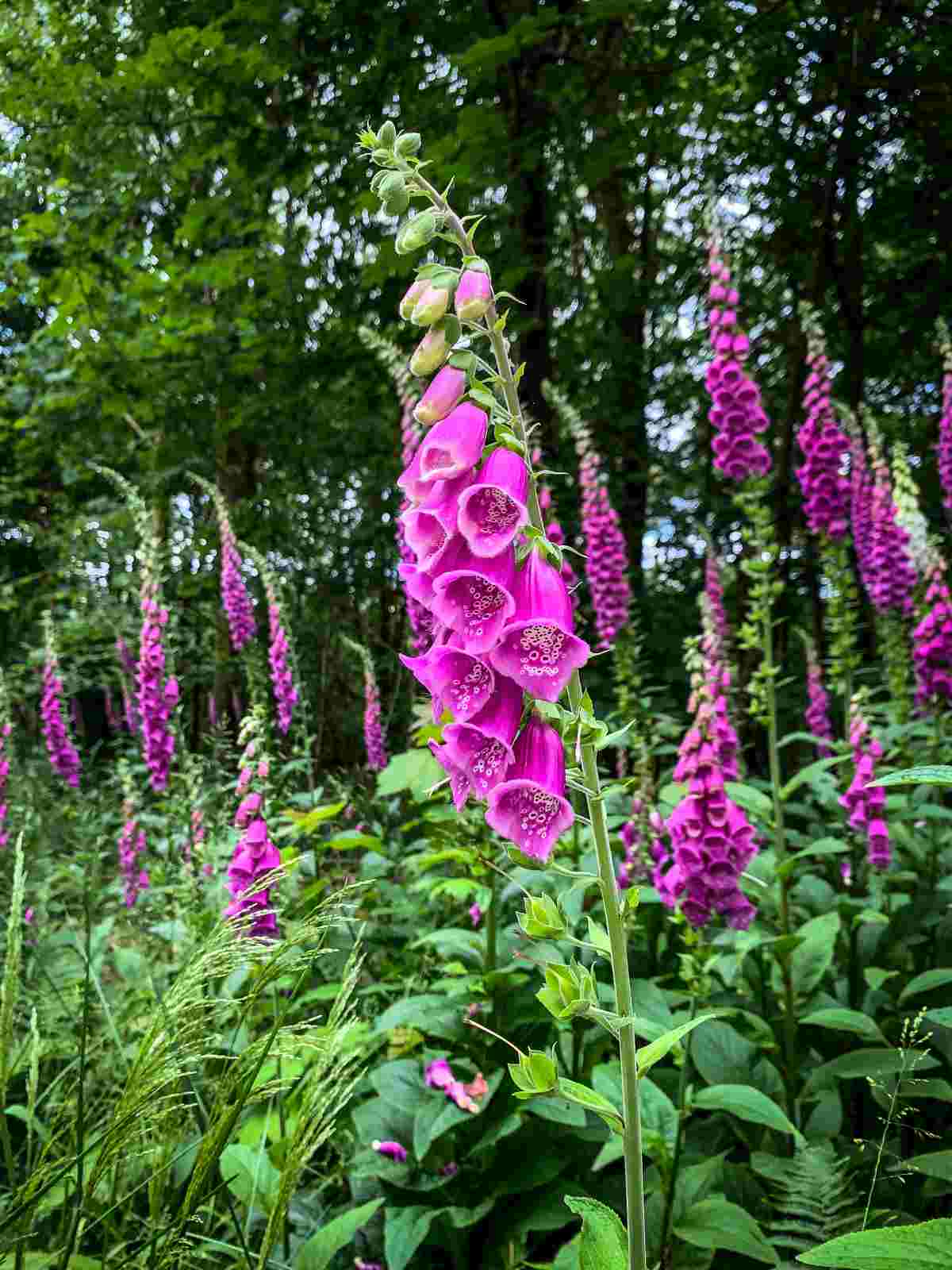
Wild Foxglove is a tall native biennial with spires of spotted pink-purple bells from June to August for woodland edges and hedgebanks, a favourite of bumblebees.
🚚 UK delivery £5.95 per order
Larger area or a bespoke mix? Ask us for a quote →
About this product
Wild Foxglove (Digitalis purpurea) is a native biennial of woodland edges, hedgerows, heathland and roadside verges, reaching 50 to 100cm or more in flower. In its first year it forms a rosette of large, soft, downy leaves; in its second it sends up a single tall spike hung with pink-purple, bell-shaped flowers, each spotted inside, and a spike can carry up to 80 flowers. It flowers from June to August.
The tubular flowers are shaped for long-tongued bumblebees, which are the main pollinators, and a stand of foxgloves is a reliable summer draw for them. As a biennial each plant dies after seeding, but it produces huge quantities of fine seed that lies in the soil and germinates whenever ground is disturbed, so it renews itself readily.
It grows on most well-drained soils, with a preference for slightly acid ground, in partial shade or full sun where the soil does not dry out. It suits a woodland edge, a hedge base, a shaded bank, a heathy corner or a rough garden margin. All parts of the plant are poisonous, so site it with care where children or livestock have access.
Sow in spring, or in late summer, onto bare or scarified ground, surface-sown and firmed in without covering; the seed is very fine and needs light. Rosettes form in the first year and flower spikes follow in the second. Leave spikes to shed seed before cutting back, and keep some open ground each year so new plants can establish. Combine with our woodland edge and hedgerow mixes or single species that share the same lightly shaded conditions.
Frequently asked questions
What conditions does Wild Foxglove need?
Well-drained soil in partial shade or sun, with a preference for slightly acid ground. It is a plant of woodland edges, hedgebanks and heaths.
When should I sow Wild Foxglove?
Spring, onto bare or scarified ground. Surface-sow the very fine seed and firm it in without covering.
Is Wild Foxglove good for pollinators?
Yes. Its bell-shaped flowers are made for long-tongued bumblebees, which visit constantly from June to August.
Does Wild Foxglove come back every year?
It is a biennial, so each plant flowers once in its second year and dies, but it self-seeds freely and a colony renews itself where there is bare ground.
Ground Preparation
Choose a partly shaded or sunny site with well-drained soil that stays reasonably moist; slightly acid ground is ideal. Clear or scarify to expose bare soil, which the fine seed needs.
Sowing
Sow in spring, scattering the dust-fine seed thinly on the surface and firming it in. Do not cover; it needs light to germinate.
Aftercare: Year 1
A rosette of downy leaves forms in the first season with no flowers. Keep coarse growth from smothering the rosettes and leave them undisturbed.
Once Established
Spikes flower and seed in year two, then the plant dies. Let seed shed before cutting back and keep some bare ground open so seedlings replace the parents.
- Type: Biennial
- Height: 50-100cm
- Flowers: June-August
- Best Sown: Spring
- Soil Requirement: Well-drained
- Light Requirement: Full sun and partial shade
- Natural Habitat: Woodland edges, roadside verges, heathland, hedgerows
- Also known as: Goblin Gloves, Witches’ Gloves, Dead Men’s Bells
- Seeds per gram: 12000
- Origin: UK native