

What is a Seed Mat?
What is Improver?
Wild Marjoram Seeds (Origanum vulgare)
£56.26 inc VAT
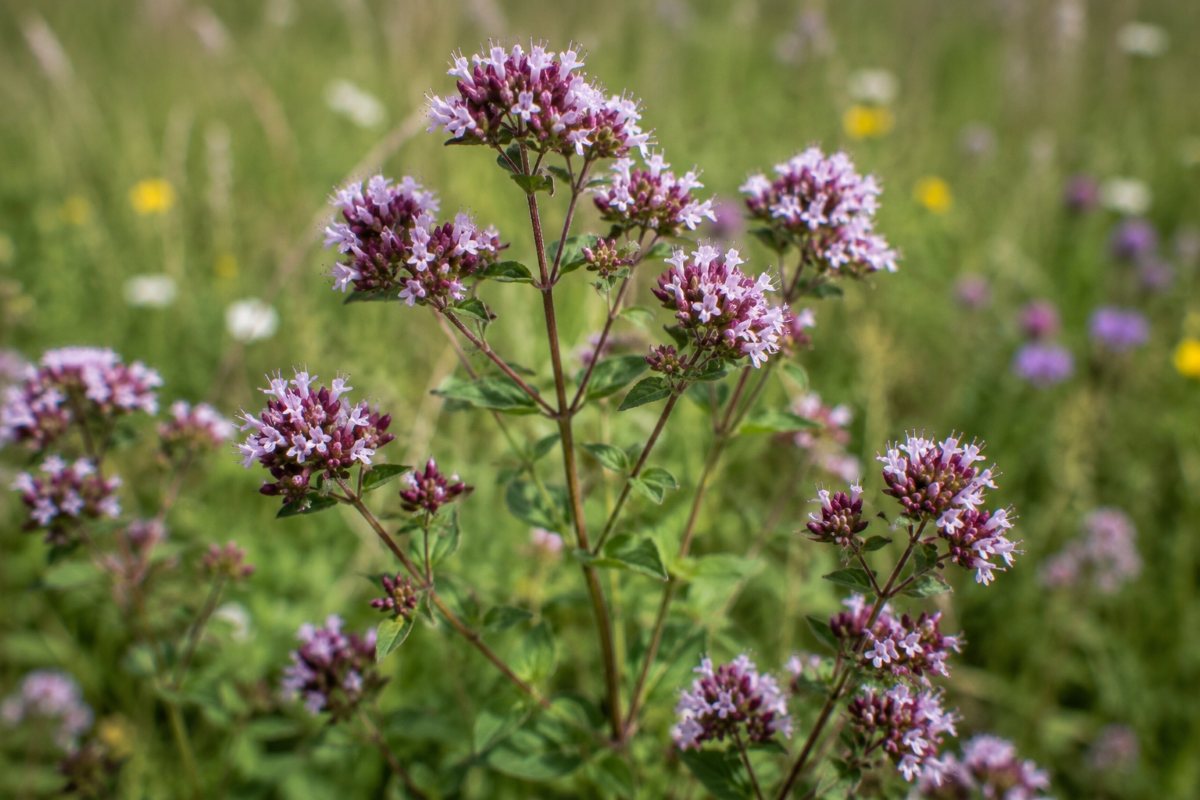
Wild Marjoram is an aromatic native perennial of chalk grassland with clusters of purple-pink flowers from July to September, thronged by butterflies and bees.
🚚 UK delivery £5.95 per order
Larger area or a bespoke mix? Ask us for a quote →
About this product
Wild Marjoram (Origanum vulgare) is an aromatic native perennial of chalk and limestone grassland, road verges and hedgebanks, growing 30 to 60cm tall. It has small oval leaves in opposite pairs on square, red-tinted stems and carries dense clusters of dark purple buds that open to paler pink-purple flowers from July to September. It is the same species as culinary oregano and the leaves can be used in the kitchen.
Wild Marjoram is one of the most valuable late-summer nectar plants in Britain. Its flowers are crowded with butterflies, including blues, browns and skippers, as well as bumblebees, honeybees and hoverflies, and moths visit after dark. It is a long-lived, clump-forming perennial that also self-seeds gently, and it fills the gap after the main meadow flush has finished.
It needs well-drained, low-fertility soil in full sun and is happiest on chalk, limestone or light, stony ground. It suits a chalk bank, a sunny hedge base, a dry meadow, a gravel garden or a warm south-facing verge. Avoid heavy, wet or shaded sites and rich soils, where it will be crowded out.
Sow in spring onto bare or scarified ground, surface-sown and firmed in without covering; the seed is very fine and needs light. Plants form clumps in the first year and flower well from the second summer. Cut in autumn once seed has been shed and remove the cuttings, and it will persist for many years. Combine with our chalk and dry mixes or single species that share the same free-draining, sunny conditions.
Frequently asked questions
What conditions does Wild Marjoram need?
Full sun and well-drained, low-fertility soil. It is best on chalk, limestone or light stony ground and dislikes wet or shaded sites.
When should I sow Wild Marjoram?
Spring, onto bare or scarified ground. Surface-sow the fine seed and firm it in without covering.
Is Wild Marjoram good for pollinators?
Yes, it is among the best. Butterflies, bumblebees, honeybees and hoverflies crowd the flowers from July to September, and moths visit at night.
Is Wild Marjoram the same as oregano?
Yes. It is the same species as culinary oregano, though the wild British form is hardier and milder in flavour.

Ground Preparation
Choose a sunny, well-drained site with thin, low-fertility soil, ideally over chalk or limestone. Clear or scarify to expose bare ground and do not add fertiliser.
Sowing
Sow in spring, scattering the very fine seed thinly on the surface and firming it in. Do not cover; it needs light to germinate.
Aftercare: Year 1
Seedlings are small and slow at first, so keep competing growth short and remove the cuttings. Expect leafy clumps rather than flowers in the first year.
Once Established
Cut in autumn once seed has dropped and clear the cuttings. It is long-lived and self-seeds gently on open ground.
- Type: Perennial
- Height: 30-60cm
- Flowers: July-September
- Best Sown: Spring
- Soil Requirement: Well-drained
- Light Requirement: Full sun
- Natural Habitat: Chalk limestone grassland, road verges, hedge banks
- Also known as: Oregano
- Seeds per gram: 10000
- Origin: UK native