

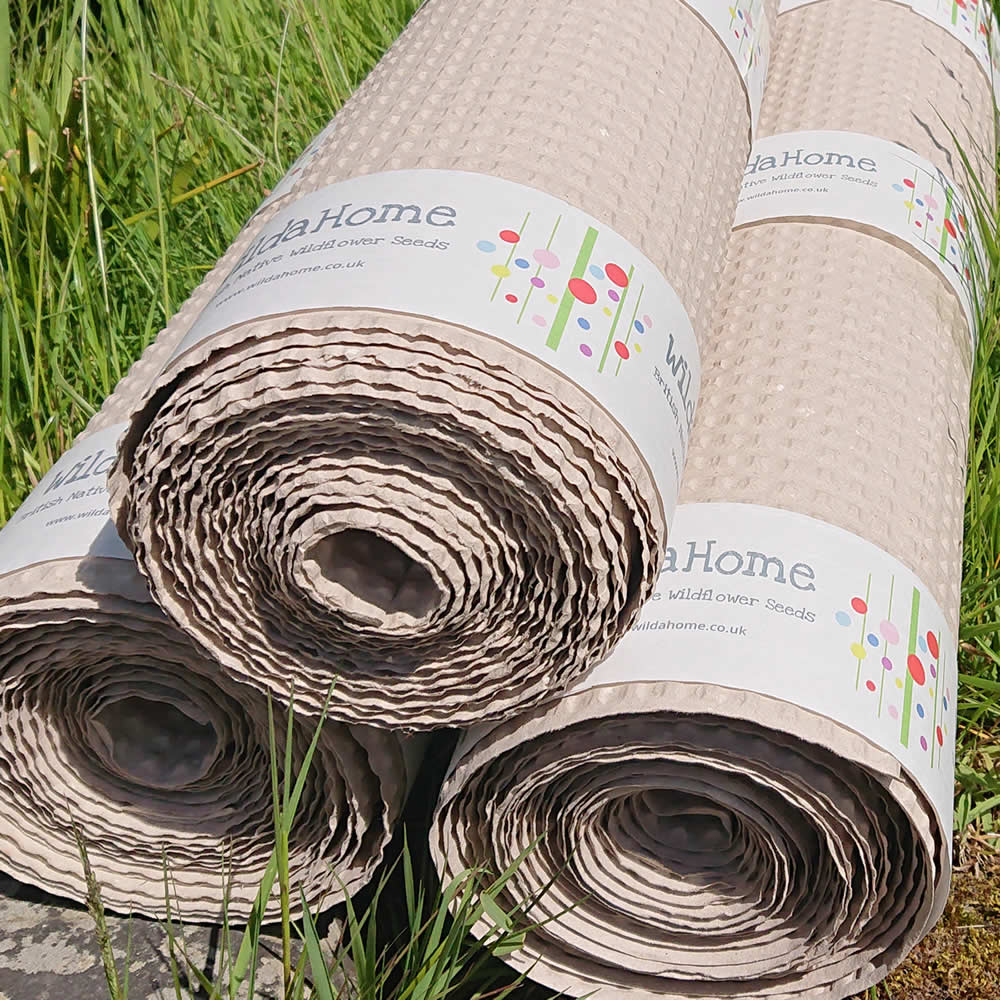
What is a Seed Mat?
What is Improver?
Yellow-Flag Iris Seeds (Iris pseudacorus)
£27.00 inc VAT
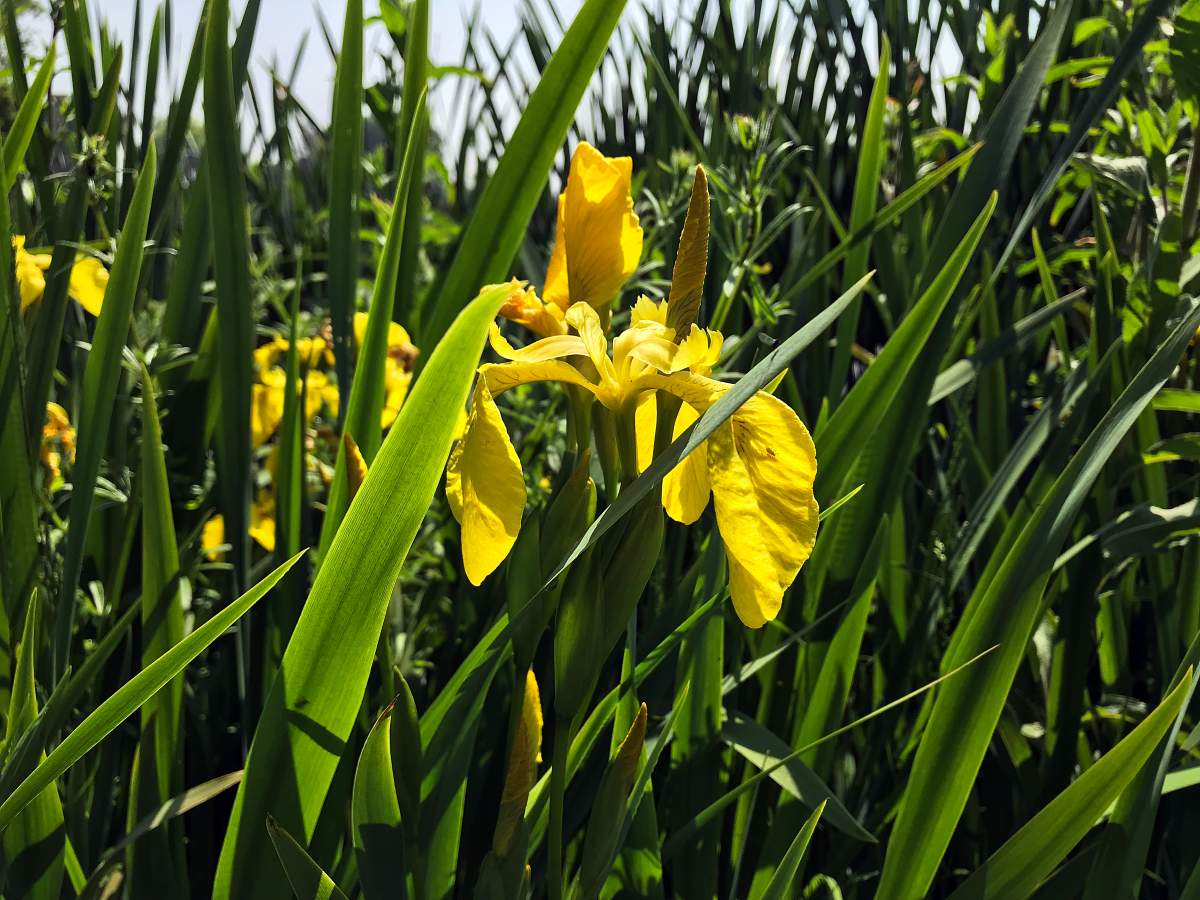
Yellow-Flag Iris is a tall native perennial of wet ground with bold yellow flowers from May to August, worked by bumblebees. Vigorous; needs damp soil.
🚚 UK delivery £5.95 per order
Larger area or a bespoke mix? Ask us for a quote →
About this product
Yellow-Flag Iris (Iris pseudacorus) is a tall native perennial of marshes, ditches, flood plains and pond margins, growing 100 to 150cm tall. It forms dense clumps of stiff, grey-green, sword-shaped leaves from thick creeping rhizomes, and carries branching stems of large, buttery yellow flowers with three drooping outer petals from May to August, followed by fat green seed pods.
Bumblebees are the main pollinators, pushing into the large flowers for nectar, and hoverflies and other insects also visit. The dense leafy clumps give cover and nesting habitat for waterfowl, amphibians and invertebrates at the water’s edge. It is long-lived and robust once settled.
This is strictly a plant for wet ground. It needs permanently moist or waterlogged soil, in full sun or partial shade, and will grow in shallow water at a pond edge, along a ditch, in a marsh or on a river bank, tolerating seasonal flooding. It is vigorous and spreads by rhizome and by floating seed, so it can dominate a small pond; give it room, or confine it in a basket in a garden pond, and keep it out of watercourses where spread is unwanted.
Sow in autumn or spring onto bare, wet soil at the water’s edge, pressed firmly into the mud and lightly covered. Germination can be slow and uneven, and plants take two to three years to flower. Cut back dead foliage in late winter and divide clumps every few years if they outgrow their space. Combine with our wetland and pond-edge mixes or single species that share the same permanently damp conditions.
Frequently asked questions
What conditions does Yellow-Flag Iris need?
Permanently moist or waterlogged soil, or shallow water, in full sun or partial shade. It will not thrive on ground that dries out in summer.
When should I sow Yellow-Flag Iris?
Autumn or spring, pressed into bare wet soil at the water's edge and lightly covered. Germination can be slow and plants take two to three years to flower.
Is Yellow-Flag Iris good for wildlife?
Yes. Bumblebees pollinate the flowers from May to August, and the dense clumps shelter amphibians, waterfowl and invertebrates at the water's edge.
Is Yellow-Flag Iris invasive?
It is native and not invasive in Britain, but it is vigorous, spreading by rhizome and floating seed. In a small pond it can dominate, so give it space or restrict it in a basket.
Ground Preparation
Choose permanently wet ground at a pond, ditch or stream edge, or a marshy hollow, in sun or light shade. Clear coarse vegetation to expose bare mud. Decide first whether you have room for a vigorous spreader.
Sowing
Sow in autumn or spring, pressing the large seed firmly into wet soil and covering lightly. Seed can also be started in pots of soil stood in a tray of water and planted out later.
Aftercare: Year 1
Germination may be slow and patchy over the first year. Keep the ground wet and keep rushes and coarse grasses from swamping the seedlings.
Once Established
Flowers from the second or third year and is long-lived. Cut back dead leaves in late winter and divide or thin clumps every few years to keep it within bounds.
- Type: Perennial
- Height: 100-150cm
- Flowers: May-August
- Best Sown: Autumn or Spring
- Soil Requirement: Moist
- Light Requirement: Full sun and partial shade
- Natural Habitat: Marsh, flood plains, ditches
- Also known as: Flagon, Water Flag, Yellow Fleur-De-Lis
- Seeds per gram: 20
- Origin: UK native