


What is a Seed Mat?
What is Improver?
Restoration Wildflower Meadow Mix
£34.80 – £6,960.00Price range: £34.80 through £6,960.00 inc VAT
A perennial-heavy native mix designed for degraded or species-poor ground — builds long-term meadow habitat with strong pollinator value from year two.
🚚 UK delivery £5.95 per order
Larger area or a bespoke mix? Ask us for a quote →
About this product
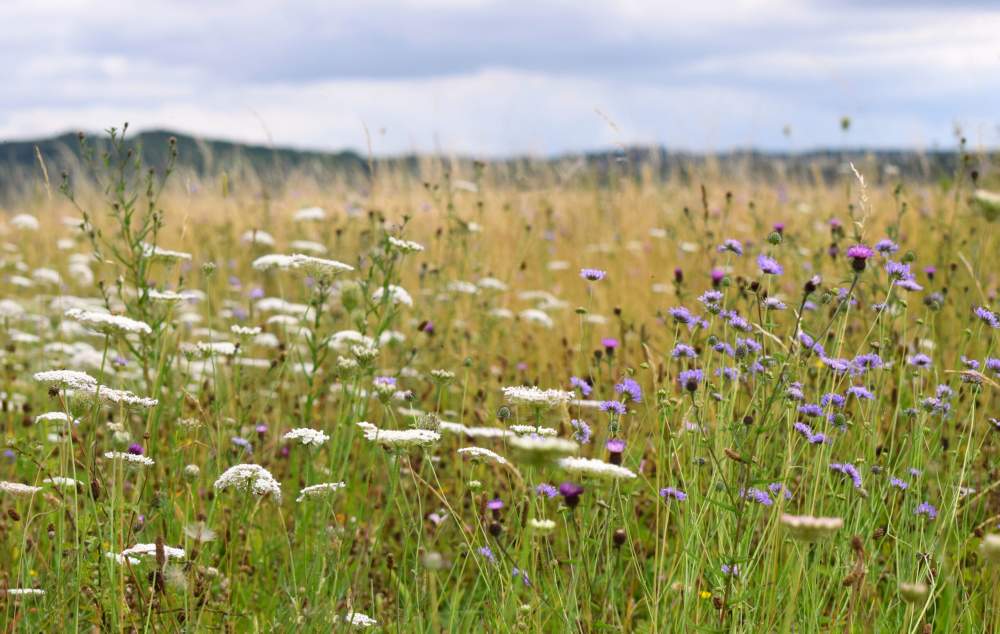
The Restoration mix is built for land that has lost its wildflower character — fields that have been ploughed, fertilised, or left to coarse grass, and are now being brought back. The species selection prioritises perennials that establish slowly but persist, building a stable root system and a meadow that improves year on year.
This mix works well for conservation grazing land, farm margins, ex-arable ground, and community meadow projects where long-term habitat value matters more than first-season display. Pollinators, ground-nesting birds, and invertebrates all benefit as the sward develops.
Sow at 3g per square metre into exposed, scarified, low-nutrient soil. Autumn sowing (August–September) gives perennial species the best start through natural cold stratification. Adding Yellow Rattle to your sowing plan helps suppress existing grass competition. Expect steady development over two to three seasons — restoration meadows are not quick fixes.
Sourced from UK meadows and partner farms. 100% wildflowers, 100% British native.
Frequently asked questions
What sites is the Restoration Wildflower Meadow Mix designed for?
It is designed for land that has lost its wildflower character — ex-arable fields, fertilised grassland, farm margins, and degraded amenity ground. The mix is well-suited to conservation projects and community meadow schemes where long-term habitat creation is the goal.
What wildlife benefit does the Restoration mix provide?
As the perennial sward establishes, it builds habitat for pollinators, ground-nesting birds, and invertebrates. The value increases year on year as root systems develop and the meadow matures into a stable, species-rich habitat.
How should I sow the Restoration Wildflower Meadow Mix?
Sow at 3g per square metre into thoroughly scarified, low-nutrient, exposed soil. Autumn sowing (August to September) suits this mix well, giving perennial seed time to cold-stratify naturally over winter. Adding Yellow Rattle to your plan helps suppress grass competition.
How long does a restoration meadow take to establish?
Restoration meadows are a two to three year project. Year one sees initial germination and establishment. The perennial root system strengthens in year two, and by year three a well-prepared site typically shows strong meadow character. Annual management with a late-summer cut is important throughout.
Bedstraw, Lady’s, (Galium verum), Black Medick, (Medicago lupulina), Burnet, Salad, (Sanguisorba minor), Buttercup, Meadow, (Ranunculus acris), Campion, Red, (Silene dioica), Campion, White, (Silene alba), Carrot, Wild, (Daucus carota), Catchfly, Night-Flowering, (Silene noctiflora), Clary, Wild, (Salvia verbenaca), Cowslip, (Primula veris), Daisy, Ox-eye, (Leucanthemum vulgare), Forget-me-not, Field, (Myosotis arvensis), Foxglove, Wild, (Digitalis purpurea), Goat’s-beard, (Tragopogon pratensis), Knapweed, Common, (Centaurea nigra), Knapweed, Greater, (Centaurea scabiosa), Musk Mallow, (Malva moschata), Self-heal, (Prunella vulgaris), Sorrel, Common, (Rumex acetosa), St John’s-wort, Common, (Hypericum perforatum), Yarrow, (Achillea millefolium), Yellow Rattle, (Rhinanthus minor)
Ground Preparation
Sowing
Aftercare: Year 1 & Once Established
Flower Colours: Varied
Plant Height: up to 1.5 metre
Flowering Season: April to October
Setting: Range of soil types