

What is a Seed Mat?
What is Improver?
Native Bluebell Seed (Hyacinthoides non-scripta)
£18.00 – £1,185.00Price range: £18.00 through £1,185.00 inc VAT
True native bluebell seed for establishing woodland carpets at scale. Around 200 seeds per gram; sow at 1g per m² in autumn into moist, dappled shade. First flowers after four to six years.
Growing from seed? Read our guide to growing native bulbs from seed: when to sow, what the first years look like, and when to choose bulbs instead.
🚚 UK delivery £5.95 per order (£7.94 with seed mats, 5kg+ bags or 1,000-bulb packs) · usually dispatched within 5 working days
Larger area or a bespoke mix? Ask us for a quote →
About this product
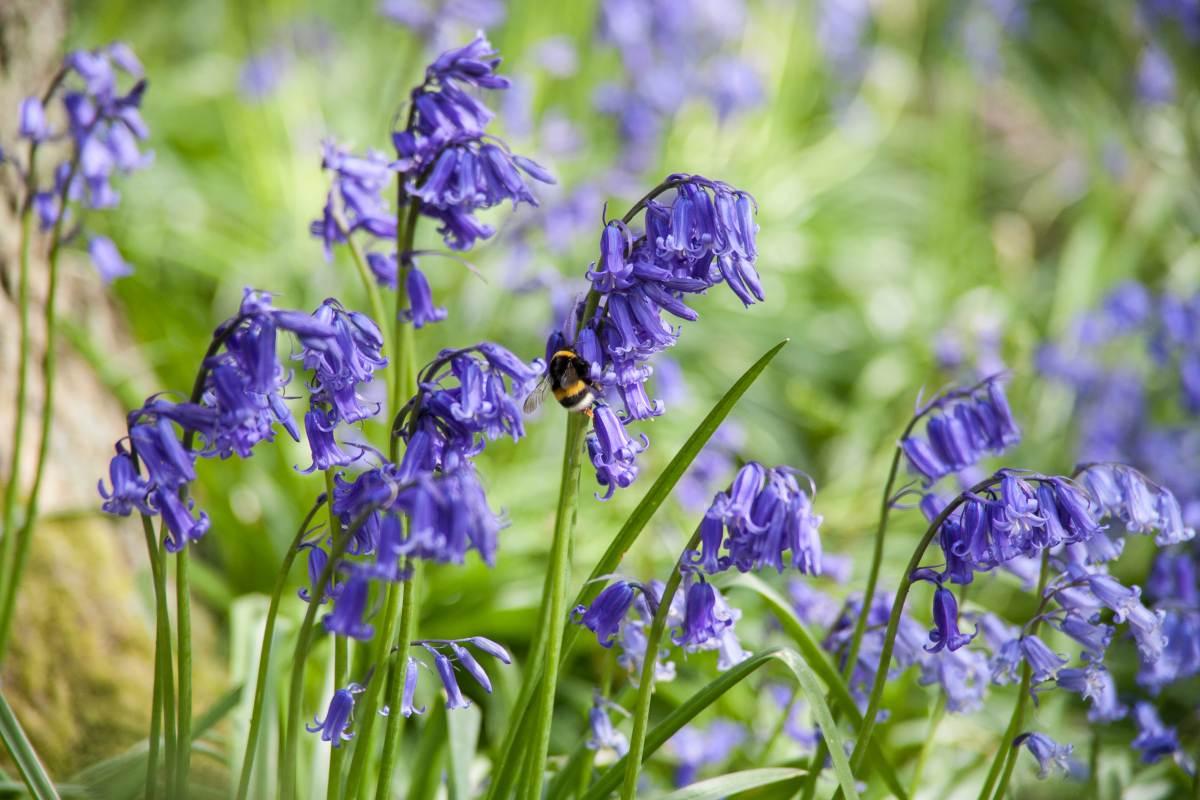
Native bluebell (Hyacinthoides non-scripta) is the defining flower of British broadleaved woodland, carpeting the ground in violet-blue from April into May before the tree canopy closes over. Growing it from seed is the most cost-effective way to establish bluebells across a large area. A 10g pack holds roughly 2,000 seeds and sows around 10m² at 1g per m², and every plant raised from seed is genetically different, which is exactly what a healthy, resilient colony needs.
What to expect from bluebell seed
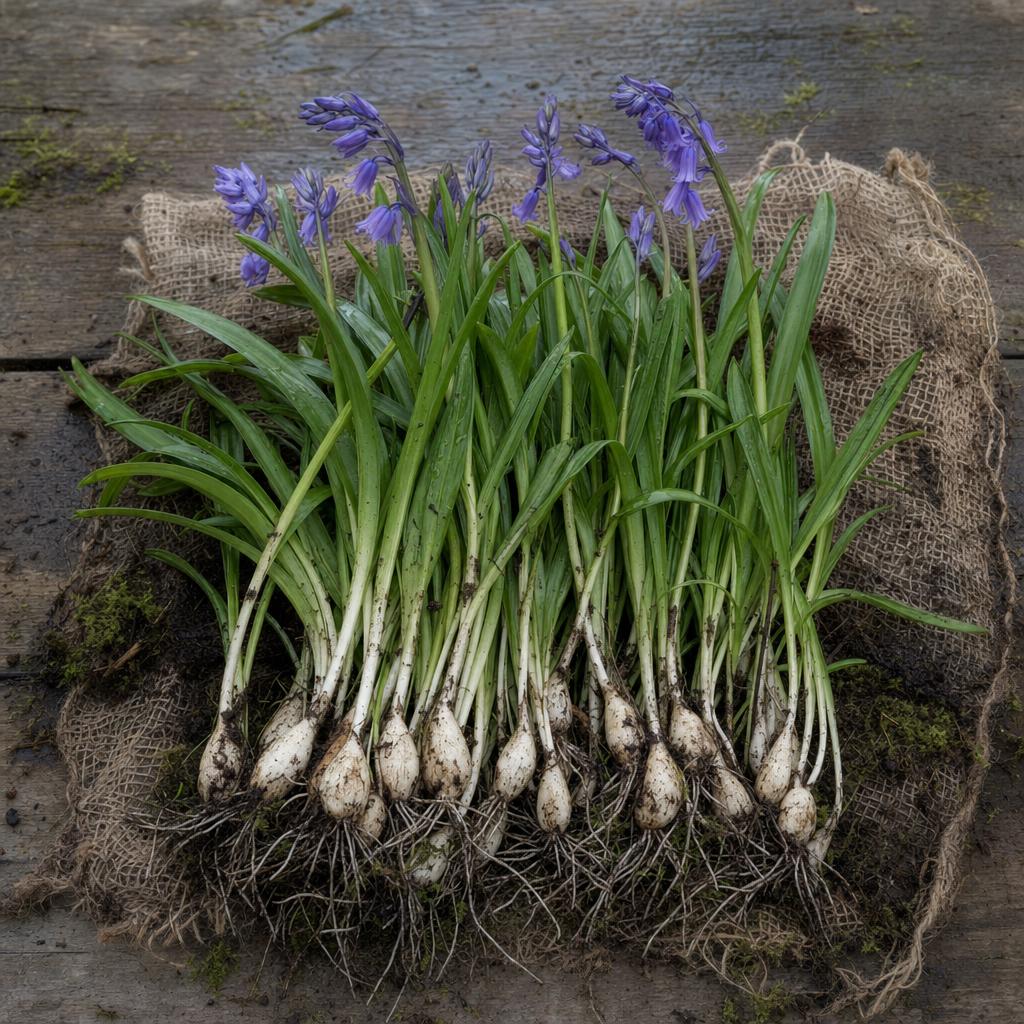
The trade-off is time. Bluebell seed germinates in its first autumn and winter, sends up a single grass-like leaf the following spring and then builds its bulb slowly underground. Expect the first flowers after four to six years, with a proper carpet developing over the following decade as plants self-seed and bulbs divide. If you want flowers next spring, plant bluebell bulbs in autumn or bluebells in the green in early spring. If you are restoring woodland or underplanting new trees for the long term, seed gives far more plants for the money, and many projects use both.
Where bluebells grow
Bluebells need dappled shade and moist, humus-rich soil that does not dry out in spring: deciduous woodland, coppice, old hedgebanks, orchards, shelterbelts and the shaded side of buildings. They will persist on open ground that was once woodland, especially in the wetter west, but they do not suit hot, dry, sunny sites or grass that is mown before the leaves die back in early summer.
The native species, not the Spanish bluebell
This is the true native species, not the Spanish bluebell (H. hispanica) or the hybrid between the two, which threaten native colonies through cross-pollination. Avoid sowing near garden Spanish or hybrid bluebells if you can. Native bluebell is protected against the sale of wild-collected plants and seed under Schedule 8 of the Wildlife and Countryside Act 1981; this seed is supplied from cultivated UK stock, not collected from wild colonies.
Looking for more than one species? Our Woodland Bulb Seed Mix combines bluebell with wild daffodil and wild garlic, and the whole native bulb seed range is sown the same way.
Frequently asked questions
How long do bluebells take to flower from seed?
Usually four to six years. The seed germinates in its first winter, makes a single grass-like leaf each spring and builds its bulb slowly before it is large enough to flower. A full carpet takes longer still as plants self-seed.
When should I sow bluebell seed?
From late summer to late autumn, ideally as soon as you receive it. The seed needs autumn and winter conditions to germinate, so sowing in spring or storing it somewhere warm reduces germination.
How much bluebell seed do I need?
Sow at 1g per m², or up to 2g per m² for a denser result. At around 200 seeds per gram, a 10g pack covers about 10m² and 100g covers about 100m².
Is it legal to sell bluebell seed?
Yes, when it comes from cultivated stock. Native bluebell is listed on Schedule 8 of the Wildlife and Countryside Act 1981, which prohibits selling plants or seed taken from the wild. This seed is supplied from cultivated UK stock.
Should I plant bluebell seed or bluebell bulbs?
Bulbs flower the following spring and suit small or high-profile areas. Seed is far cheaper per plant and suits large woodland, hedgebank and tree-planting schemes where you can wait four to six years. Many projects use bulbs near paths and seed everywhere else.
Will bluebells grow in my lawn?
Only if the grass is left uncut until the bluebell leaves have died back in early summer. Regular spring mowing removes the leaves before they can feed the bulb, and the plants fade out.
When to sow
Sow from late summer to the end of autumn, ideally as soon as the seed arrives. Bluebell seed needs the cooling soil of autumn and the cold of winter to germinate, so do not hold it over to spring or store it somewhere warm.
Ground preparation
Choose shaded or part-shaded ground with moist soil. Clear coarse vegetation such as bramble, nettle and dense grass, and scratch the surface to expose some bare soil. Leaf litter can stay. Do not add compost, manure or fertiliser.
Sowing
Mix the seed with dry sand for an even spread and scatter on the surface at 1g per m² (up to 2g per m² for a denser result). Press it in by treading or rolling, or cover very lightly with leaf mould. Do not bury it deeply.
Years 1 to 3
Seedlings appear in late winter and spring as single, thin, grass-like leaves that are easy to overlook or weed out by mistake. Mark the area, keep bramble and coarse weeds down, and do not mow or strim between February and July.
Year 4 onwards
The first flowering spikes usually appear between years four and six. Let flowers set seed and the leaves die back naturally; the colony then thickens by self-seeding and bulb division with no further input.
- Type: Bulbous perennial (supplied as seed)
- Height: 30-50cm
- Flowers: April-May
- Best Sown: Late summer to late autumn
- Sowing Rate: 1g per m² (up to 2g per m² for faster cover)
- Seeds per gram: Approx. 200
- Time to flower from seed: 4-6 years
- Soil Requirement: Moist, humus-rich, free-draining
- Light Requirement: Dappled or partial shade
- Natural Habitat: Broadleaved woodland, hedgebanks, coppice
- Also known as: English bluebell, wild hyacinth, wood bells
- Origin: UK native