

What is a Seed Mat?
What is Improver?
Wild Garlic (Ramsons) Bulb Seed (Allium ursinum)
£18.00 – £1,185.00Price range: £18.00 through £1,185.00 inc VAT
Wild garlic seed in sizes from 10g to 1kg, for carpeting damp woodland, stream banks and shaded hedgebanks. Sow at 1g per m² in autumn; seedlings appear the following spring and flower in two to three years.
Growing from seed? Read our guide to growing native bulbs from seed: when to sow, what the first years look like, and when to choose bulbs instead.
🚚 UK delivery £5.95 per order (£7.94 with seed mats, 5kg+ bags or 1,000-bulb packs) · usually dispatched within 5 working days
Larger area or a bespoke mix? Ask us for a quote →
About this product
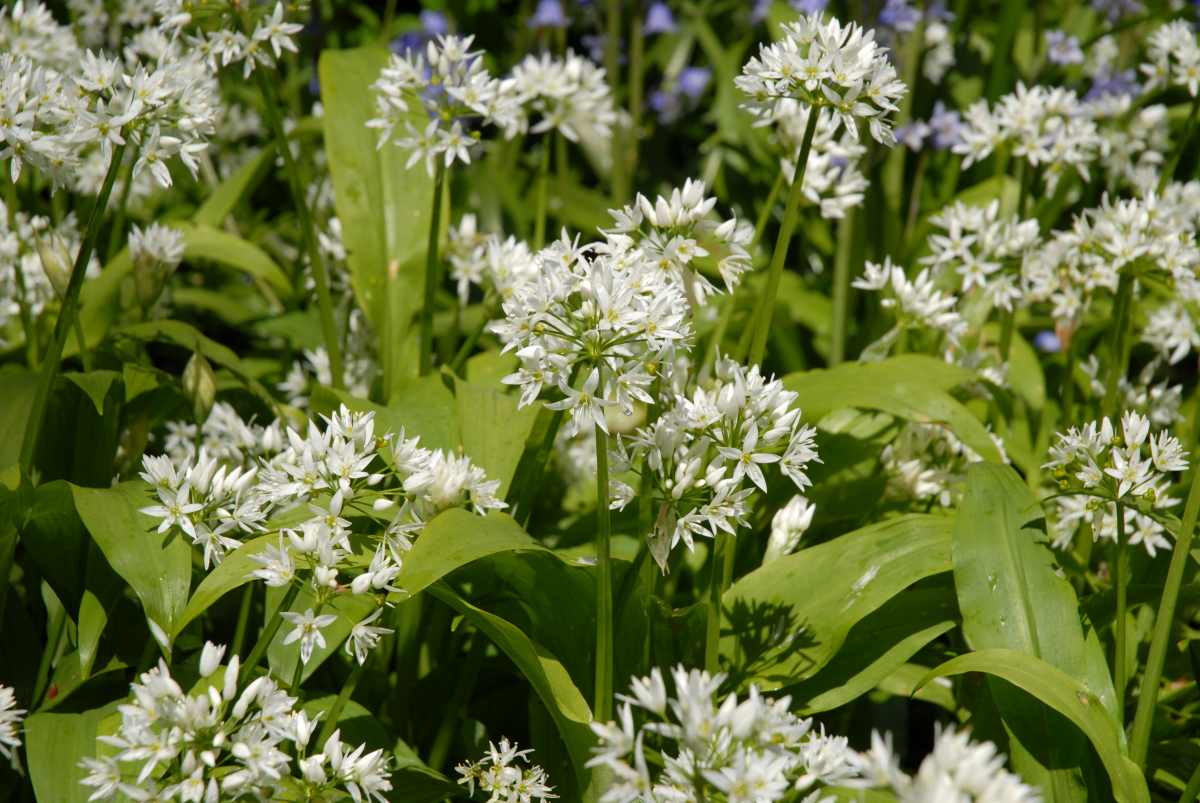
Wild garlic or ramsons (Allium ursinum) is the fastest of the native woodland bulbs to establish from seed. Broad, glossy leaves push through in late winter, followed from April to June by rounded heads of starry white flowers on stems 30 to 45cm tall, and the whole plant smells of garlic. Once settled it spreads by seed and bulb division to form dense carpets on damp ground, and is an indicator of ancient woodland in much of Britain.
Why sow wild garlic seed
Seed is the economical way to cover a large area: a single gram holds well over a hundred seeds, and at 1g per m² a 1kg pack sows around 1,000m². It suits woodland creation, wet woodland and riparian planting, shelterbelts, community orchards and estate grounds. Wild garlic also gives early nectar and pollen to hoverflies, solitary bees and other spring insects, then dies back completely by midsummer, leaving room for ferns and later woodland plants.
What to expect
Wild garlic seed needs a period of winter cold before it will germinate, so autumn sowing works with nature: the seed lies through winter and seedlings appear the following spring, occasionally not until the second spring. Young plants look like single blades of grass at first. Most reach flowering size in their second or third year, much sooner than bluebells or wild daffodils. If you want an established patch straight away, plant wild garlic bulbs or wild garlic in the green.
Where wild garlic grows
Shade or partial shade on moist, humus-rich soil that stays damp in spring: deciduous woodland, stream sides, river banks, wet hollows and north-facing hedgebanks. It does not persist in dry, sunny or open meadow ground. It can be vigorous where conditions suit it, so give it space rather than sowing it among delicate woodland flowers.
If you plan to forage, make sure you can tell wild garlic leaves from those of lily of the valley, lords-and-ladies and daffodils, all of which are poisonous. Read more in our article on growing wild garlic from bulbs and seed, or combine it with bluebell and wild daffodil in the Woodland Bulb Seed Mix.
Frequently asked questions
How long does wild garlic take to grow from seed?
Seedlings appear the spring after an autumn sowing, sometimes not until the second spring. Most plants flower in their second or third year, which makes wild garlic the quickest native woodland bulb to raise from seed.
When is the best time to sow wild garlic seed?
Late summer to late autumn. The seed needs a period of winter cold to break dormancy, so autumn sowing lets winter do the work and seedlings emerge in spring.
Where does wild garlic grow best?
In shade or partial shade on moist, humus-rich soil: damp woodland, stream sides, river banks and shaded hedgebanks. It does not persist in dry, sunny or open ground.
How much wild garlic seed do I need?
Sow at 1g per m². A 10g pack covers about 10m², 100g about 100m² and 1kg about 1,000m².
Can I pick wild garlic leaves from plants grown from seed?
Leave the plants alone for the first two years so the bulbs can build up. Once the patch is established, light picking of leaves is fine. Always be certain of identification, as lily of the valley, lords-and-ladies and daffodil leaves are poisonous.
Is wild garlic invasive?
It is native and not legally invasive, but it can spread vigorously by seed and bulb division where conditions suit it. Give it room rather than sowing it among small or delicate woodland flowers.
When to sow
Sow in late summer or autumn so the seed gets a full winter of cold. Germination follows in spring. Seed sown in spring may sit dormant until the following year.
Ground preparation
Choose shaded, moist ground. Clear bramble, nettle and dense grass and expose bare soil; leaf litter can be left. Do not add compost, manure or fertiliser.
Sowing
Scatter on the surface at 1g per m², mixed with dry sand for an even spread. Press in by treading or rolling, or cover lightly (no more than 1-2cm) with leaf mould or fine soil.
Year 1
Thin, grass-like seedlings appear in spring and die back by early summer. Keep coarse weeds down and do not let the ground dry out in spring. Do not pick leaves in the first two years.
Year 2 onwards
Plants usually flower in their second or third year. Let them seed and die back naturally; no cutting is needed. Light leaf picking is fine once the patch is well established.
- Type: Bulbous perennial (supplied as seed)
- Height: 30-45cm
- Flowers: April-June
- Best Sown: Late summer to late autumn
- Sowing Rate: 1g per m²
- Time to flower from seed: 2-3 years
- Soil Requirement: Moist, humus-rich
- Light Requirement: Shade or partial shade
- Natural Habitat: Damp woodland, stream sides, river banks, wet hollows
- Also known as: Ramsons, bear’s garlic, wood garlic, broad-leaved garlic
- Origin: UK native