

What is a Seed Mat?
What is Improver?
Lily of the Valley Pips for Spring Planting (Convallaria majalis)
£164.16 – £648.00Price range: £164.16 through £648.00 inc VAT
Native lily of the valley supplied as pips for spring planting. Fragrant white bells in May and June for shade. All parts are poisonous.
Spring season: order now for despatch from January to April, as plants are lifted in the green. We pack and send each order as soon as the plants are ready.
Free download: Spring planting guide for bulbs in the green (PDF) – what arrives, the 48-hour rule and planting depths.
🚚 UK delivery £5.95 per order
Larger area or a bespoke mix? Ask us for a quote →
About this product
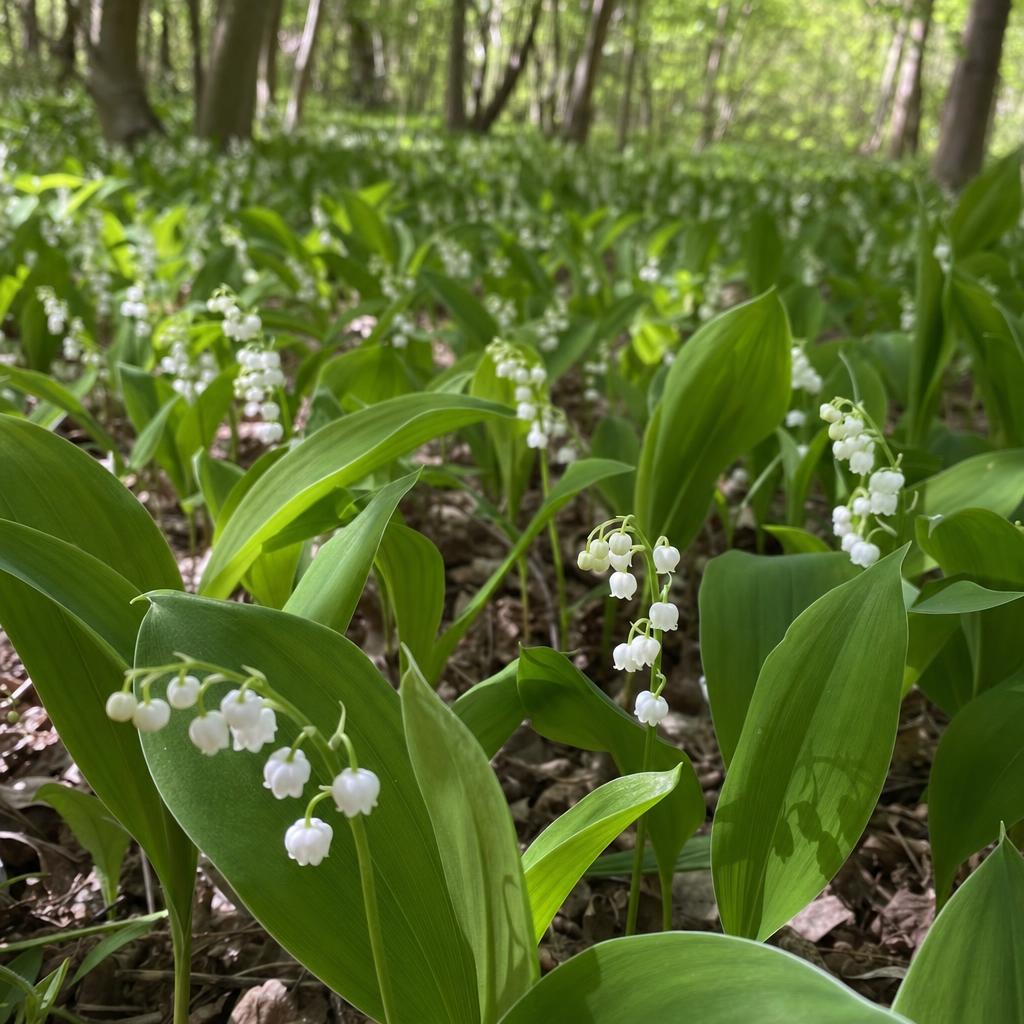
Lily of the valley (Convallaria majalis) carries sprays of small, waxy white bells with a famously sweet scent in May and June, above broad, paired leaves. It is native to Britain, growing wild in dry ash woodland on limestone, and spreads into ground-covering colonies in shade.
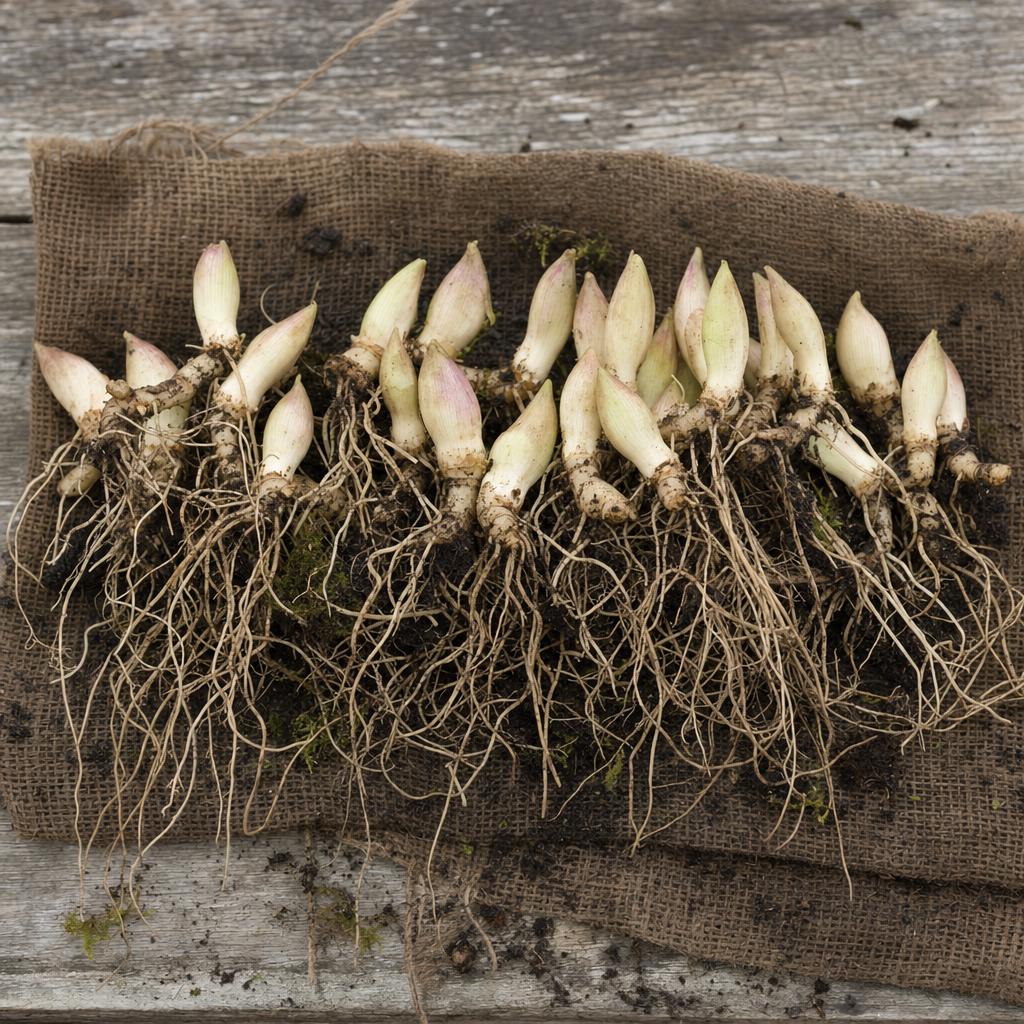
It is supplied as pips: single rhizome crowns with roots attached, dormant or just starting to shoot. Pips are planted in late winter and early spring and usually flower from the first or second year.
Plant on arrival with the tips just below the surface, about 2–3cm deep, and 10cm apart, in humus-rich, moist but well-drained soil in shade or part shade. Water in and keep moist while they establish. Once settled, it spreads steadily by its rhizomes.
All parts of lily of the valley are poisonous to people and pets. Its leaves can be mistaken for wild garlic, so don’t plant the two together where anyone forages.
Frequently asked questions
What are lily of the valley pips?
Pips are single rhizome crowns with roots attached, the usual way lily of the valley is sold. Each pip produces a shoot and, once established, a flowering stem.
How deep should I plant lily of the valley pips?
Plant with the pointed tips just below the soil surface, about 2–3cm deep and 10cm apart, in humus-rich soil in shade or part shade.
Is lily of the valley poisonous?
Yes. All parts are poisonous to people and pets. The leaves can be confused with wild garlic, so keep the two apart where people forage.
Is lily of the valley native to Britain?
Yes. It grows wild in dry ash woodland, particularly on limestone, though many garden plants are from cultivated stock.
Flowers: May – June
Height: 20–25cm
Supplied as: Pips (rhizome crowns with roots)
Planting depth: Tips 2–3cm below the surface
Plant: On arrival, February to April
Despatched: February to March
Origin: UK native