

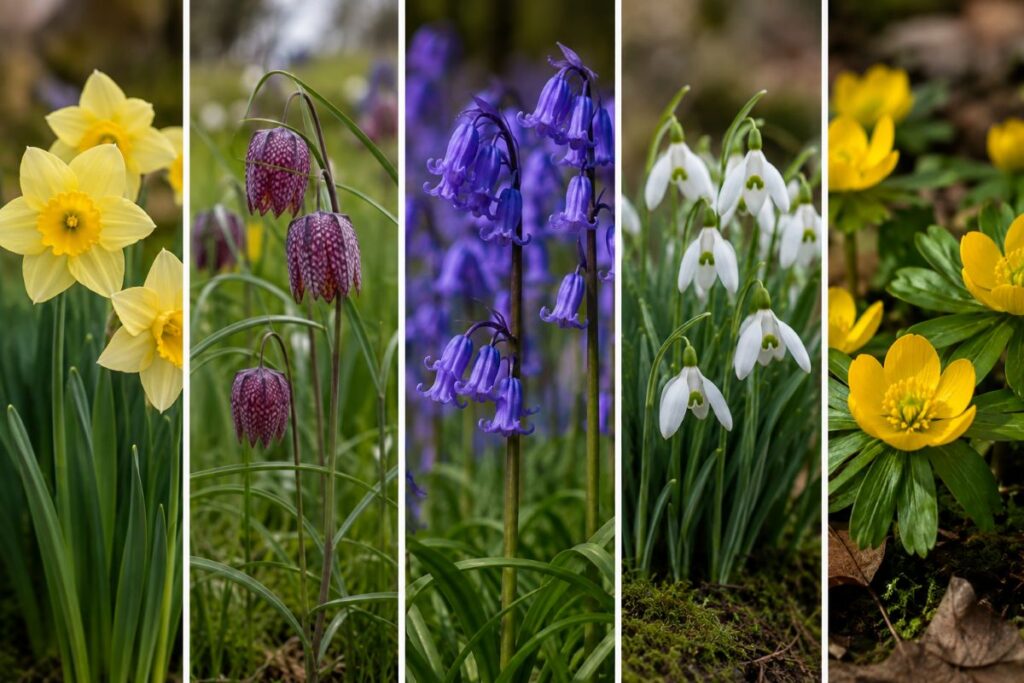
Planting Wildflower Bulbs: A Practical Guide to Native Bulbs for Grass, Hedges and Shade
Planting wildflower bulbs in autumn is the simplest way to bring colour to a meadow, a hedge bank or a shady corner months before anything else is flowering. A drift of wild daffodils under a field hedge in March, snowdrops along a woodland edge in February, bluebells beneath trees in May: these are the plants that carry a wild garden through the lean end of winter, and they feed the first queen bumblebees of the year.
Bulbs are also among the most forgiving things you can plant. Get them into the ground at the right depth in the right place and most will come back every year, slowly spreading by offsets and seed. Get the place wrong, and they will sulk or quietly disappear. This guide covers which wildflower bulbs suit which ground, when and how deep to plant them, how to make drifts look natural rather than planted, and how to manage the grass around them so they keep coming back.
The planting window is now. Most native bulbs go in from September to November, and a few can wait until December. Here is how to make the most of it.
Which wildflower bulbs suit which ground?
The single biggest factor in success with bulbs is matching the plant to the place. Native bulbs have evolved for particular habitats, and they do best when you give them something similar.
Grass and meadows
These bulbs flower early, before the grass grows tall, and die back before the hay cut. They are the natural partners for a wildflower meadow or a patch of rough lawn.
- Wild daffodil (Narcissus pseudonarcissus), the Lent lily. Pale petals around a deeper yellow trumpet, flowering March to April. Happy in grass, orchards and open woodland.
- Tenby daffodil (Narcissus obvallaris). A compact, all-yellow daffodil long associated with Pembrokeshire. Tough, wind-resistant and good in short grass and on rocky ground.
- Wild tulip (Tulipa sylvestris). Slender, scented yellow flowers in March and April. It likes well-drained ground and naturalises in grass and borders.
- Snake’s head fritillary (Fritillaria meleagris). Chequered purple bells in April. A plant of damp, flood meadows, so it needs moisture through spring. It is included in our woodland wildflower bulb collection.
Woodland, hedges and shade
These bulbs flower before the tree canopy closes over, using the spring light, then rest through summer in the shade.
- Bluebell (Hyacinthoides non-scripta). The native English bluebell, flowering April to June under deciduous trees, along hedge bottoms and in shaded borders.
- Snowdrop (Galanthus nivalis). Long established in British woods, churchyards and stream banks, flowering February to March. Best in moist, humus-rich soil at a woodland edge.
- Wood anemone (Anemone nemorosa). Starry white flowers in April and May, a classic plant of old woodland. Slow to spread, but long-lived.
- Wild garlic (Allium ursinum), or ramsons. White flowers from April, with edible spring leaves. It loves damp shade and spreads vigorously, so plant it where it can have room.
Non-native bulbs worth knowing about
We also sell two well-behaved non-native bulbs that are useful for very early or very late colour. Winter aconite (Eranthis hyemalis) gives yellow flowers in January and February, among the earliest food for bees. Hardy cyclamen (Cyclamen hederifolium) flowers in autumn in dry shade under trees. Both naturalise without becoming a nuisance, but they are not native, so we keep them to gardens rather than recommending them for conservation sites.
When to plant wildflower bulbs
Most wildflower bulbs should be planted in autumn, from September to the end of November. Planting early gives them time to grow roots while the soil is still warm, which leads to better flowering in their first spring.
- September to November: snowdrops, bluebells, winter aconite, wood anemone, wild garlic, daffodils and fritillaries.
- September to December: wild tulips, which are happy to go in later than the rest.
- August to October: hardy cyclamen, which flowers in autumn and does best planted early.
Dry bulbs and tubers lose condition if they sit around for too long, especially small ones such as winter aconite and snowdrops. Plant them as soon as you can after they arrive. If you have to wait a few days, keep them somewhere cool, dry and airy, never in a sealed bag.
Avoid planting into waterlogged or frozen ground. If the soil is too wet, wait a few days for it to drain.
How deep to plant wildflower bulbs
The general rule is to plant a bulb at two to three times its own height, measured to the base of the bulb. Too shallow and bulbs dry out, get dug up or split into small non-flowering offsets. Too deep and they use up their energy before reaching the surface.
| Bulb | Planting depth | Spacing | Flowers |
|---|---|---|---|
| Wild daffodil | 10–15 cm | 10–15 cm | March–April |
| Tenby daffodil | 8–10 cm | 10 cm | March–April |
| Wild tulip | 10–15 cm | 10–15 cm | March–April |
| Snake’s head fritillary | 10–15 cm | 10 cm | April |
| Bluebell | 5–8 cm | 10 cm | April–June |
| Snowdrop | 5–8 cm | 5–10 cm | February–March |
| Wild garlic | 3–5 cm | 10 cm | April–June |
| Wood anemone | about 5 cm, laid flat | 5–10 cm | April–May |
| Winter aconite | about 5 cm | 5–10 cm | January–February |
| Hardy cyclamen | about 5 cm | 5 cm or more | September–November |
Plant bulbs with the pointed end, or nose, upwards. If you can’t tell which way is up, plant the bulb on its side and it will right itself. Wood anemone rhizomes look like small twigs; lay them horizontally. Cyclamen tubers go in with the smooth, rounded side down and the slightly hollow side facing up.
Planting bulbs in grass and wildflower meadows
Bulbs planted into existing grass are the best way to add spring colour to a meadow without disturbing it. There are three ways to do it.
The bulb planter
A long-handled bulb planter takes out a plug of turf and soil. Drop the bulb in nose up, crumble a little loose soil over it, then replace the plug and firm it down with your foot. It is quick for larger bulbs such as daffodils and tulips.
The turf flap
For small bulbs such as snowdrops and fritillaries, cut an H shape in the turf with a spade, peel back the two flaps, loosen the soil underneath to the right depth, set the bulbs in, and fold the turf back over. You can plant a group of bulbs in one go this way.
Planting with a trowel or spade
For scattered bulbs, a narrow trowel or a spade pushed in and rocked back and forth makes a slot for each bulb. Drop it in, close the slot with your heel, and move on.
Whichever method you use, don’t add bonemeal, compost or fertiliser to the planting hole. Wildflower bulbs don’t need feeding, and extra nutrients in a meadow feed the grass at the expense of the wildflowers. The same rule applies throughout our guide on how to establish a wildflower meadow.
How to make drifts look natural
Wild bulbs grow in loose, uneven drifts that thicken towards the middle and thin out at the edges. Rows or neat circles look planted and never quite settle into the landscape. A few simple habits make all the difference.
- Scatter and plant where they land. Gently toss a handful of bulbs across the area and plant each one where it falls. Move any that land touching.
- Plant in groups. Clusters of six to ten bulbs read better from a distance than single bulbs dotted about. Aim for at least ten bulbs per square metre for snowdrops and wild garlic.
- Follow the landscape. Run drifts along a hedge line, down a slope, around the base of a tree or beside a path, the way they would spread naturally.
- Leave gaps. Uneven spacing, with some denser patches and some sparse ones, looks far more natural than an even carpet.
Buying bulbs in larger quantities makes a bigger difference than you might expect. Our wildflower favourites collection combines bluebell, snowdrop and winter aconite in equal numbers, for a run of colour from January to June.
Looking after wildflower bulbs after flowering
This is where most bulb plantings succeed or fail. After flowering, bulbs rely on their leaves to rebuild their energy for next year. Cut the leaves too early and they flower less, then fade away.
- Leave the leaves for at least six weeks after flowering, or until they turn yellow and flop. Don’t tie or plait daffodil leaves; it reduces the light they can use.
- Delay mowing in lawns. If you have bulbs in a lawn, mow around them, or leave that area uncut until early summer. This fits neatly with No Mow May.
- Time the meadow cut. In a wildflower meadow, the usual hay cut in late July or August comes long after the bulbs have died back, so meadow bulbs and meadow flowers work well together. Fritillaries also need time to ripen their seed, which they do by early summer.
- Let them seed. Bluebells, fritillaries and snowdrops spread by seed as well as by offsets. Leaving the seed heads to ripen helps a planting thicken up over the years.
From then on, wildflower bulbs need very little. Our guide to starting a wildflower meadow in a garden covers the cutting routine that suits bulbs and wildflowers together.
Bluebells: a note on the native species
The native English bluebell is in decline in some places, partly because it hybridises with the Spanish bluebell and its hybrids, which are common in gardens. The native plant has narrow leaves, deep violet-blue flowers hanging mostly to one side of a drooping stem, and a sweet scent. Spanish and hybrid bluebells are paler, more upright, with flowers all round the stem and little scent.
To protect native populations:
- Plant only native bluebells near woodland and hedgerows.
- Don’t plant Spanish or hybrid bluebells in the same garden as native ones.
- Buy only from suppliers who sell cultivated or legally sourced bulbs. Never dig bulbs from the wild; wild bluebells are protected by law.
Our bluebell bulbs are true Hyacinthoides non-scripta, lifted under licence.
What to expect in the first few years
Be patient. Many bulbs flower lightly in their first spring, especially if they went in late, and build up from there.
- Year one: daffodils and tulips usually flower well. Snowdrops, aconites and wood anemones may be sparse while they settle.
- Years two and three: clumps thicken as bulbs produce offsets. Snowdrops and bluebells start to fill out.
- Year four onwards: self-sown seedlings start to flower, and drifts begin to spread on their own. Bluebells grown from seed take about five years to flower, so a planting keeps improving for many years.
Squirrels and mice sometimes dig up freshly planted bulbs, especially tulips. Firming the soil well after planting and laying a piece of chicken wire over small plantings until spring both help. Daffodils are rarely touched because they are poisonous to rodents.
Bulbs for different sites at a glance
- Wildflower meadow or rough grass: wild daffodil, Tenby daffodil, wild tulip, fritillary (if damp).
- Hedge bottoms and banks: bluebell, snowdrop, wild daffodil. Pair with our hedgerow and banks wildflower mix.
- Under trees and in woodland: bluebell, wood anemone, wild garlic, snowdrop, winter aconite. Pair with our woodland and heavy shade mix for summer flowers.
- Damp ground: snake’s head fritillary, wild garlic. Pair with our wetland and pond mix.
- Dry shade: hardy cyclamen, winter aconite.
Our wildflower bulbs
We supply native and naturalising bulbs as dry bulbs, tubers and rhizomes for autumn planting, in pack sizes from small garden quantities to larger amounts for estates and projects. If you want several species in one go, our woodland wildflower bulb collection brings together wild daffodil, snake’s head fritillary, bluebell, snowdrop and winter aconite: 185 bulbs for shaded and damper ground.
Bulbs and seed work best together. Plant bulbs this autumn and sow a wildflower mix at the same time, and you will have flowers from late winter through to the end of summer. Browse the full range of wildflower bulbs for autumn planting, or see our wildflower seeds to pair with them.
Plant this autumn
Bulbs planted between now and the end of November will be flowering by next spring. Pick the species that suit your ground, plant them in loose drifts at the right depth, and leave the leaves to die back naturally. If you’re planning a larger planting, or want help choosing bulbs and seed for a particular site, ask us and we’ll suggest the right mix and quantities.
Frequently Asked Questions
When is the best time for planting wildflower bulbs?
Plant most wildflower bulbs from September to the end of November, while the soil is still warm enough for roots to grow. Wild tulips can go in until December, and hardy cyclamen is best planted from August to October. Plant dry bulbs as soon as possible after they arrive.
How deep should I plant wildflower bulbs?
Plant bulbs at two to three times their own height. In practice that means about 10–15 cm for wild daffodils and tulips, 5–8 cm for bluebells and snowdrops, and around 5 cm for winter aconite, wood anemone and cyclamen.
Can I plant bulbs in a wildflower meadow?
Yes. Early bulbs such as wild daffodils, wild tulips and snake’s head fritillaries flower before the grass grows tall and die back well before the late-summer hay cut. Plant them into the turf with a bulb planter or under a turf flap, and don’t add fertiliser.
Should I add bonemeal or compost when planting bulbs?
No. Wildflower bulbs don’t need feeding. In a meadow or rough grass, extra nutrients encourage vigorous grass that crowds out wildflowers. Plant bulbs straight into the existing soil.
When can I mow over bulbs in my lawn?
Wait at least six weeks after flowering, or until the leaves turn yellow and die back. The leaves feed the bulb for next year, so cutting them early leads to fewer flowers. Mow around clumps or leave that part of the lawn uncut until early summer.
How do I tell native bluebells from Spanish bluebells?
Native bluebells have deep violet-blue flowers hanging mostly to one side of a drooping stem, narrow leaves and a sweet scent. Spanish and hybrid bluebells are paler, stand upright with flowers all round the stem, and have little scent.
How long do wildflower bulbs take to spread?
Most bulbs flower in their first spring and thicken into clumps over two to three years. Self-sown seedlings take longer: bluebells grown from seed need about five years to flower. A well-placed planting keeps improving for many years.
Ready to get started?
Shop: Traditional Wildflower Meadow Mix →