

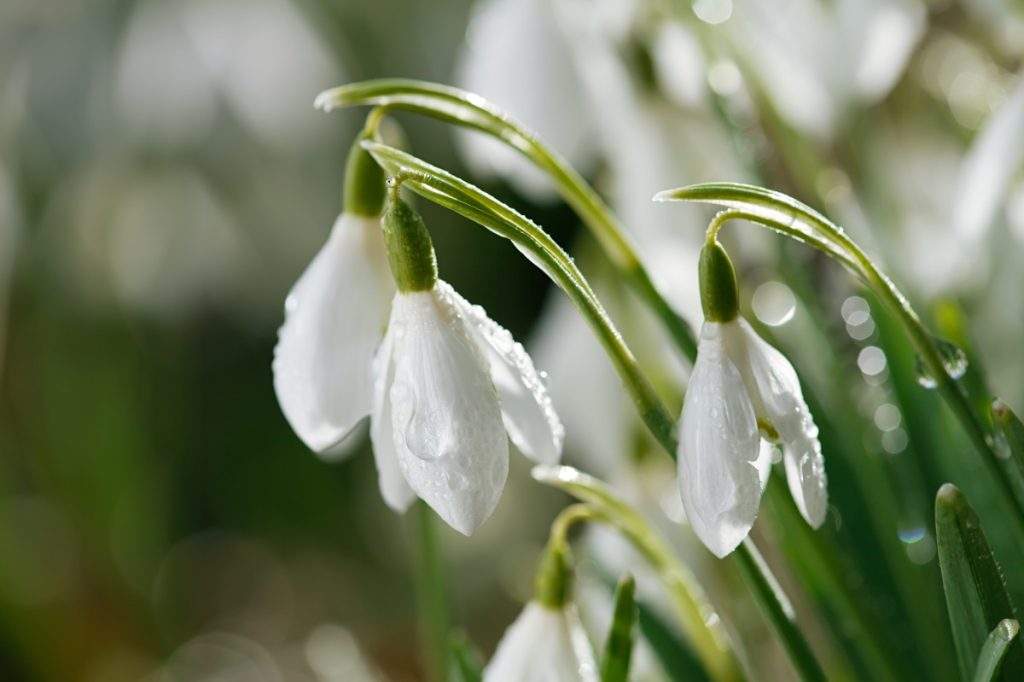
How to Plant Snowdrop Bulbs: Dry Bulbs or In the Green
Snowdrops are the first real sign that the year has turned. A good drift under trees in late January does more for a winter landscape than almost anything else you can plant, and once settled it keeps spreading for decades. The catch is that snowdrops are fussier at the start than most bulbs. Knowing how to plant snowdrop bulbs properly, and when, is the difference between a thin scatter that fades out and a colony that thickens every year.
This guide covers the two ways snowdrops are planted, dry bulbs in autumn and plants “in the green” in late winter, along with the ground they like, planting depth and density, how to look after them in grass, and how to bulk them up once they are growing. It is written for people planting at scale as well as in gardens: woodland edges, churchyards, orchards, estate grounds and shaded borders.
One point of honesty first. The common snowdrop (Galanthus nivalis) is so familiar in British woods that most people assume it is native. Botanists generally consider it a very early introduction that has naturalised over several centuries rather than a strictly native plant. It is a well-behaved, long-established part of our flora, it does not displace native woodland plants, and it gives early bees one of the first meals of the year, but it belongs in gardens, parkland and managed woodland rather than in semi-natural ancient woodland or on a restoration site where a strictly native species list matters.
How to plant snowdrop bulbs: dry bulbs or in the green?
Snowdrops are sold in two forms, and each has its place.
Dry snowdrop bulbs (autumn)
Dry bulbs are lifted when dormant in early summer, dried and sold from late summer through autumn. They are cheaper, easier to post and store, and easier to plant in quantity. Their weakness is that snowdrop bulbs are small and have a thin protective tunic, so they lose moisture faster than daffodils or tulips. A bulb that has sat warm and dry for weeks will often produce leaves but no flower in its first Spring, or fail altogether.
The answer is simple: buy from a supplier who handles them properly, plant them as soon as they arrive, and do not leave the bag in a warm shed. Firm, heavy bulbs are good. Soft, shrivelled or very light bulbs are not. If you cannot plant for a few days, keep them cool and in a paper bag rather than plastic. Some growers soak dry bulbs in water for a few hours before planting to rehydrate them; it does no harm, but it will not rescue a bulb that has already dried right out.
Snowdrops in the green (late winter)
“In the green” means plants lifted just after flowering, with leaves still on, and replanted straight away. This is usually late February into March. Because the plants are actively growing, they establish quickly and most flower well the following winter. Many experienced gardeners prefer this method for that reason.
The downsides are cost, a short window, and handling: plants in the green are heavier to post and must go in the ground within a day or two of arrival. They are also the method used for dividing your own clumps, which we cover below.
Which to choose
- Planting a large area on a budget: fresh dry bulbs in early autumn. Order early and plant on arrival.
- Planting a smaller, high-value spot where you want flowers next winter: in the green in late winter.
- Bulking up existing clumps: lift and divide in the green, every few years.
Both methods work. The bulbs themselves are identical; what differs is how much moisture they have lost before they reach the soil.
When to plant snowdrops in the UK
The planting window depends on the form you buy.
- Dry bulbs: September to November. Earlier is better. Bulbs planted in September have time to root before the soil cools; bulbs planted in late November will usually still flower but may be thinner in their first year.
- In the green: from the end of flowering, usually mid-February to the end of March, depending on how early your site is.
Avoid planting into frozen or waterlogged ground. If the soil is unworkable when your bulbs arrive, pot them temporarily in moist compost in a cool, sheltered spot and plant out when conditions allow. For a wider view of when each native bulb goes in, see our native bulb planting calendar.
Where snowdrops grow best
Snowdrops are woodland-edge plants. They do their growing from late Autumn to Spring, when deciduous trees are bare and light reaches the ground, then die back into dormancy as the canopy closes. Match that pattern and they thrive.
Light
Dappled or part shade under deciduous trees and shrubs is ideal: oak, beech, hazel, field maple, fruit trees, hedge bottoms. They tolerate full sun in Winter as long as the ground does not bake hard in Summer. Deep year-round shade under evergreens such as conifers, laurel or holly is poor ground.
Soil
Snowdrops want soil that stays moist through Winter and Spring but does not sit waterlogged, with plenty of organic matter. Leaf-litter woodland soil is the model.
- Clay: good, provided it drains. Heavy, wet clay that holds standing water rots bulbs. Plant slightly shallower and work leaf mould into the planting holes.
- Chalk and limestone: good. Snowdrops are common on chalky woodland soils.
- Light sand and gravel: workable but dries out in Summer, which stresses dormant bulbs. Mulch with leaf mould and plant where tree roots are not taking all the moisture.
- Acid soils: tolerated where there is enough organic matter.
Our guide to matching native bulbs to soil types goes into more detail on reading your ground before you buy.
Snowdrops do not need feeding. On rich, fertilised ground the surrounding grass and weeds grow away from them, which is the opposite of what you want. Low-nutrient conditions keep the competition down, the same principle that underpins any wildflower planting.
Planting depth, spacing and density
How deep to plant snowdrop bulbs
Plant dry bulbs 5–8cm deep, measured to the base of the bulb. That is roughly three times the height of the bulb. On heavy clay, stay towards 5cm; on light soil, go towards 8cm.
Plants in the green show their old planting depth clearly: the leaves are white at the base where they were underground and green above. Replant so the white section is buried and the soil line sits where the white turns to green.
Spacing and numbers
Snowdrops look their best in groups, never singly or in lines. Plant in clumps of 10 to 25 bulbs, setting bulbs a few centimetres apart within each clump, and space the clumps irregularly. For a drift across an area, work on at least 10 bulbs per square metre to start; 25–50 per square metre gives a fuller effect sooner. Over a few years, offsets and self-sown seedlings fill the gaps.
Making drifts look natural
The old trick still works best: throw handfuls of bulbs gently across the area and plant them where they land, nudging only those that touch. Concentrate numbers towards the base of trees and along edges, and let them thin out towards open ground. That mirrors how a colony spreads on its own. Our wildflower bulb planting guide covers drift planting in more depth.
Planting step by step
- Clear any thick grass or weeds from the immediate planting spots. In established grass, cut or lift a small flap of turf rather than stripping a whole area.
- Use a narrow trowel or bulb planter to open a hole to the right depth. In grass, a wider hole for a whole clump is quicker than individual holes.
- Set dry bulbs pointed end up. If you cannot tell which end is which, plant them on their side; they will sort themselves out.
- Backfill with the soil you removed, mixed with a little leaf mould on poor or heavy ground, and firm gently.
- Water in only if the soil is dry. Mark the areas so you do not dig into them later in the year when nothing shows above ground.
Snowdrops in grass, orchards and meadows
Snowdrops naturalise well in grass, which makes them useful for orchards, churchyards, parkland and the uncut margins of lawns. The rule that matters is the mowing date.
After flowering, the leaves keep photosynthesising for roughly six weeks, building up the bulb for next year. Cut them off early and the colony weakens. Leave the grass uncut until the snowdrop leaves have yellowed and collapsed, usually by late April or May. That fits neatly with a spring meadow regime and with a standard July hay cut on a wildflower meadow, so snowdrops can sit happily at the edges of a meadow or under scattered trees within it.
Avoid planting snowdrops into dense, vigorous grass on fertile ground. The grass smothers the leaves in Spring. Finer, less productive swards on poorer soil suit them far better. If you are creating new grassland around trees or a woodland edge, a low-nutrient seed mix such as our woodland and heavy shade wildflower mix gives snowdrops a much easier start than a rye-grass lawn.
Looking after snowdrops and helping them spread
The first year
Expect a modest show the first winter after planting dry bulbs, especially if they were planted late. Leaves without flowers are common in year one and not a sign of failure. Most bulbs flower properly in their second season. Plants put in the green usually flower well the following winter.
Ongoing care
- Do not cut or tie leaves until they die back naturally.
- Do not fertilise. A thin mulch of leaf mould in Autumn on poor soil is all they need.
- Keep competing vegetation such as brambles and nettles from overwhelming clumps, cutting back in late Summer when snowdrops are dormant.
- Avoid digging, rotavating or compacting the ground over them while they are dormant.
Lifting and dividing in the green
Snowdrops increase by offsets, forming dense clumps, and by seed, which ants carry short distances. Seed is slow: a seedling can take three or four years to flower. Dividing clumps is much faster.
- Every three to five years, once flowering has finished and while the leaves are still green, lift a congested clump with a fork, keeping as much soil and root as possible.
- Tease it apart into smaller groups of three to five bulbs. Do not separate every bulb.
- Replant immediately at the same depth, spreading the groups across new ground.
A few well-established clumps divided this way can stock a large area within a decade, at no extra cost.
Common problems and how to avoid them
- Bulbs failing to come up: almost always bulbs that had dried out before planting, or waterlogged ground. Buy fresh, plant promptly, and avoid wet hollows.
- Leaves but no flowers: normal in the first year from dry bulbs. If it persists, clumps may be congested and need dividing, or shade may be too deep.
- Clumps thinning out: early mowing, heavy grass competition, or Summer drought on light soil. Change the cutting date and mulch.
- Bulbs dug up: squirrels and badgers occasionally disturb freshly planted bulbs. Firm the soil well and remove obvious loose bulb tunics from the surface.
- Grey mould and bulb rot: found in very wet, poorly drained sites. Lift and discard affected bulbs and replant clean stock elsewhere.
One safety note: all parts of the snowdrop are toxic if eaten, and the sap can irritate sensitive skin. Wear gloves if you are handling large numbers, and keep bulbs away from children and pets before planting.
Buying snowdrops responsibly
Wild-collected snowdrop bulbs were once traded in huge numbers from wild populations elsewhere in Europe and Asia, damaging the colonies they came from. Snowdrop species are now covered by international trade controls, and responsible suppliers sell cultivated, nursery-grown stock. Whoever you buy from, ask where the bulbs were grown and how they are stored. It is also illegal in Britain to dig up any wild plant without the landowner’s permission, so never take snowdrops from the wild.
Our snowdrop bulbs
Our common snowdrop bulbs (Galanthus nivalis) come from trusted British growers and are sent as fresh dry bulbs for autumn planting. They are the right choice for naturalising under trees, along woodland edges and in grass that is left uncut until late Spring.
For variety within a planting, the double snowdrop gives a fuller flower, while the giant snowdrop (Galanthus elwesii) and Woronow’s snowdrop suit gardens and borders. For a naturalistic woodland floor, keep to the common snowdrop and pair it with winter aconite for yellow alongside the white, then wood anemone and native bluebells to carry the display into Spring. The deluxe woodland wildflower bulb collection puts several of these together.
Plan your snowdrop planting
If you have trees, a hedge bottom or a shaded corner, there is still time to get dry snowdrop bulbs in this Autumn, and late Winter brings the chance to plant in the green. Browse our spring bulbs to plan a planting that runs from January to May. For larger sites such as estates, churchyards or community woodlands, get in touch and we will help you work out quantities and a sensible planting plan for your ground.
Frequently Asked Questions
When is the best time to plant snowdrop bulbs in the UK?
Plant dry snowdrop bulbs from September to November, as early as you can, because they dry out quickly in storage. Plants lifted “in the green” go in after flowering, usually from mid-February to the end of March. Both methods work; dry bulbs are cheaper for large areas, while plants in the green establish faster and usually flower well the following winter.
How deep should you plant snowdrop bulbs?
Plant dry snowdrop bulbs 5–8cm deep, measured to the base of the bulb, which is about three times the bulb’s height. Stay nearer 5cm on heavy clay and nearer 8cm on light soil. When planting in the green, bury the white part of the stem and keep the green leaves above ground.
What does “snowdrops in the green” mean?
It means snowdrops lifted and replanted just after flowering, while the leaves are still green and growing. Because the plants are active, they settle in quickly and lose less moisture than dry bulbs. It is the preferred method for dividing your own clumps and for planting smaller areas where you want a reliable display the next winter.
Can you plant snowdrops in a lawn?
Yes. Snowdrops naturalise well in grass, especially finer swards on poorer soil. The key is to leave the grass uncut until the snowdrop leaves have yellowed, usually late April or May. Mowing earlier starves the bulbs and the display will decline over a few years. Avoid lush, heavily fertilised lawns, where grass smothers them.
Why are my snowdrops not flowering?
In the first year after planting dry bulbs, leaves without flowers are normal. If snowdrops still do not flower after two or three years, the usual causes are clumps so congested they need dividing, shade that is too deep, early mowing that cuts the leaves before they recharge the bulb, or bulbs that were dried out before planting.
Do snowdrops spread on their own?
Yes, slowly. Bulbs form offsets that build into clumps, and seeds are carried short distances by ants. Seedlings take three or four years to flower. To spread them faster, lift and divide congested clumps in the green every three to five years, replanting small groups across new ground.
Are snowdrops native to Britain?
The common snowdrop is widely naturalised and has been part of British woods and gardens for centuries, but most botanists consider it an early introduction rather than strictly native. It is well suited to gardens, parkland and managed woodland, and feeds early bees, but avoid adding it to ancient woodland or restoration sites where only native species are wanted.
Ready to get started?
Shop: Traditional Wildflower Meadow Mix →