

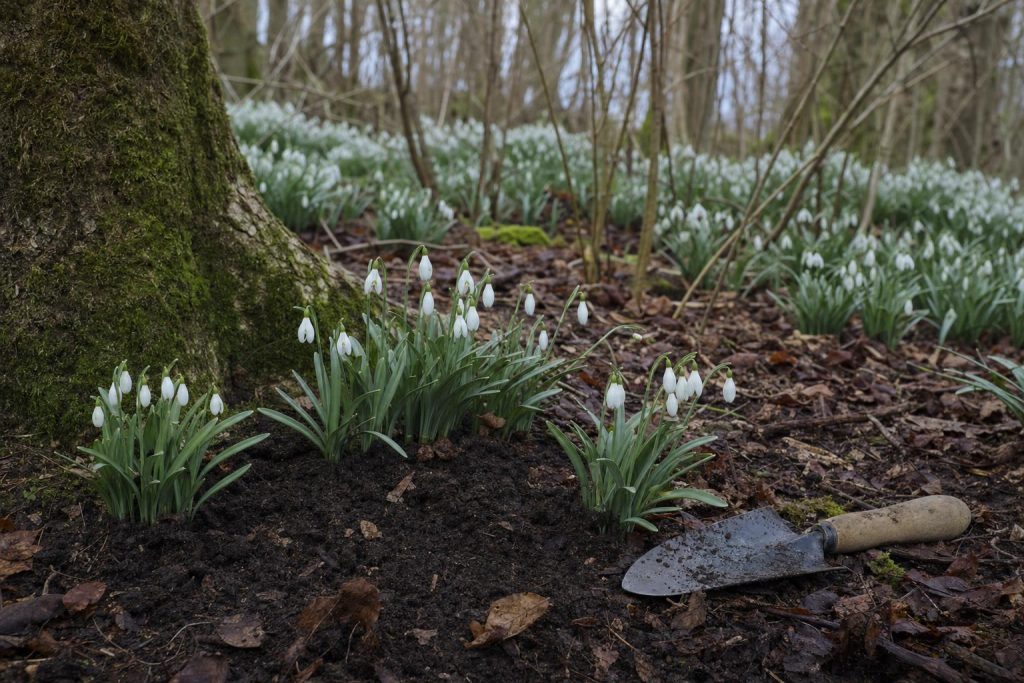
What Arrives in the Box: Native Wildflower Bulbs, Tubers and Plants in the Green
Quick answer: Our native bulbs arrive in one of six forms: dry bulbs (bluebell, snowdrop, wild daffodil), tubers (wild cyclamen, winter aconite), rhizomes (wood anemone), pips (lily of the valley), corms or bulbs sent in the green, which are lifted in leaf in late winter. Dry stock arrives from September to November and should feel firm, not soft or mouldy. In-the-green stock arrives from February with leaves that may look tired. Plant either type as soon as you can, and keep anything waiting cool, dark and airy.
Opening a box of native bulbs for the first time can be a surprise. A sack of wood anemone rhizomes looks like a handful of twigs. Winter aconite tubers look like gravel. Snowdrops in the green arrive as a bundle of wilting leaves wrapped in damp paper. None of that means anything is wrong.
This guide explains what each of our bulbs looks like when it arrives, how to tell healthy stock from poor stock, what to do on the day the box lands, and how long each type can safely wait. It sits alongside our main guide to planting wildflower bulbs and the native bulb planting calendar, which covers timing month by month.
Free printable planting guides
Autumn planting guide: dry wildflower bulbs (PDF)
Spring planting guide: bulbs in the green (PDF)
Why native bulbs arrive in different forms
Every plant in our range stores energy underground through the dormant season, but not all of them do it in a true bulb. The form a plant arrives in depends on its storage organ and on how well that organ copes with being out of the ground.
- True bulbs (bluebell, snowdrop, wild daffodil, snake's head fritillary, wild garlic, summer snowflake, wild tulip) are layered, like an onion. They hold moisture well and travel dry in autumn.
- Tubers (wild cyclamen, winter aconite) are solid, swollen stems with no protective layers. They dry out faster.
- Rhizomes (wood anemone) are creeping underground stems. Dry, they look like brown twigs.
- Pips (lily of the valley) are single crowns with a fringe of roots, cut from a spreading rootstock.
- In the green means the plant is lifted while still in leaf, usually just after flowering, and sent straight out to be replanted.
The forms that dry out easily are the ones that most benefit from careful handling, and in some cases from being bought in the green instead.
Dry bulbs: what to expect in autumn
Dry bulbs are despatched from September to November, which is the planting window for most of the range. They come in breathable bags or nets, never sealed plastic.
What healthy dry bulbs look like
- Firm when squeezed, like a fresh onion
- A papery outer skin (tunic) that may be loose, flaking or missing in places
- A slightly pointed top (the nose) and a flatter base where roots will form
- Sometimes small white root tips or a short green shoot, especially later in the season
Native bulbs are smaller than garden-centre bulbs. A native bluebell bulb is often the size of a fingertip, and a snowdrop bulb smaller still. That is normal for wild species, not a sign of poor quality.
What to watch for
- Soft or squashy bulbs: a sign of rot. Remove them so it doesn't spread.
- Blue-green mould: surface mould on the tunic usually wipes off and the bulb is fine underneath. If the flesh beneath is soft or brown, discard it.
- Shrivelled, hollow bulbs: these have dried out too far.
A few imperfect bulbs in a large pack is normal with wild-type stock. If more than a small handful are soft or dried out, contact us with a photo and we'll put it right.
Bulbs in this group
- Bluebell bulbs (Hyacinthoides non-scripta): small, white and often elongated
- Snowdrop bulbs (Galanthus nivalis) and double snowdrops: small, pale brown, rounded
- Wild daffodil and Tenby daffodil: brown, papery, smaller than garden daffodils
- Wild garlic bulbs (Allium ursinum): narrow, white and easily bruised
- Snake's head fritillary: small, white, made of two fleshy scales that can split apart
- Summer snowflake: larger and rounder, with a brown tunic
- Wild tulip: small, chestnut brown and pointed
Fritillary and wild garlic bulbs have thin or no tunics and dry out faster than the rest. Plant these first.
Tubers, rhizomes and pips
These are the forms most likely to make people think they've been sent the wrong thing.
Wild cyclamen tubers
Wild cyclamen tubers are flat, brown discs, a little like a small, dry biscuit. The top is slightly concave or flat and is where leaves and flowers emerge. The base is rounded. Roots grow mainly from the top and sides, so plant them concave side up, only just covered with soil or leaf litter.
Winter aconite tubers
Winter aconite tubers look like small, knobbly, dark brown pebbles. They are hard to tell top from bottom, so plant them on their side. Soak them in water overnight before planting to rehydrate them. Dry aconite tubers are known for patchy results even in good conditions, which is why many people prefer to buy them in the green.
Wood anemone rhizomes
Wood anemone rhizomes look like short pieces of brown twig, often with small bumps that are next year's buds. Lay them flat, about 5cm deep. A few hours' soak in water before planting helps.
Lily of the valley pips
Lily of the valley pips arrive as a pointed bud on top of a tangle of pale roots. Spread the roots out in a shallow hole and plant with the bud just below the surface.
What healthy stock looks like
- Firm, not soft or slimy
- Dry tubers and rhizomes may feel light and woody, which is normal
- No grey or white fluffy mould
Bulbs in the green: what to expect in late winter
"In the green" means the plant has been lifted while still in leaf, usually just after flowering, and sent out for immediate replanting. It is the traditional way to move snowdrops, and it works well for bluebells, winter aconites and other species that dislike drying out.
In-the-green stock is sent from January to April, depending on the season and the species. Snowdrops and aconites come first, bluebells and wild garlic later.
What arrives
- Clumps or bunches of plants with bulbs, roots and leaves attached
- Leaves that may be yellowing, flopping or bent from packing. That is expected. The bulb is what matters.
- Sometimes flower stems or seed heads still attached
- Damp packing material around the roots
What to do
- Open the box on arrival. In-the-green plants need air and must not sit sealed in the box.
- Plant within two or three days if you can. If you can't, stand the bundles upright in a shallow tray with a little water, or heel them into a trench of damp soil in a shady spot.
- Separate large clumps into smaller groups of three to five bulbs.
- Plant at the same depth they grew at before. The leaf base is usually white where it was underground and green above. Plant so the white part is covered.
- Firm in and water if the ground is dry.
Expect the leaves to die back sooner than usual after replanting. Flowering may be light in the first spring and should build from the second year.
Our in-the-green range
Our in-the-green range covers bluebell, single and double snowdrop, wild garlic, wild daffodil, Tenby daffodil, snake's head fritillary, summer snowflake and winter aconite, along with wood anemone rhizomes and lily of the valley pips for spring planting. Orders are open now, for despatch as the plants are lifted from January. Our native bulb hub brings together the autumn range and every bulb guide.
Dry or in the green: which should you buy?
| Bulb | Dry (autumn) | In the green (late winter) | Our view |
|---|---|---|---|
| Snowdrop | Sept–Nov | Feb–Mar | In the green establishes more reliably |
| Winter aconite | Sept–Oct | Feb–Mar | In the green strongly preferred |
| Bluebell | Sept–Nov | Mar–Apr | Both work; dry is cheaper for large areas |
| Wild garlic | Sept–Nov | Mar–Apr | Both work; plant dry bulbs promptly |
| Wild daffodil | Sept–Nov | Feb–Mar | Dry is reliable and better value |
| Tenby daffodil | Sept–Nov | Feb–Mar | Dry is reliable and better value |
| Snake's head fritillary | Sept–Oct | Mar–Apr | Dry bulbs need planting fast; in the green is safer |
| Summer snowflake | Sept–Nov | Mar–Apr | Dry is reliable |
| Wood anemone | Sept–Nov (rhizomes) | Feb–Apr (rhizomes) | Soak dry rhizomes before planting |
| Lily of the valley | Oct–Nov (pips) | Feb–Apr (pips) | Either; plant on arrival |
| Wild cyclamen | Aug–Oct (tubers) | Not offered | Plant shallow, top just covered |
| Wild tulip | Sept–Nov | Not offered | Dry is reliable |
The general rule: if a species has a fleshy bulb without a protective tunic, or a tuber that dries hard, buying it in the green gives a better take. If it has a robust tunicated bulb, dry stock is reliable and covers more ground for the money.
On the day the box arrives
- Open the box straight away, even if you can't plant that day. Bulbs need air.
- Check the contents against your order and look for soft, rotten or mouldy stock.
- Plant the most vulnerable first: in-the-green plants, fritillaries, wild garlic, tubers and rhizomes.
- Store what's waiting in a cool, dark, airy place: a garage, shed or porch, off the floor.
- Avoid sealed plastic bags, warm kitchens, radiators, direct sun and anywhere frost can reach.
How long can each type wait?
- Dry tunicated bulbs (bluebell, daffodil, snowdrop, summer snowflake, wild tulip): two to three weeks in cool, dark, airy storage.
- Thin-skinned bulbs (fritillary, wild garlic): a week at most. Keep them in slightly damp sawdust, peat-free compost or vermiculite if delayed.
- Tubers and rhizomes (cyclamen, aconite, wood anemone): one to two weeks, in a paper bag with a little dry compost.
- Pips (lily of the valley): a few days. Keep the roots moist.
- In the green: two to three days in the box, a week or more if heeled into damp soil.
If the ground is frozen or waterlogged when your bulbs arrive, store them as above and plant as soon as conditions allow. Dry bulbs can go in up to December if the soil is workable. In-the-green stock should go in as soon as the ground can be dug.
Choosing the right spot
Most native bulbs come from woodland, hedgerow and meadow. Matching the bulb to your soil and light matters more than anything you do on planting day. Our guide to native wildflower bulbs by soil type explains which species suit clay, chalk, sand and damp ground. For species-specific advice, see our guides to buying and planting native bluebells, how to plant snowdrop bulbs and growing wild garlic from bulbs and seed.
If you're planting at scale, for a woodland edge, a churchyard or a habitat project, our bulb collections bring several woodland species together, or contact us about bulk quantities.
Frequently Asked Questions
What do wildflower bulbs look like when they arrive?
Native wildflower bulbs are smaller than garden-centre bulbs and often have loose, flaky skins. Bluebell and snowdrop bulbs may be no bigger than a fingertip. Tubers such as winter aconite look like small pebbles, wood anemone rhizomes look like brown twigs, and in-the-green plants arrive with roots and leaves attached. All of these are normal.
What does "in the green" mean for bulbs?
"In the green" means the plant was lifted while still in leaf, usually just after flowering in late winter or early spring, and sent out for immediate replanting. It is the traditional way to plant snowdrops and winter aconites, which establish more reliably this way than from dry bulbs.
Why are the leaves on my in-the-green snowdrops yellow?
Yellowing or floppy leaves are normal after lifting and transit. The plant is entering its dormant season and the bulb has already stored most of its energy. Plant at the same depth as before, with the white part of the stem below ground, and the bulbs will grow on next year.
Is it better to buy snowdrops dry or in the green?
In the green generally gives better results for snowdrops, because the small bulbs dry out easily in storage. Dry snowdrop bulbs can still establish well if planted promptly in autumn into moist, humus-rich soil. In the green costs more per bulb but usually gives a higher take.
How should I store bulbs before planting?
Keep them cool, dark and airy, in their breathable bag or a paper bag, off the floor of a shed or garage. Avoid sealed plastic, warmth and frost. Thin-skinned bulbs such as fritillary and wild garlic, and all tubers and rhizomes, should be planted within a week or two.
Which way up do I plant wood anemone rhizomes and aconite tubers?
Lay wood anemone rhizomes flat, about 5cm deep. Winter aconite tubers are hard to orient, so plant them on their side about 5cm deep after soaking overnight. Wild cyclamen tubers go in concave side up, with the top just covered.
My bulbs have started to sprout in the bag. Are they still OK?
Yes. A short shoot or root tips mean the bulb is alive and ready to grow. Plant it as soon as possible, taking care not to snap the shoot, with the shoot pointing upwards.
Ready to get started?
Shop: Traditional Wildflower Meadow Mix →Native bulb hub
- All native bulbs for autumn planting, plus every bulb guide
- Bulbs in the green for late-winter and spring planting
- How to plant wildflower bulbs
- Native bulb planting calendar
- Native wildflower bulbs by soil type
- How to plant snowdrop bulbs
- Native bluebell bulbs: buying and planting
- Growing wild garlic from bulbs and seed