More help choosing
What "in the green" means
Plants in this range are lifted while still in leaf, usually just after flowering, and sent out to be replanted straight away. Because the roots are active and the bulb hasn't dried out, they settle in quickly. It is the traditional way to move snowdrops and the most reliable way to establish winter aconites.
When it arrives and what it looks like
We send bulbs in the green from January to April, each species when it lifts best:
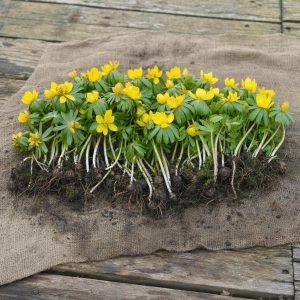
- Snowdrops and winter aconites: January to March.
- Daffodils, fritillary and summer snowflake: February to April.
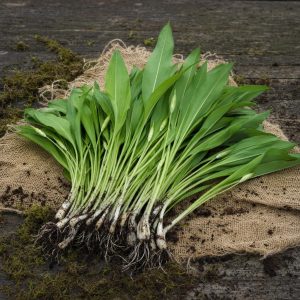
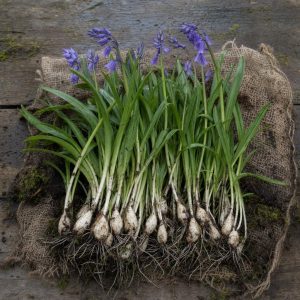
- Bluebells and wild garlic: March to April.
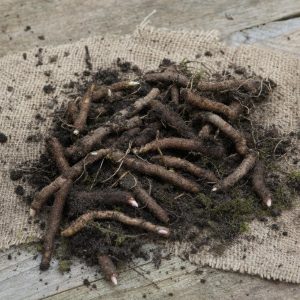
- Wood anemone rhizomes and lily of the valley pips: February to April, dormant or just breaking.
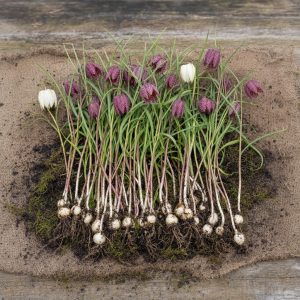
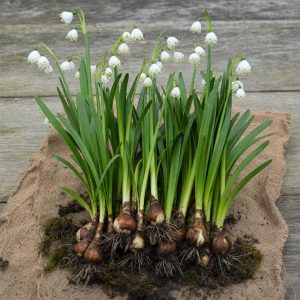
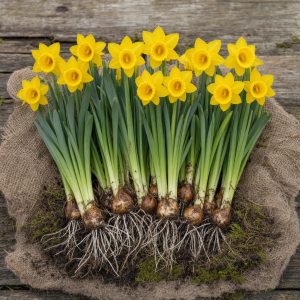
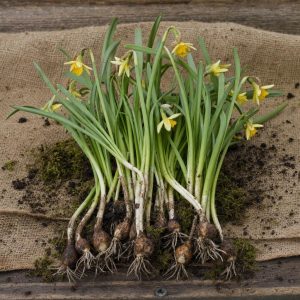
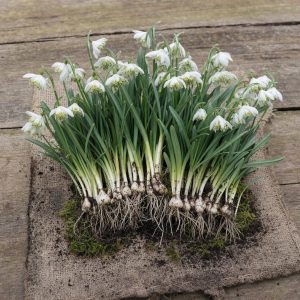
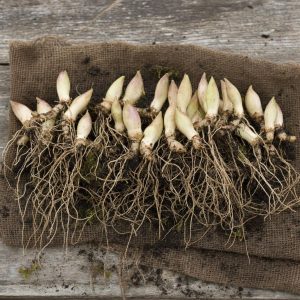
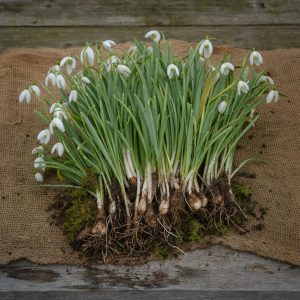
Expect bundles of bulbs with roots and leaves attached, packed in damp material. Leaves are often yellowing or bent from transit. That is normal. Our guide to what arrives in the box shows what healthy stock looks like.
Planting checklist
- Open the box on arrival and plant within two or three days.
- If you can't, heel the bundles into damp soil in a shady spot.
- Split large clumps into groups of three to five bulbs.
- Plant at the depth they grew before: the white part of the stem goes below ground.
- Firm in, water if dry, and leave the leaves to die back naturally.
- Expect light flowering the first spring, building from year two.
Planting depths
Every bulb in the green shows how deep it grew: the stems are white where they were underground and green above. Plant so all the white is covered – that line always comes first. As a guide, from the soil surface to the base of the bulb:
| Bulb | Sent | Planting depth |
|---|
| Single and double snowdrop | Jan–Mar | 5–8cm |
| Winter aconite | Jan–Mar | 5cm |
| Tenby and wild daffodil | Feb–Apr | 8–10cm |
| Snake’s head fritillary | Feb–Apr | 10cm |
| Summer snowflake | Feb–Apr | 10–15cm |
| Wood anemone (rhizomes) | Feb–Apr | 5cm, laid flat |
| Lily of the valley (pips) | Feb–Apr | Bud 2–3cm below the surface |
| Bluebell | Mar–Apr | 5–8cm |
| Wild garlic | Mar–Apr | 3–5cm |
Plant in clumps of three to five, with clumps 10–15cm apart (8–10cm for snowdrops and aconites).
Dry or in the green?
Robust bulbs with a papery skin, such as daffodils and bluebells, are reliable and cheaper as dry bulbs in autumn. Our autumn bulb range covers those. Choose in the green for snowdrops and aconites, for fritillary and wild garlic if you missed the autumn window, or whenever you want the best possible take.
Frequently asked questions
What does ‘bulbs in the green’ mean?
The plants are lifted in leaf, usually just after flowering, and sent out for immediate replanting. Their roots are still active, so they establish faster and more reliably than dry bulbs, especially snowdrops and winter aconites.
When are bulbs in the green delivered?
From January to April, depending on the species and the season. Snowdrops and aconites come first, bluebells and wild garlic last. You can order now for delivery in the new year.
Why are the leaves yellow when my bulbs arrive?
That is normal after lifting and transit. The bulb has already stored most of its energy. Plant at the depth the plants grew before, with the white part of the stem below ground, and they will grow on the following spring.
How soon do I need to plant bulbs in the green?
Within two or three days if you can. If the ground is frozen or you are short of time, heel the bundles into a trench of damp soil in a shady spot and plant as soon as conditions allow.
Are bulbs in the green more expensive than dry bulbs?
Usually yes, per bulb, because they are lifted and packed by hand while in growth. The higher take often makes up for it, particularly for snowdrops and winter aconites.
Related guides and categories
Planting at scale for a woodland, churchyard or habitat project? Contact us about bulk quantities in the green.


 Wildflower Bulbs in the Green (Spring Planting)
 Wildflower Bulbs in the Green (Spring Planting)
 Wildflower Bulbs in the Green (Spring Planting)
 Wildflower Bulbs in the Green (Spring Planting)
 Wildflower Bulbs in the Green (Spring Planting)