

What is a Seed Mat?
What is Improver?
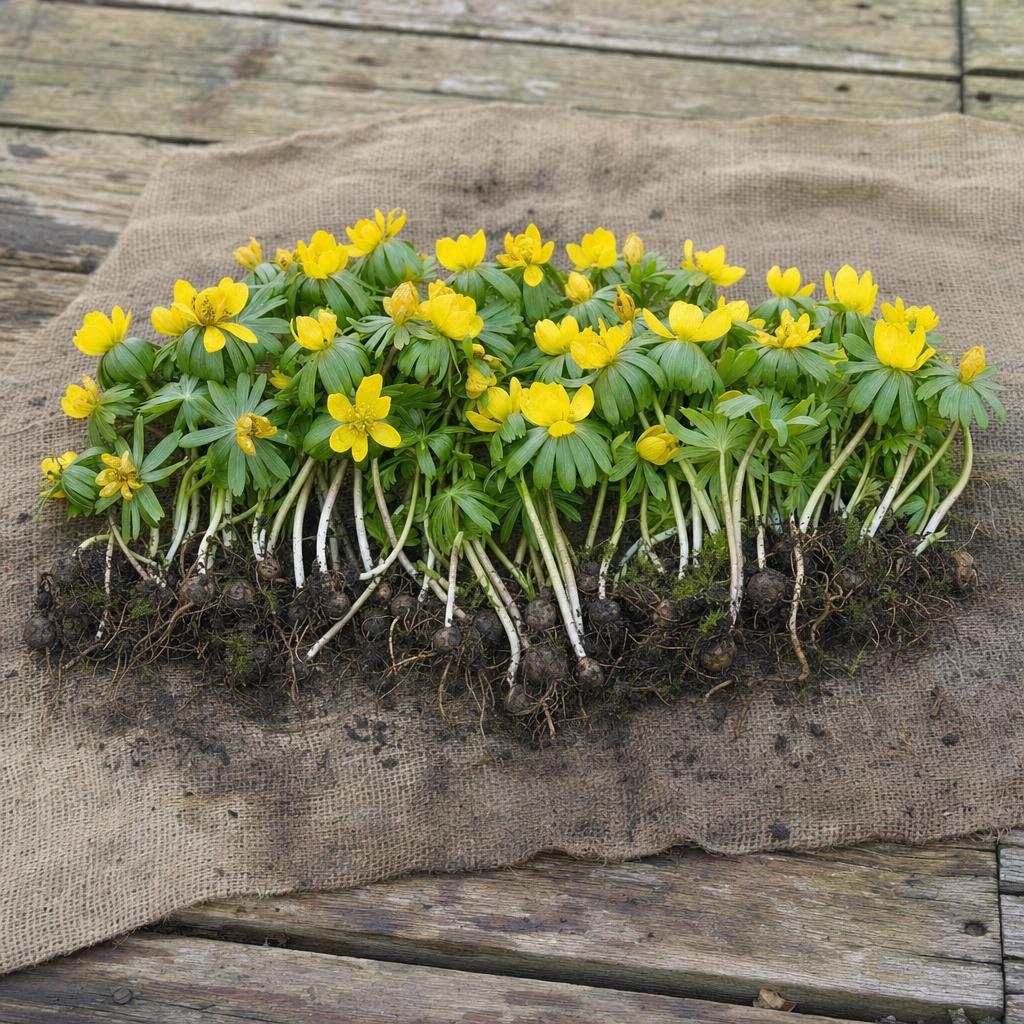
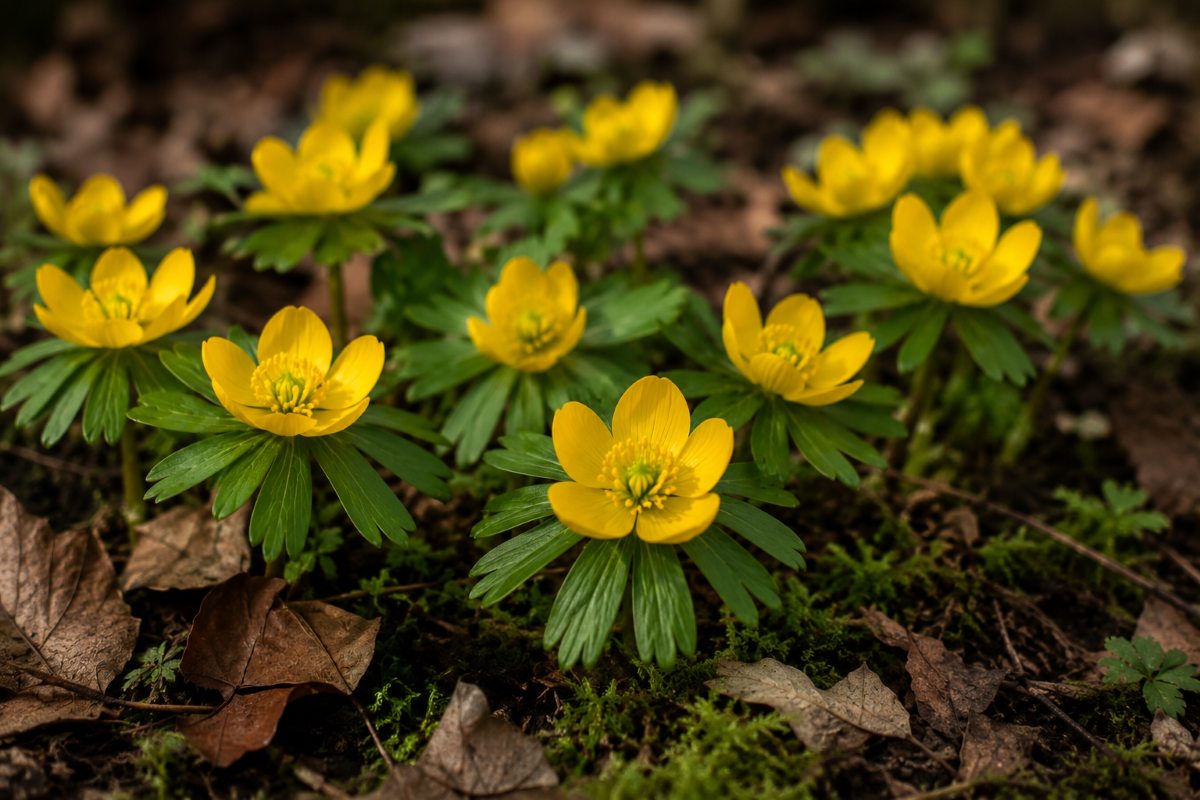
Winter Aconite Bulbs in the Green (Eranthis hyemalis)
£31.51 – £780.60Price range: £31.51 through £780.60 inc VAT
Winter aconite supplied in the green for late-winter planting. Bright yellow flowers with a green ruff in January and February. A naturalised introduction.
Spring season: order now for despatch from January to April, as plants are lifted in the green. We pack and send each order as soon as the plants are ready.
Free download: Spring planting guide for bulbs in the green (PDF) – what arrives, the 48-hour rule and planting depths.
🚚 UK delivery £5.95 per order
Larger area or a bespoke mix? Ask us for a quote →
About this product
Winter aconite (Eranthis hyemalis) opens glossy, buttercup-yellow flowers, each sitting on a ruff of green leaves, in January and February, often alongside snowdrops. It is not native to Britain but has been grown here for centuries and is naturalised in old woodland gardens, parks and churchyards.
The small tubers dry out quickly when stored, so aconites establish far better in the green than from dry tubers. Plants lifted from mid-February onwards are often already dying back. That is normal: they are planted for flowers the following year.
Plant on arrival under deciduous trees and shrubs, in moist but well-drained soil that is bright in winter and shaded in summer. Set the tubers at the depth they grew before, about 5cm, in small groups 5–10cm apart. On moist, humus-rich ground they seed freely into carpets.
Leave the leaves to die back naturally by late spring and avoid disturbing the ground once established. Bulbs in the green are lifted while in leaf and sent straight out, so they arrive looking a little tired. Yellowing or flattened leaves are normal and do not affect next year’s flowers.
Frequently asked questions
Why are my aconites dying back when they arrive?
Aconites flower very early, so plants lifted from mid-February are often already dying back. That is normal. The tuber has stored its food, and they are planted for flowers the following winter.
Are winter aconites native?
No. Winter aconite comes from southern Europe. It has been grown in Britain for centuries and is naturalised in many old gardens and churchyards, and it is a useful very early nectar source for bees.
Where should I plant winter aconites?
Under deciduous trees and shrubs, in moist but well-drained soil that gets winter light and summer shade. They pair well with snowdrops.
When should I plant aconites in the green?
Plant on arrival, between late January and March, at the depth they grew before, about 5cm.
Flowers: January – February
Height: Approx. 10cm
Supplied as: Tubers in the green (lifted in leaf)
Planting depth: As grown, about 5cm
Plant: On arrival, January to April
Despatched: Late January to March, as lifted
Origin: Non-UK native (naturalised)