

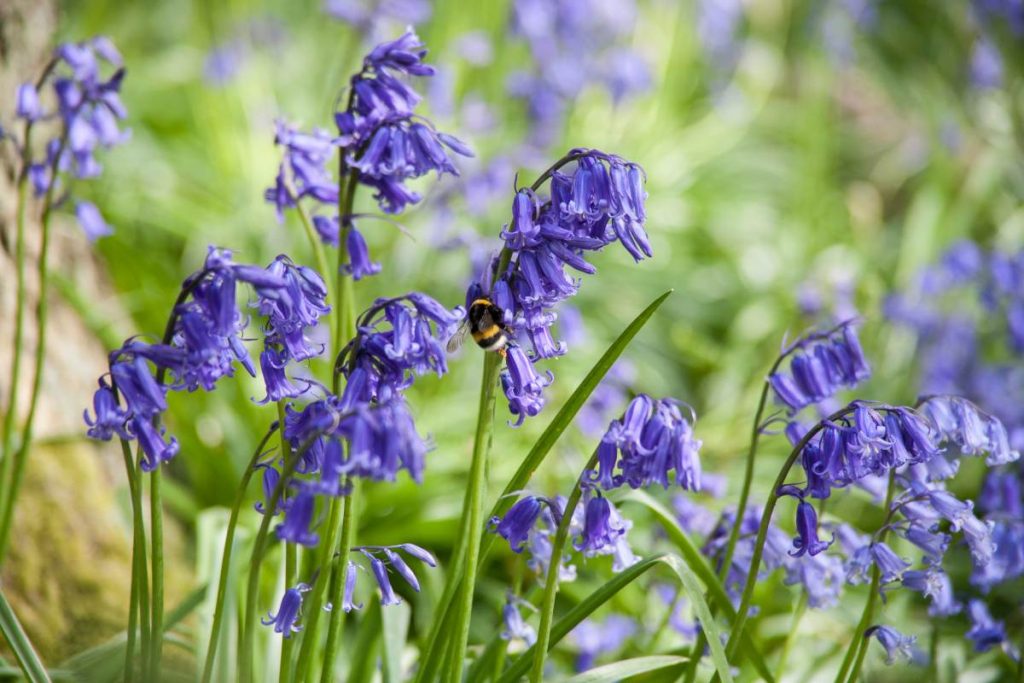
Native Bluebell Bulbs: How to Buy, Plant and Protect Them
A bluebell wood in May is one of the defining sights of the British countryside, and Britain holds a large share of the world’s native bluebells. That makes planting them a real responsibility. Buy the wrong bulbs and you can introduce Spanish or hybrid bluebells that cross with native colonies nearby and gradually dilute them.
This guide covers native bluebell bulbs (Hyacinthoides non-scripta) from start to finish: how to make sure what you buy is genuinely native and legally sourced, how to tell native, Spanish and hybrid bluebells apart, where bluebells will thrive, when and how to plant them, and how long a new colony takes to fill out. It is written for woodland owners, estates, community groups and gardeners who want to add bluebells without doing harm to the ones already here.
Bluebells are slow. A planting made this Autumn will look modest for several years before it starts to resemble a bluebell wood. That is normal, and the patience is worth it.
Why buying native bluebell bulbs matters
Two problems make bluebell buying different from other bulbs.
Wild-dug bulbs
Native bluebells are protected under the Wildlife and Countryside Act 1981. It is illegal to sell bluebells or bulbs taken from the wild without a licence, and, as with any wild plant in Britain, it is illegal to dig them up without the landowner’s permission. Unlicensed collection from woods has damaged colonies in the past. Any reputable seller should be able to tell you that their native bluebell bulbs are nursery-grown or lifted under licence, and certified as genuine native stock.
Spanish and hybrid bluebells
The Spanish bluebell (Hyacinthoides hispanica) was widely planted in gardens and crosses readily with our native species. The resulting hybrid is fertile and now common in gardens, verges and woodland edges near houses. Where hybrids grow close to native bluebells, pollen moves between them and native colonies can gradually become diluted. Many garden centre “bluebells” are Spanish or hybrid stock, sometimes labelled vaguely or incorrectly.
The safest rule: buy only bulbs sold by their full Latin name, Hyacinthoides non-scripta, from a supplier who can confirm native provenance, and never plant Spanish or hybrid bluebells anywhere near woodland or countryside.
How to tell native, Spanish and hybrid bluebells apart
Identifying bluebells properly is the best protection for native colonies, whether you are checking a planting or deciding what to remove from a garden.
Native bluebell (Hyacinthoides non-scripta)
- Flowers hang mostly from one side of the stem, which droops at the tip.
- Narrow, tubular bells with tips that curl right back.
- Deep violet-blue flowers, occasionally white.
- Creamy-white pollen inside the bell.
- Strong, sweet scent.
- Narrow leaves, typically around 1–1.5cm wide.
Spanish bluebell (Hyacinthoides hispanica)
- Flowers arranged all round an upright, stiff stem.
- Wider, open, bell-shaped flowers with tips that spread rather than curl back.
- Paler blue, also pink or white.
- Blue or greenish pollen.
- Little or no scent.
- Broad leaves, often 3cm wide or more.
Hybrids
Hybrids sit anywhere between the two. A common clue is a plant that looks largely native but has flowers on more than one side of the stem, a stem that is upright rather than drooping, or bluish pollen. If in doubt, treat a plant as a hybrid.
If you have Spanish or hybrid bluebells in a garden near woodland, the most useful thing you can do is remove them. Dig out the whole bulb while plants are in leaf, deadhead any you cannot remove before they set seed, and dispose of bulbs so they cannot regrow. Do not dump them in hedgerows or woods.
Where native bluebells grow best
Bluebells grow, flower and set seed in Spring, before the tree canopy closes, then die back and stay dormant underground through Summer.
Light and setting
Deciduous woodland is the classic habitat: oak, beech, hazel coppice, ash and mixed broadleaves. Hedge banks and shaded field margins also suit them. In the wetter west of Britain, including much of Wales, bluebells also grow on open hillsides, among bracken and on sea cliffs, because the damp climate keeps the ground moist enough without tree cover. In drier eastern areas, they need shade.
They do poorly under dense evergreens, in deep year-round shade, and in open sunny ground that bakes dry in Spring.
Soil
Bluebells are tolerant of soil type and grow on clay, loam and lighter soils, slightly acid to neutral or a little alkaline. What they need is ground that stays moist in Spring but is not waterlogged. Leaf-litter woodland soil is ideal. Very wet hollows rot the bulbs. On light, dry soils, choose shaded spots where leaf litter builds up. Our guide to native bulbs and soil types covers matching bulbs to ground in more detail.
Where not to plant bluebells
- Inside ancient woodland or nature reserves that already have native bluebells, without advice. Introducing bulbs from elsewhere can affect local populations.
- Anywhere near existing Spanish or hybrid bluebells. Deal with those first.
How to plant native bluebell bulbs
When to plant
Plant dry bluebell bulbs from September to November, as early as possible. Bluebell bulbs have no protective outer skin and dry out quickly, so plant them as soon as they arrive. Keep them cool and in a paper bag if planting is delayed by a day or two.
Bluebells can also be planted “in the green” in Spring, as growing plants lifted after flowering. These establish quickly but must be planted within a day or two of arrival.
Depth and spacing
- Depth: 5–8cm to the base of the bulb. Nearer 5cm on heavy clay, nearer 8cm on light soil.
- Spacing: about 10cm apart, in irregular drifts rather than rows or tidy blocks.
- Grouping: concentrate bulbs in clusters and let them thin out at the edges, as a natural colony would.
Step by step
- Choose shaded or part-shaded ground under deciduous trees or along a hedge bank, away from Spanish or hybrid bluebells.
- Clear brambles, nettles and thick grass from the planting spots. Young bluebells cannot compete with dense vegetation.
- Scatter bulbs gently across the area and plant them roughly where they fall for a natural drift.
- Plant each bulb pointed end up at 5–8cm deep. If you cannot tell which end is which, plant it on its side.
- Firm the soil and add a light layer of leaf litter or leaf mould.
- Mark the area so it is not disturbed while dormant.
For wider advice on drift planting and planting bulbs into grass, see our guide to planting wildflower bulbs, and our native bulb planting calendar for timings across the year.
How long bluebells take to establish and spread
Be realistic about timescales. Bluebells are a slow, long-lived plant, and that is part of why old bluebell woods are so valued.
- First Spring: leaves and some flowers from bulbs planted in Autumn. The display is modest.
- Years two to five: bulbs settle and flower more reliably. Self-sown seedlings start to appear around the clumps.
- Five years and beyond: clumps thicken and seedlings reach flowering size. Seedlings typically take around five years to flower.
Bluebells spread mainly by seed, and slowly. Seed falls close to the parent plant, so a colony creeps outwards rather than jumping across a site. That is why they are one of the plants used to recognise ancient woodland: new woods take a very long time to gain them naturally. Planting gives a new wood a head start.
Looking after a bluebell colony
- Leave leaves alone. Bluebell leaves feed the bulb after flowering. Do not cut, mow or tie them until they have yellowed, usually by late June.
- Protect from trampling. Bluebell leaves are fragile, and repeated footfall can kill plants and take years to recover. Keep paths defined in woods with public access.
- Manage competition. Cut back brambles and bracken in late Summer or Autumn when bluebells are dormant.
- Do not fertilise. Extra nutrients favour nettles and grasses over woodland flowers.
- Grass and meadows: where bluebells grow in grass, leave the first cut until July, which fits with a traditional hay meadow regime.
Native bluebells in a wider woodland planting
Bluebells are the headline of a Spring woodland floor, but they work best as part of a wider native community. Good companions include wood anemone for March and April, wild garlic on damper ground, and, in gardens and managed woodland, snowdrops to open the year.
Early bumblebee queens, hoverflies and butterflies such as the orange tip use bluebell nectar in Spring. For the lighter rides and edges, a seed mix designed for shade, like our woodland and heavy shade wildflower mix, extends flowering into Summer. Along hedges, our guide to wildflower seeds for hedgerows and banks covers species for the hedge bottom.
Our native bluebell bulbs
Our native bluebell bulbs (Hyacinthoides non-scripta) are true UK native stock, responsibly lifted under licence from British woodlands and certified as genuine native bluebells, not Spanish or hybrid plants. They are sent as fresh dry bulbs for Autumn planting at 5–8cm deep and around 10cm apart, in drifts.
For a fuller woodland floor, the deluxe woodland wildflower bulb collection combines several complementary species, and our spring bulbs range covers most shaded and woodland sites.
Plan your bluebell planting
Autumn is the time to plant native bluebell bulbs, and the earlier they go in, the better they settle. Check your site for Spanish or hybrid bluebells first, choose shaded ground under deciduous trees, and plant in loose drifts. For woodland creation, estates, schools and community projects, get in touch and we will help you plan quantities and species for your ground and region.
Frequently Asked Questions
When is the best time to plant native bluebell bulbs?
Plant native bluebell bulbs from September to November, as soon as they arrive. Bluebell bulbs have no protective skin and dry out quickly. Bluebells can also be planted “in the green” in Spring after flowering, but they must go in within a day or two of arrival.
How deep should you plant bluebell bulbs?
Plant native bluebell bulbs 5–8cm deep, measured to the base of the bulb, and about 10cm apart. Plant nearer 5cm on heavy clay and nearer 8cm on light soil. Plant in loose, irregular drifts rather than rows for a natural look.
Is it illegal to dig up bluebells?
Yes. It is illegal to dig up any wild plant in Britain without the landowner’s permission, and native bluebells have extra protection under the Wildlife and Countryside Act 1981, which makes it illegal to sell wild-collected bluebells or bulbs without a licence. Always buy nursery-grown or licensed native stock.
How can you tell a native bluebell from a Spanish bluebell?
Native bluebells have narrow, deep blue bells hanging from one side of a drooping stem, petal tips that curl back, creamy-white pollen and a strong scent. Spanish bluebells have flowers all round an upright stem, wider open bells, blue or greenish pollen, broad leaves and little scent. Hybrids show a mix of both.
Why are Spanish bluebells a problem?
Spanish bluebells cross with native bluebells to produce fertile hybrids. Where garden plantings sit near native colonies, pollen and seed spread between them and native populations can gradually become diluted. Avoid planting Spanish or hybrid bluebells, and remove them from gardens near woodland or countryside where you can.
How long do bluebells take to spread?
Slowly. Bulbs planted in Autumn flower modestly the first Spring and more reliably over the following years. Bluebells spread mainly by seed, which falls close to the parent plant, and seedlings take around five years to flower. Expect a planted colony to take many years to fill out.
Can you plant native bluebell bulbs in a garden?
Yes, under deciduous trees or shrubs or along a shaded hedge bank, in soil that stays moist in Spring but does not waterlog. Make sure the bulbs are certified native Hyacinthoides non-scripta, and remove any Spanish or hybrid bluebells nearby so the planting stays native.
Ready to get started?
Shop: Traditional Wildflower Meadow Mix →