

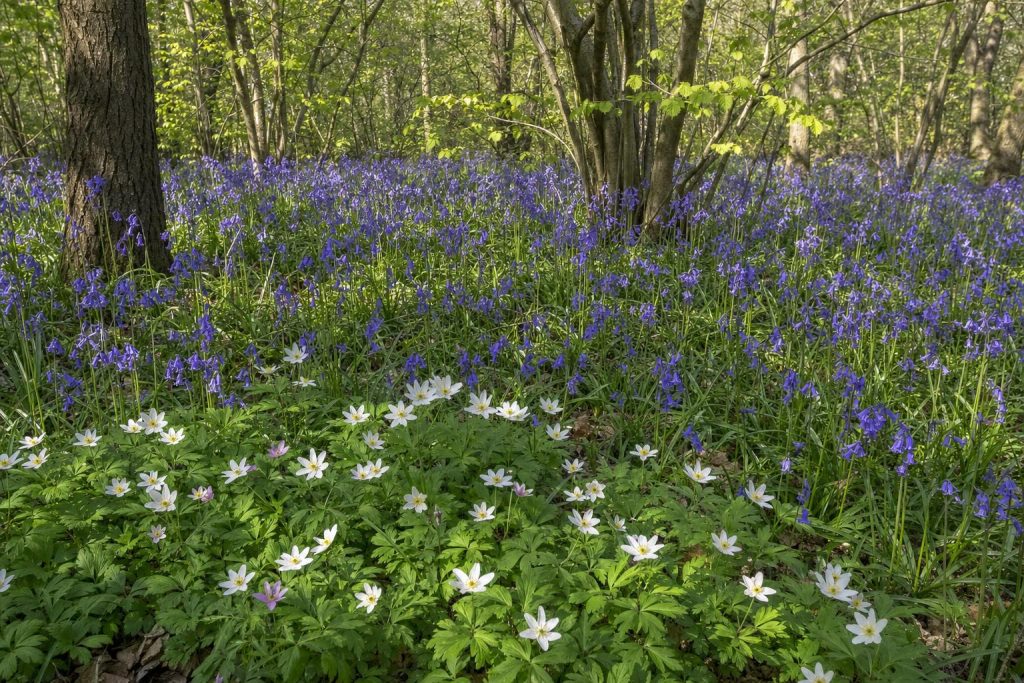
Native Wildflower Bulbs by Soil Type: Choosing the Right Bulbs for Your Ground
A native bulb planted in the right soil will still be flowering, and spreading, in thirty years. Put the same bulb in the wrong ground and it will put up a thin show for a spring or two, then fade away. Soil is the single biggest factor in whether a bulb planting lasts.
This guide matches native wildflower bulbs to the ground they actually grow on: heavy clay, chalk and limestone, acid soils, damp floodplain and woodland floor. It also explains how the different types of bulb behave, because a rhizome and a true bulb need different handling.
It is written for landowners, estate managers and project teams planting at scale, including housing schemes, public open space and biodiversity net gain sites, where a bulb planting has to keep delivering long after the contractor has left. If you are planting a few hundred bulbs in a garden, the same principles apply on a smaller scale.
For planting depths and techniques, see our practical guide to planting wildflower bulbs. This article is about choosing the right species for the right ground in the first place.
What counts as a native wildflower bulb?
Not every bulb sold as a wildflower is native. Some arrived centuries ago and have naturalised so well that most people assume they belong. For habitat work, and especially for biodiversity net gain, it is worth knowing the difference.
- Native: bluebell, wild daffodil, wild garlic (ramsons), wood anemone and lily of the valley.
- Native or long-established, with debated status: Tenby daffodil, snake’s head fritillary and summer snowflake.
- Introduced but widely naturalised: snowdrop, winter aconite, wild tulip and wild cyclamen.
Introduced species are not wrong in every setting. Snowdrops in a churchyard or estate garden are part of the cultural landscape. But where a planting is meant to restore or create native habitat, stick to the first group and be clear in your plans about anything from the other two.
Types of bulbs: why the storage organ matters
“Bulb” is used loosely for any plant that stores energy underground and dies back after flowering. The type of storage organ affects how it is supplied, how quickly it dries out and when it can be planted.
True bulbs
Layers of fleshy scales around a central bud, like an onion. Bluebells, daffodils, snowdrops, wild garlic, fritillaries and wild tulips are all true bulbs. Most are supplied dry in autumn and keep reasonably well for a week or two.
Tubers, corms and rhizomes
Winter aconite and wild cyclamen grow from tubers. Wood anemone spreads by thin, twig-like rhizomes, and lily of the valley is supplied as pips, which are rhizome crowns. These dry out quickly and should go in the ground as soon as they arrive.
Dry bulbs and bulbs “in the green”
Some species, snowdrops and winter aconite in particular, establish better when planted “in the green”: lifted just after flowering with their leaves still on. This shifts their planting window from autumn to late winter, which matters when you are programming a large scheme.
Why soil matters more for bulbs than for seed
A wildflower seed mix sorts itself out. Species that suit the ground thrive, and the others drop out. A bulb planting is a much larger single investment in one species, so a mismatch costs more.
Three soil factors decide most outcomes: drainage, pH and organic matter. Bulbs rot in ground that stays waterlogged at the wrong time of year. Some species need lime and others tolerate mild acidity. Woodland bulbs depend on the humus-rich layer that builds up under leaf litter.
Before specifying bulbs for a large site, test the soil pH and dig a few pits to see how wet the ground is in winter. A simple soil testing kit is enough for most sites, and it is far cheaper than replacing a failed planting.
Reading your site before you choose bulbs
The plants already growing on a site tell you a good deal about its soil. A quick walk round in spring or early summer, before any ground works, is worth more than a generic species list.
Rushes and sedges point to ground that stays wet for long periods. Bracken and foxgloves usually mean acid, free-draining soil. Dog’s mercury and wild garlic in an old hedge bank often signal damp, lime-rich ground, and existing bluebells are the clearest sign that bluebells will thrive.
On development land the topsoil may have been stripped, stockpiled or imported, so what grows there now may not reflect what you will be planting into. Ask for the soil survey, and check where any reinstated topsoil came from before choosing species for those areas.
Native bulbs for clay soil and damp ground
Heavy clay and damp ground suit more native bulbs than many people expect, provided the ground is not waterlogged for long periods.
Wild daffodil
The wild daffodil (Narcissus pseudonarcissus) grows in ancient woodland, damp meadows and old grassland, flowering from early March into April. It is smaller and paler than garden daffodils, and it copes well with heavy, moisture-retentive soils. Keep it well away from garden cultivars, which can cross with it.
Wild garlic (ramsons)
Wild garlic (Allium ursinum) favours damp woodland, hedgerows and scrub, often on chalky soils, and flowers from April to June. It is an ancient woodland indicator and forms dense carpets in moist shade. Plant it where it can spread freely, because it will.
Snake’s head fritillary
The snake’s head fritillary (Fritillaria meleagris) is a plant of floodplain meadows and is now found naturally on fewer than 30 UK sites. Research by the Floodplain Meadows Partnership shows it grows where the soil is wet for roughly 10 to 20 weeks a year and dry for the rest, on moderately fertile ground.
It cannot tolerate grazing in spring, so it only suits sites managed as hay meadow, with the cut taken in summer. On the right floodplain site it is a remarkable addition. On the wrong one it will not persist.
Summer snowflake
The summer snowflake (Leucojum aestivum), also known as the Loddon lily, grows in wet woodland and along riverbanks, particularly in the Thames valley. Despite the name, it flowers in April and May. It suits the wettest parts of a site, where few other bulbs survive.
Bulbs for chalk soil and limestone
Free-draining, alkaline soils over chalk or limestone support a distinctive set of bulbs, many of them woodland plants.
Lily of the valley (Convallaria majalis) is native to dry woodland on chalky soils and limestone pavement, flowering in May and June. Every part of the plant is highly poisonous, including the red berries, so keep it away from play areas and grazing livestock.
Wild garlic grows on damper chalk in woodland and hedge bases. Snowdrops and winter aconites, though introduced, naturalise well in moist, humus-rich soil over chalk and are a good choice for estate woodland and churchyards.
Bulbs for acid and free-draining soils
The native bluebell (Hyacinthoides non-scripta) grows in woodlands across a wide pH range, from calcareous to mildly acid, avoiding only the wettest ground. It also persists in grassland, under bracken and on coastal slopes, which makes it one of the most adaptable native bulbs.
What bluebells need is time and shade in late spring. A seed takes at least five years to grow into a flowering bulb, and colonies spread slowly. Plant them under deciduous trees, along hedge bases and woodland edges, and expect a sparse first spring.
Wood anemone (Anemone nemorosa) suits moist woodland soils, slightly acid to neutral, and is a classic sign of long-established woodland. The Tenby daffodil (Narcissus obvallaris) is the Welsh daffodil of Pembrokeshire, nearly lost in the late 19th century to Victorian bulb collecting. Like the wild daffodil, it suits grassland, hedgebanks and woodland edges in sun or light shade. The wild tulip (Tulipa sylvestris), a long-naturalised introduction, needs light, well-drained ground and sun to flower well.
Woodland or open ground: matching bulbs to light
Soil is only half the match. Most native bulbs are woodland plants that do their growing in early spring, before the tree canopy closes. They need light from February to May and shade, or at least no competition, in summer.
On open sites such as a new housing scheme, give woodland bulbs a home under existing trees, along retained hedgerows or in new woodland planting once it starts to cast shade. Reserve open grassland for wild daffodils, fritillaries on suitable floodplain ground, and the Tenby daffodil.
Do this, avoid this: matching bulbs to soil
Most bulb failures on larger sites come down to a handful of avoidable mistakes. These are the ones we see most often.
- Do: test pH and check winter wetness before you choose species.
- Do: put woodland bulbs where they get spring light and summer shade.
- Do: keep wild daffodils well away from garden daffodils and avoid Spanish bluebells.
- Avoid: compost, manure or fertiliser in planting holes, which feed grass at the bulbs’ expense.
- Avoid: planting into ground that sits under water for months at a time.
Using native wildflower bulbs on large projects and biodiversity net gain sites
On larger schemes, bulbs are often an afterthought: a line in the landscape specification with a quantity and no species list. Treated properly, they add early-season pollen and nectar, strengthen woodland and hedgerow ground flora, and give residents something to notice in March.
Under England’s mandatory biodiversity net gain, which applies to major development from February 2024 and small sites from April 2024, gains are measured in habitat units based on habitat type, area and condition. Bulbs do not create a habitat type on their own. They can, however, help woodland edges and hedgerows reach the condition set out in a habitat management plan, which has to be maintained for at least 30 years. In Wales, the equivalent requirement is a net benefit for biodiversity under Planning Policy Wales.
- Zone the site by soil and light, and match species to each zone.
- Specify native species by Latin name, and exclude Spanish and hybrid bluebells.
- Use cultivated stock. Selling wild-dug bluebells is an offence under the Wildlife and Countryside Act.
- Write the mowing regime into the management plan: no cutting until the foliage has died back.
Native bulbs from Wildahome
Our native range includes Bluebell, Wild Daffodil, Tenby Daffodil, Wild Garlic and Wood Anemone, alongside Snowdrops, Winter Aconite and Wild Tulip for gardens and estate settings. Browse the full spring bulbs range to see pack sizes.
Bulbs work best alongside a seed mix matched to the same ground. Under trees, pair bluebells, wild garlic or wood anemone with our Woodland & Heavy Shade mix. On chalk, use the Chalk & Limestone mix around lily of the valley and snowdrops.
Planning bulbs for a larger site?
If you are specifying bulbs for a housing scheme, estate or net gain site, send us your soil information and a site plan. We will suggest species for each zone, quantities and a planting programme that fits with your seed sowing, and quote for bulk supply. For timing across the year, see our native bulb planting calendar.
Frequently Asked Questions
What are the best native wildflower bulbs for the UK?
Bluebell, wild daffodil, wild garlic, wood anemone and lily of the valley are reliably native and widely suitable. Snake’s head fritillary and summer snowflake are excellent on the right wet sites. Snowdrops and winter aconite are introduced but long naturalised, so they suit gardens and estates better than native habitat projects.
Which bulbs grow well in clay soil?
Wild daffodil, wild garlic and bluebell all cope with heavy, moisture-retentive clay, provided the ground does not stay waterlogged for months. On seasonally flooded floodplain meadows, snake’s head fritillary and summer snowflake are better choices. Relieve compaction before planting and avoid the wettest hollows.
Do bluebells grow on chalk soil?
Yes. Native bluebells grow in woodland across a wide pH range, from chalky to mildly acid soils, and avoid only the wettest ground. What they need most is deciduous shade in late spring and time, as colonies build slowly over several years.
Are snowdrops native to Britain?
No. Snowdrops are native to mainland Europe and were probably grown in British gardens from around the 16th century, with wild records from the late 18th century. They are now widely naturalised and valued, but they should not be described as native in habitat or net gain plans.
What is the difference between a bulb, a tuber and a rhizome?
A true bulb is made of layered fleshy scales, as in bluebells and daffodils. A tuber is a swollen underground stem, as in winter aconite. A rhizome is a creeping underground stem, as in wood anemone. Tubers and rhizomes dry out faster, so plant them promptly.
Can native wildflower bulbs count towards biodiversity net gain?
Not on their own. Net gain is measured by habitat type, area and condition. Native bulbs can support the condition of woodland, hedgerow and grassland habitats in a management plan, but they should be part of a wider habitat design rather than the whole of it.
Is it illegal to dig up wild bluebells?
Selling bluebells taken from the wild is an offence under the Wildlife and Countryside Act 1981, and digging up any wild plant needs the landowner’s permission. For any planting scheme, buy bulbs from cultivated stock and keep records of where they came from.
Ready to get started?
Shop: Traditional Wildflower Meadow Mix →