

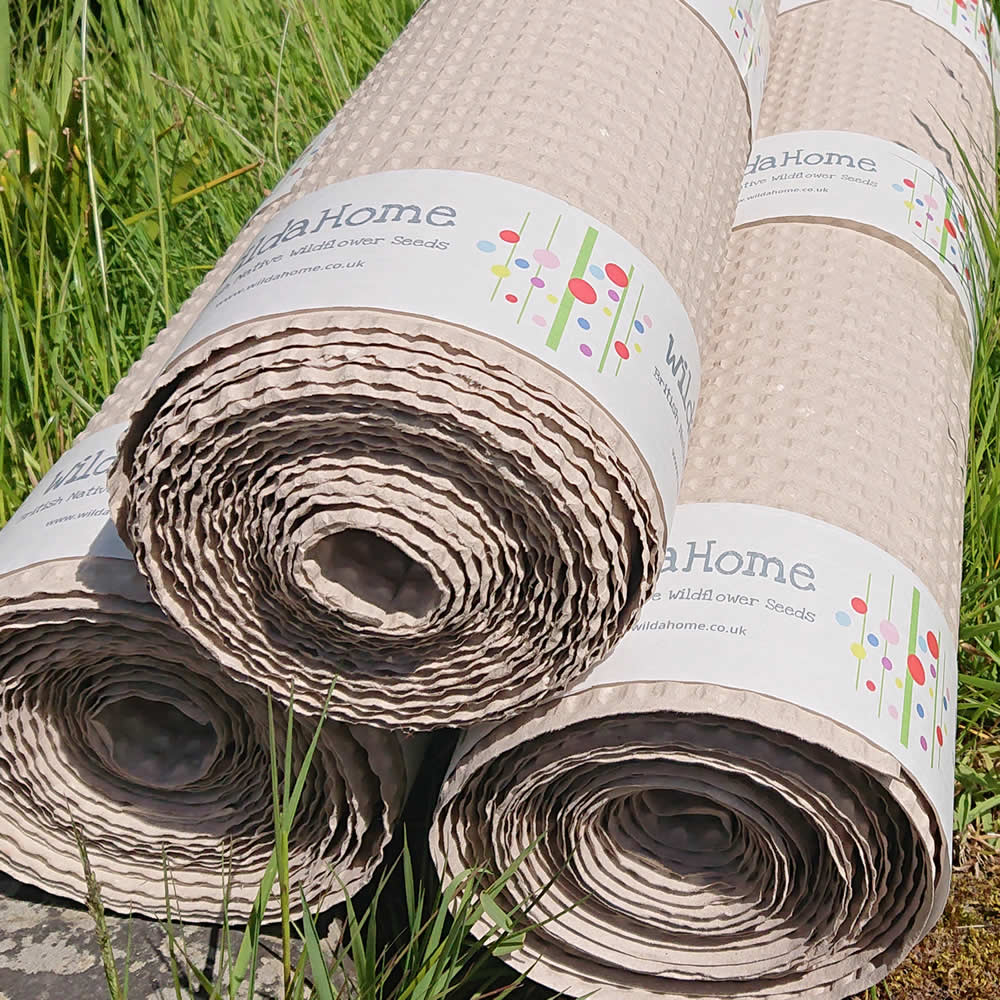
What is a Seed Mat?
What is Improver?
Snake’s Head Fritillary Bulbs (Fritillaria meleagris)
£24.00 – £535.20Price range: £24.00 through £535.20 inc VAT
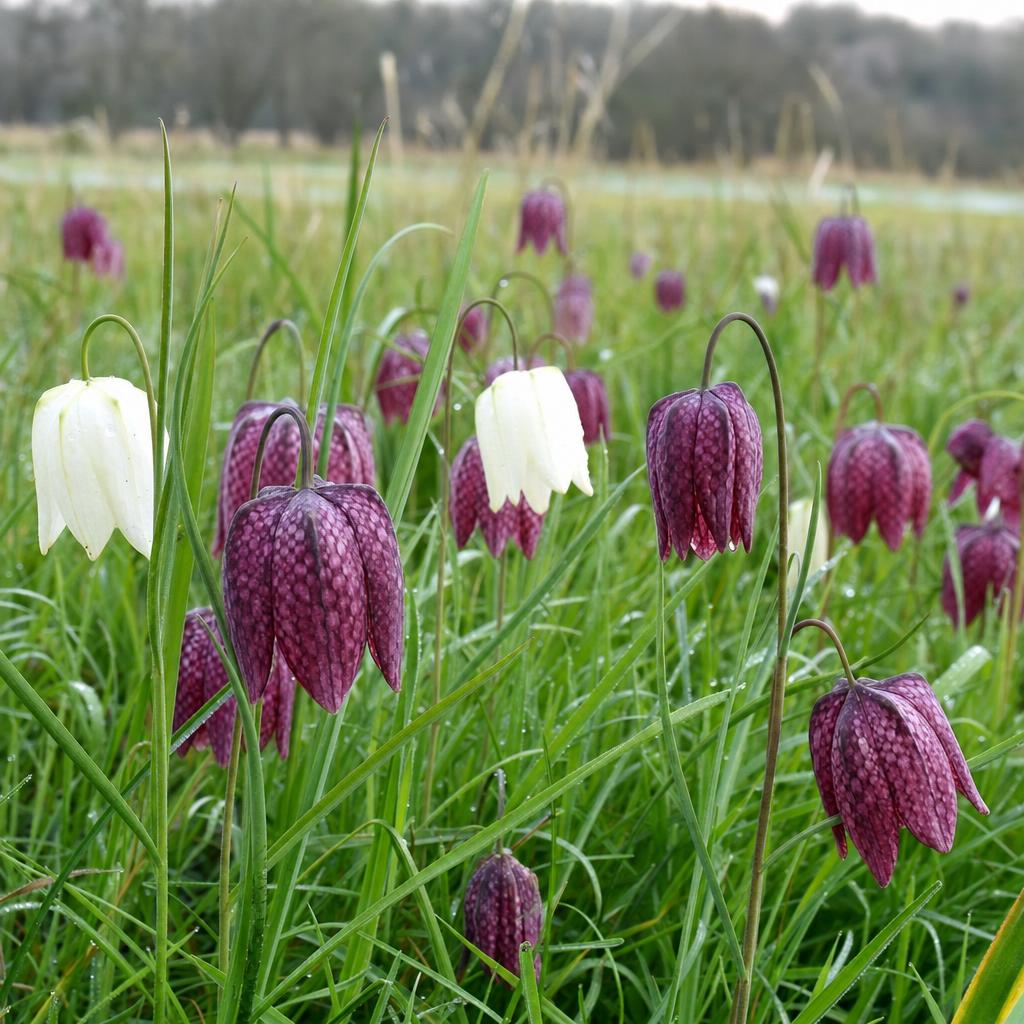
Snake’s Head Fritillary — nodding, chequered bells in purple, pink and occasional white, April to May. A classic bulb for damp grass and lightly shaded ground. Its native status in Britain is debated.
🚚 UK delivery £5.95 per order
Larger area or a bespoke mix? Ask us for a quote →
About this product
The Snake’s Head Fritillary (Fritillaria meleagris) is one of the most distinctive of all spring bulbs: a single nodding bell on a slender stem, patterned with a precise chequerboard of purple and pink, with the occasional pure white flower among them. It flowers in April and May at around 15cm and is at its best seen en masse in damp grass, where the flowers hang above the sward like small lanterns.
It is a plant of damp, seasonally flooded meadows and does best where the ground stays moist through spring and is never allowed to dry out completely. Damp lawns, orchard grass, the margins of ponds and streams, and lightly shaded ground under open tree cover all suit it. Once settled it returns year after year and, where the grass is managed with a late cut, will slowly spread by seed.
Plant in autumn, September to November, at 10–15cm depth and 20–25cm apart, or scattered and planted where they fall for a natural effect. The small bulbs dry out quickly, so plant them as soon as they arrive. If planting in grass, leave the area uncut until the seed has set and the foliage has died back — usually late June or July.
Supplied as dry bulbs, 5–6cm size, for autumn planting. Its status as a British native is debated, but it is a long-established plant of floodplain meadows and a favourite for naturalistic planting.
Frequently asked questions
Is the Snake's Head Fritillary a UK native?
Our supplier lists Fritillaria meleagris as non-UK-native. It is a long-established plant of British damp meadows and a favourite for naturalistic planting.
What conditions does Snake's Head Fritillary need?
Damp ground that stays moist through spring: damp lawns, orchard grass, pond and stream margins, or lightly shaded ground under open tree cover.
How deep should I plant Snake's Head Fritillary bulbs?
Plant in autumn, September to November, at 10–15cm depth and 20–25cm apart, and plant promptly as the small bulbs dry out quickly.
When can I cut grass planted with fritillaries?
Leave the area uncut until the seed has set and the foliage has died back, usually late June or July, so the plants can spread by seed.
N/A
N/A
Flowers: April – May
Height: Approx. 15cm
Bulb size: 5–6cm
Origin: Debated — long established in British floodplain meadows