

Wood Anemone: A UK Guide to the Ancient Woodland Windflower
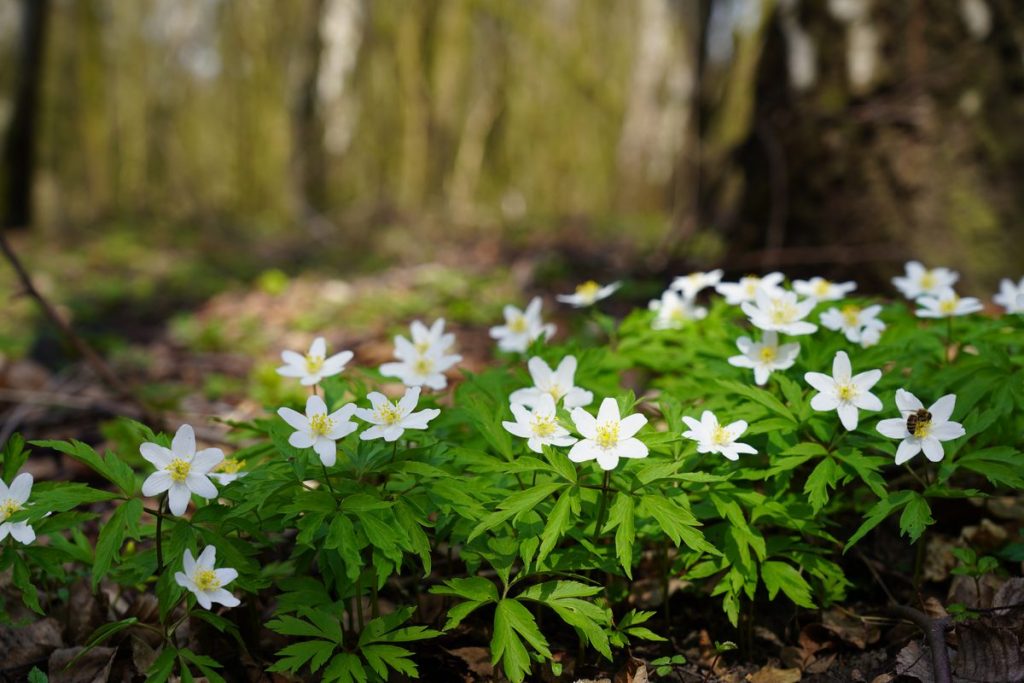
Walk into an old deciduous wood in March or April and you may find the floor white with wood anemones. The flowers open in sunshine and droop shut before rain, which is why country people called them windflowers. A carpet of them is one of the surest signs that the ground beneath your feet has been wooded for centuries.
The wood anemone (Anemone nemorosa) is a genuine native, found across Britain and Ireland. It is also one of the slowest-spreading plants in the woodland flora. That slowness is what makes it an ancient woodland indicator, and it shapes everything about how you should plant it: generously, in the right shade, and with patience.
This guide covers how to identify wood anemone, what the “two metres per century” figure really means, its value to early insects, and how to establish rhizomes and potted plants so they knit into a carpet within a few years rather than a few decades.
How to identify wood anemone
Wood anemone is a low plant, usually 10–20 cm tall, rising from slender rhizomes just under the soil surface. Look for:
- Flower: a single white star about 2 cm across, usually with six or seven petal-like tepals, often flushed pink or purple underneath, around a boss of about 45 yellow stamens.
- Stem leaves: a whorl of three deeply cut, toothed leaves partway up the stem, below the flower.
- Behaviour: flowers open fully in sun and nod shut at night and before rain.
- Flowering: March to May, with first flowers usually between early March and late April.
Wood anemone or wood sorrel?
The usual confusion is with wood sorrel (Oxalis acetosella), which flowers at the same time in the same places. Wood sorrel has clover-like leaves of three rounded leaflets and smaller flowers with five white petals traced in pink veins. Wood anemone’s leaves are jagged and deeply divided.
Garden anemones also turn up. Yellow wood anemone (A. ranunculoides) has rich yellow flowers and can cross with wood anemone to give a pale lemon hybrid. Blue A. blanda and A. apennina are southern European garden plants. Wild wood anemones are occasionally lilac or pinkish, but named blue forms such as ‘Robinsoniana’ are garden selections.
A note on names: Kew now places the plant in Anemonoides, as Anemonoides nemorosa. BSBI, the RHS and most UK sources still use Anemone nemorosa.
Wood anemone and ancient woodland
Ancient woodland is land that has been continuously wooded since at least 1600 in England, Wales and Northern Ireland, and 1750 in Scotland. It covers only about 2.5% of the UK. Wood anemone is one of its classic indicator plants, along with bluebell, wild garlic and others.
What “two metres per century” means
You will often read that wood anemone spreads about two metres a century. That figure is real but specific. It comes from measurements of rhizome growth: one study recorded an average of 2.5 cm a year, modelling radial spread of about 2 cm a year. Others found 1.7 cm a year, and young rhizomes growing only a few millimetres a year at first.
That is the speed of the clone. Seed adds a little. A study of woods planted next to ancient woodland found wood anemone advancing 0.2–0.85 m a year at the edge, helped by short-range seed dispersal. Even so, colonisation of new woodland is slow.
The reason is seed. Each flowering shoot produces about 35 seeds, but fertility ranges from 3% to 82% depending on light. In a field trial, only 18% of sown seeds emerged, and only around a quarter of those seedlings survived beyond 400 days. Survivors take at least five years to flower.
So a dense carpet is a strong clue to long continuity, especially alongside other indicator species, although no single plant proves a wood is ancient.
Beyond the wood
Wood anemone also grows on old hedgebanks, in hay meadows and upland pastures, and on shady hillsides. In Wales and the uplands, it often marks woodland cleared centuries ago. It persists in conifer plantations on ancient woodland sites too, as a survivor from the earlier wood. Good Welsh examples grow in the Conwy Valley woods such as Parc Mawr. Our article on wood meadows looks at this woodland-grassland edge in more depth.
A true spring ephemeral
Wood anemone is built to use the short window between winter and the closing of the tree canopy. Its flower buds form underground the autumn before. Shoots push through leaf litter in March and April, cued by soil temperature, and flower within about two weeks.
By April it can cover 70–100% of the woodland floor in favourable woods. By July it has withered and gone dormant as the shade deepens. Dry autumns, winters and springs reduce flowering the following year even when leaf cover stays steady, so a poor flowering year is not necessarily a sign of decline.
Wood anemone and pollinators
Wood anemone was long described as a pollen-only flower. A 2012 study, prompted by watching bee-flies feeding on the blooms, found it does produce nectar after all, secreted early in the morning at the base of the carpels.
Visitors include hoverflies, solitary and social bees, the dark-edged bee-fly and pollen-feeding beetles. The flowers’ habit of closing in dull weather protects the pollen. Fresh foliage tastes acrid, so mammals rarely graze it, although slugs and caterpillars do.
The law and buying responsibly
Wood anemone is assessed as Least Concern in Great Britain and is not a specially protected plant. But Section 13 of the Wildlife and Countryside Act 1981, and the Wildlife (Northern Ireland) Order 1985, make it an offence to uproot any wild plant without the landowner’s permission.
Even with permission, digging wild colonies is a poor idea. A patch that grows 2 cm a year cannot heal quickly. Buy only nursery-propagated stock, and confirm with your supplier:
- that rhizomes or plants are propagated, not wild-dug
- that it is the wild form, not a blue or double garden cultivar
- when the rhizomes were lifted and how they have been stored
- that pot-grown plants are in peat-free compost
How to plant wood anemone
Wood anemone wants humus-rich, moist but well-drained soil in dappled or partial shade under deciduous trees. It grows on clay, loam, chalk and sand, across acid to alkaline soils, but dislikes waterlogging, deep evergreen shade and hot, dry, south-facing spots. It is hardy throughout the UK. Our soil types guide for native bulbs explains how soil and shade combine.
Dry rhizomes
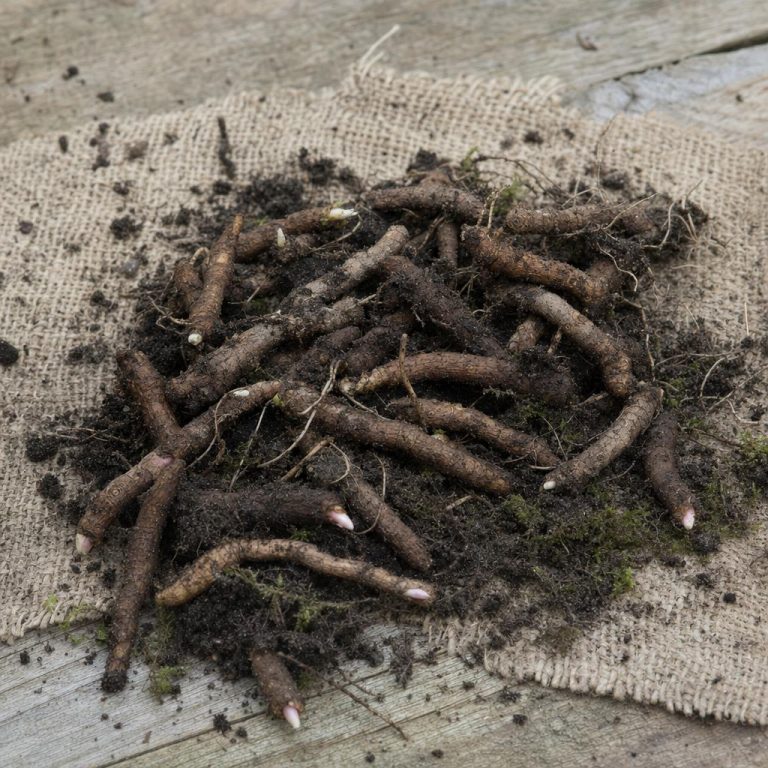
Dry rhizomes are the cheapest way to plant a large area, but they fail if they have dried out or gone mouldy in storage.
- Check they are firm and mould-free.
- Soak them in water overnight before planting.
- Plant in autumn, September to November.
- Lay them flat, horizontally, about 5 cm deep.
- Expect some to sit dormant until the following spring.
Potted plants and divisions
Pot-grown plants establish more reliably, at higher cost. Established clumps are best lifted and divided once the foliage starts to fade in late spring or summer, rather than in full leaf. Our guide to what arrives in the box compares dry and growing stock across species.
How many rhizomes per square metre
Because spread is so slow, density matters. At 10–15 cm spacing you need roughly 44–100 rhizomes per m². That spacing lets clumps join up within two to five years. Plant sparsely and the gaps may stay open for a decade or more.
The native bulb planting calendar shows when to plant wood anemone alongside other woodland bulbs.
Companions for a native woodland floor
Wood anemone shares its spring window with a classic set of native woodland plants:
- bluebell and wild garlic
- primrose, violets and wood sorrel
- lesser celandine and dog’s mercury
- early-purple orchid and yellow archangel
- moschatel and woodland ferns
To build a fuller ground flora under trees or along a shaded hedgebank, sow a woodland and heavy shade wildflower mix around the planting, or a hedgerow and banks mix on banks and field edges. Our guide to wildflowers for woodland and heavy shade covers species choice in more detail.
For native woodland, hedgebanks and meadows, plant only the wild form. More than 50 garden cultivars exist, including blue, double and green-flowered forms. Doubles such as ‘Vestal’ replace stamens with petal-like structures and offer insects little. Keep cultivars to garden borders.
Aftercare and problems
Established colonies in dappled shade need almost nothing.
- Mulch with leaf mould in summer, mimicking natural leaf litter.
- Do not mow until the foliage has yellowed and died back, usually by July.
- Divide poorly flowering garden clumps after die-back.
The main killers are waterlogged soil that rots the rhizomes, hot dry sites, dense evergreen shade under conifers or rhododendron, ploughing or soil disturbance, nutrient enrichment and heavy grazing. In gardens, slugs, caterpillars and powdery mildew cause occasional damage. Two rust fungi and an anemone smut affect wild plants, distorting leaves and reducing flowering. Wood anemone has no invasive tendencies.
Is wood anemone poisonous?
Yes, when fresh. Like other members of the buttercup family, wood anemone contains ranunculin, which forms an acrid, irritant oil called protoanemonin when the plant is crushed or chewed. Eating it causes burning in the mouth, ulcers, nausea, vomiting and diarrhoea. Handling cut rhizomes can irritate the skin, so wear gloves when dividing.
It is toxic to dogs, cats, horses and livestock, although its bitter taste usually deters grazing animals, and the toxin breaks down in dried hay. For suspected poisoning in people, call NHS 111.
Names and folklore
Anemone comes from the Greek for wind, and nemorosa from the Latin nemus, a grove. In Welsh it is blodyn y gwynt, “flower of the wind”. English names include windflower, lady’s nightcap, moonflower, smell fox (for the musky scent of crushed leaves) and, in Ashdown Forest, “drops of snow”.
Folklore offers mixed messages. One story has the Greek wind god sending the flowers ahead of him in spring. Romans were said to pick the first bloom as a charm against fever. Elsewhere in Europe the closed flowers sheltered fairies from rain, while some regions thought the plant unlucky.
Wildahome wood anemone
Our wood anemone rhizomes (Anemone nemorosa) are supplied dry for autumn planting. Soak them overnight before planting. For a more reliable start, choose wood anemone rhizomes for spring planting, delivered between January and April.
For a native woodland floor, pair it with our cultivated native bluebell bulbs. Browse every species in our native bulbs range and bulbs in the green range, and read our guide to planting wildflower bulbs.
Restoring a woodland floor
If you are underplanting a new wood, restoring a plantation on an ancient woodland site or bringing life back to a shaded hedgebank, tell us about it. We can suggest how many rhizomes you need, which companions suit your soil, and a seed mix for the ground layer. Use our free advice service or contact us.
Frequently Asked Questions
When does wood anemone flower in the UK?
Wood anemone flowers from March to May, with the first flowers usually opening between early March and late April. The flowers open in sunshine and close at night and before rain.
Why is wood anemone an ancient woodland indicator?
Wood anemone spreads mainly by slow-growing rhizomes, about 2 cm a year or roughly two metres a century, and establishes poorly from seed. Dense carpets usually mean woodland soil has been undisturbed for a very long time, especially alongside other indicator plants.
Why did my dry wood anemone rhizomes not grow?
They probably dried out or went mouldy in storage. Choose firm, clean rhizomes, soak them overnight, and plant them flat about 5 cm deep in autumn in moist, humus-rich soil. Some may stay dormant until the following spring.
How deep and which way up should wood anemone rhizomes be planted?
Lay wood anemone rhizomes horizontally, flat, about 5 cm deep and 10–15 cm apart. Shoots and roots grow from along the rhizome, so there is no need to find a top or bottom.
How many wood anemone rhizomes do I need per square metre?
At the usual 10–15 cm spacing, you need roughly 44–100 rhizomes per square metre. Planting at that density lets clumps join into a carpet within two to five years.
Is wood anemone poisonous to dogs and people?
Yes. Fresh wood anemone contains ranunculin, which forms irritant protoanemonin when crushed or chewed. It is toxic to people, dogs, cats, horses and livestock. Wear gloves when handling rhizomes and contact a vet or NHS 111 if any is eaten.
Are blue wood anemones native?
Named blue forms such as ‘Robinsoniana’ and ‘Allenii’ are garden selections, not wild plants. Wild wood anemones are occasionally pink or lilac-tinged, but for native woodland and hedgebanks only the wild white form should be planted.
Ready to get started?
Shop: Traditional Wildflower Meadow Mix →Native bulb hub
- All native bulbs for autumn planting, plus every bulb guide
- Bulbs in the green for late-winter and spring planting
- What arrives in the box: bulbs, tubers and bulbs in the green
- How to plant wildflower bulbs
- Native bulb planting calendar
- Native wildflower bulbs by soil type
- How to plant snowdrop bulbs
- Native bluebell bulbs: buying and planting
- Growing wild garlic from bulbs and seed
- Snowdrops in the UK: native status, identification and naturalising
- Winter aconite: identification, planting and where it belongs
- Wild daffodil and Tenby daffodil guide
- Tenby daffodil: history, identification and growing Wales's own daffodil
- Snake's head fritillary: floodplain meadows, planting and care
- Native bluebell vs Spanish bluebell: identification and law