

Wildflower Seed Mix for Partial Shade on Loam Soil
Quick answer: For partial shade on loam, sow a blend of a loam and alluvial mix and a hedgerow or woodland-edge mix, in roughly equal parts where the ground gets three to five hours of direct sun, shifting towards the shade mix as the shade deepens. Loam is usually more fertile than wildflowers like, so reduce fertility before sowing and include yellow rattle to hold back the grasses.
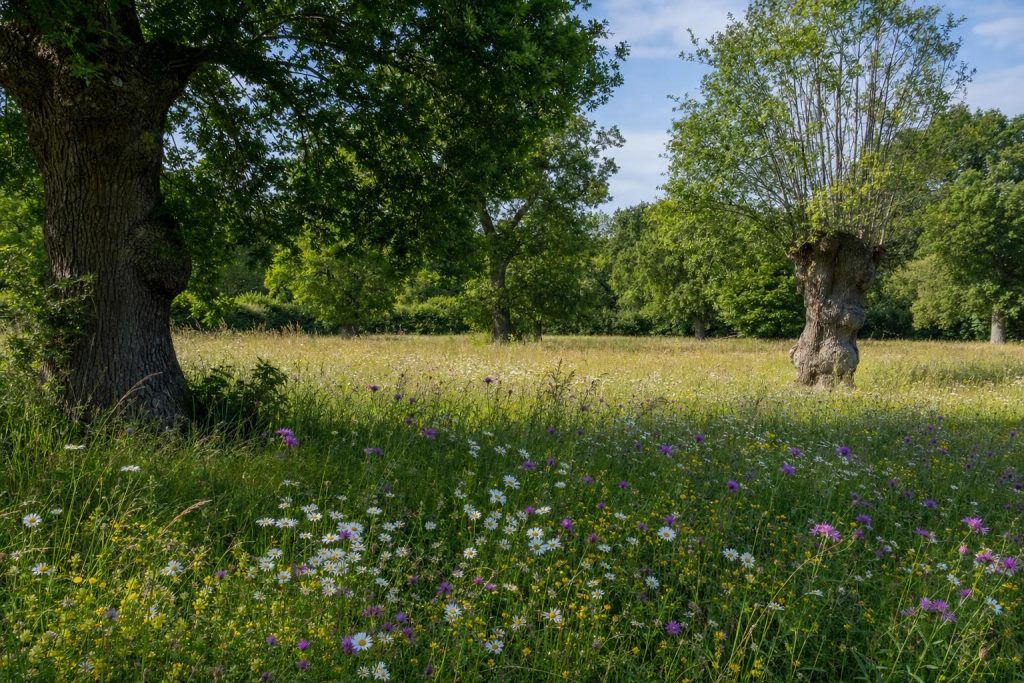
Loam is the soil gardeners hope for: soft, crumbly, easy to work and good at holding moisture without waterlogging. Add the shade of an orchard, a garden hedge or a row of parkland trees, and you have one of the most common sites people want to turn into a meadow.
It is also a site that catches people out. The problem is rarely the shade. It is usually the fertility. This article explains which wildflower seed mix for partial shade on loam soil to use, how to blend it, how to bring the fertility down, and how to manage the result. Our guide to choosing a wildflower seed mix for mixed site conditions covers the other combinations of soil and light.
Free printable sowing guide
Wildflower seed sowing & establishment guide (PDF) – soil testing, trial sowing, the sowing calendar for every mix, and aftercare from year one.
Why loam in partial shade is harder than it looks
Loam’s strengths for vegetables are weaknesses for a meadow.
- It is often fertile. Loam that has been a lawn, a vegetable plot, an orchard grazed by sheep or a paddock is usually rich in nutrients. Vigorous grasses, docks and nettles thrive on it and crowd out wildflowers.
- It warms and grows quickly. That suits grasses at least as much as it suits wildflowers.
- Shade slows the wildflowers more than the grass. Many coarse grasses tolerate shade well, so the balance tips further towards them.
So the order of priorities is fertility first, then the mix, then the shade.
Measure the shade, then choose the blend
Count the hours of direct sun in mid-Summer, when the trees are in full leaf.
| Direct sun in Summer | What to sow |
|---|---|
| 6 hours or more | Loam & Alluvial on its own |
| 3 to 5 hours, or dappled all day | Loam & Alluvial and Hedgerow & Banks, about 50:50 |
| 2 to 3 hours | Loam & Alluvial and Hedgerow & Banks, about 30:70 |
| Under 2 hours, or a closed canopy | Woodland & Heavy Shade |
The Loam & Alluvial mix carries the meadow species suited to deep, moisture-retentive soils. Hedgerow & Banks carries species chosen for the edges of hedges and banks, where light comes and goes. Sown together across a site where the shade changes gradually, each finds the parts that suit it.
Orchards: zone or blend?
An orchard is often two sites in one. The ground under each tree is in dappled shade, while the rides between the rows are open. If the rows are well spaced, sow Loam & Alluvial in the rides and a Hedgerow & Banks blend under the canopies. If the trees are close together and the whole area is dappled, one blend across the lot is simpler and works well.

Which format to use
- 100% wildflower versions, sown at 3 g/m² as a blend, suit gardens, smaller areas and over-sowing into existing orchard grass.
- 80/20 versions, sown at 5 g/m² as a blend, suit paddocks, larger areas and ground that people walk on.
A bespoke blend can also sit between the two formats, for example a 50/50 wildflower to grass ratio for a visible orchard where you want more flower than an 80/20 gives.
Bring the fertility down first
This step decides whether a shaded loam meadow succeeds.
Do this
- Look for the signs. Lush, dark-green grass, nettles, docks and creeping buttercup mean the ground is fertile.
- Strip the topsoil where you can. Removing the top 100–200 mm takes away most of the stored nutrients and the weed seed bank in one go. Use the spoil elsewhere, not on the meadow.
- Or cut and remove for a season or two. Where stripping isn’t practical, cut hard several times a year and take every cutting away. It is slower, but it works.
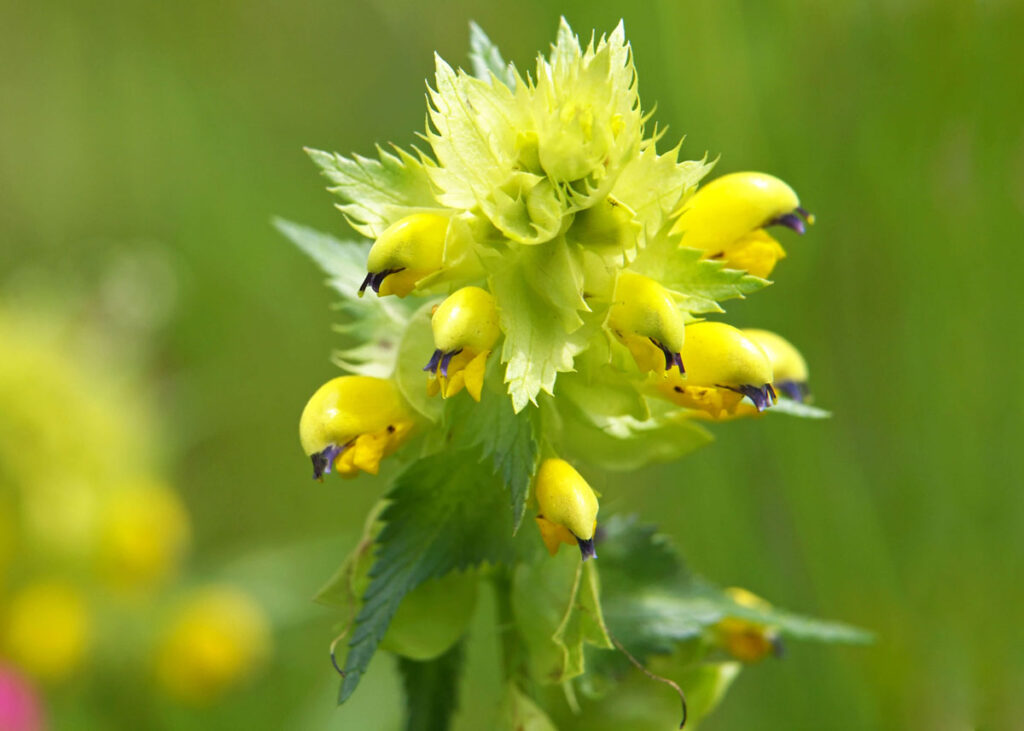
- Plan for [yellow rattle](https://wildahome.co.uk/yellow-rattle-seeds/). It feeds on grass roots and weakens the sward, which matters on loam more than almost anywhere. Our Loam & Alluvial 80/20 doesn’t contain it, so we can add it to your blend, or add extra on richer ground.
- Scarify to at least half bare soil before sowing, then firm the surface.
Avoid this
- Adding compost, manure, topsoil or fertiliser. It is the most common reason meadows on loam fail.
- Leaving grass cuttings or orchard leaf litter lying on the surface. Both return nutrients to the soil.
- Grazing sheep or other animals on the meadow before it has established.
Sowing
Sow from mid-August to late October. Loam drains well enough that Autumn sowing is rarely a problem, and Autumn is essential if the blend includes yellow rattle, which needs Winter cold to germinate.
Mix the seed with three to four parts dry sand to one part seed. Broadcast half in one direction and half across it, sow on the surface, no deeper than about 5 mm, and roll or tread it in.
How much seed
- A 400 m² orchard, 100% blend at 3 g/m²: 1.2 kg of seed.
- A quarter-hectare paddock edge (2,500 m²), 80/20 blend at 5 g/m²: 12.5 kg of seed.
Add up to 30% when over-sowing into existing grass.
Managing the meadow
- Year one: cut to 50–60 mm whenever growth reaches 100–150 mm, and remove the cuttings. This keeps the grasses from shading out the seedlings.
- Year two: expect the first strong flowering in the brighter parts, with yellow rattle appearing in late Spring if it went in the Autumn before.
- Years three to five: take a hay cut in late July or August to 50–75 mm and remove the cuttings. On fertile loam, a second cut in late Autumn helps keep the grasses in check.
Under orchard trees, rake off fallen leaves and windfall fruit each Autumn. Mow paths along the rides if the orchard is used for picking, and keep the hay cut for the rest.
Ask us for a blend
We make this blend to order from our standard Loam & Alluvial and Hedgerow & Banks mixes, weighted to the light on your site and with yellow rattle added where the ground needs it. Every bespoke wildflower seed mix is quoted per project. Send us the area, postcode, hours of sun and some photos through the Ask Us form. Our complete guide to establishing a wildflower meadow covers ground preparation in more detail.
Frequently Asked Questions
What is the best wildflower seed mix for partial shade on loam soil?
A blend of a loam and alluvial mix with a hedgerow or woodland-edge mix suits most shaded loam. Use roughly equal parts where the ground gets three to five hours of direct Summer sun, and shift towards the hedgerow mix in deeper shade. Under a closed canopy, use a woodland and heavy shade mix instead.
Can I sow a wildflower meadow in an orchard?
Yes. Orchards make good meadows once fertility is reduced. If the rows are well spaced, sow a loam mix in the open rides and a shade blend under the trees. If the whole orchard is dappled, one blend across the area works. Rake off fallen leaves and fruit each Autumn.
Why do wildflowers struggle on loam soil?
Usually because loam is fertile. Rich soil feeds vigorous grasses and weeds, which crowd out wildflowers, and shade makes the problem worse. Strip 100–200 mm of topsoil or cut and remove for a season or two before sowing, and include yellow rattle to weaken the grasses.
Do I need yellow rattle for a meadow on loam?
On fertile loam, it is one of the most useful things you can sow. Yellow rattle feeds on grass roots and keeps the sward open enough for wildflowers. Sow it in Autumn, as it needs Winter cold to germinate. We can add it to any bespoke blend.
How much wildflower seed do I need for partial shade on loam?
Sow a blend of 100% mixes at 3 g/m², or a blend of 80/20 mixes at 5 g/m². A 400 m² orchard needs 1.2 kg of a 100% blend, or 2 kg of an 80/20 blend. Add up to 30% when over-sowing existing grass.
When should I sow wildflowers on shaded loam?
Sow from mid-August to late October. The soil is warm, Autumn rain helps germination, and yellow rattle and other species get the Winter cold they need. Loam drains well, so Autumn sowing rarely runs into the waterlogging problems seen on clay.
Should I cut a wildflower meadow under trees differently?
The method is the same: an annual hay cut in late July or August to 50–75 mm, with the cuttings removed. On fertile loam, add a second cut in late Autumn. Under trees, also rake off leaves and windfalls so they don’t rot down and feed the grass.
Ready to get started?
Shop: Woodland & Heavy Shade Wildflower Mix →