


Wildflower Seed Mix for Partial Shade on Clay Soil
Quick answer: For partial shade on clay soil, sow a blend of a heavy clay mix and a hedgerow or woodland-edge mix rather than either one alone. Use roughly equal parts where the ground gets three to five hours of direct sun, and shift towards the shade mix where it gets less. Under a closed tree canopy, use a woodland and heavy shade mix instead. Sow from mid-August to late October, or late March to May if the clay lies wet in Autumn.
Partial shade on clay is the in-between site we’re asked about most often. It’s the garden that loses the sun behind a hedge by early afternoon, the strip along a north-facing wall, the paddock corner under a line of oaks. A sunny clay mix struggles there, and a pure shade mix wastes the hours of light the ground does get.
This article sets out which wildflower seed mix for partial shade on clay soil works, how to blend it, how much to sow, and how to prepare and manage shaded heavy ground. For the wider picture, our guide to choosing a wildflower seed mix for mixed site conditions covers every combination of soil and light.
Free printable sowing guide
Wildflower seed sowing & establishment guide (PDF) – soil testing, trial sowing, the sowing calendar for every mix, and aftercare from year one.
Why shaded clay needs its own approach
Clay and shade each make establishment harder, in different ways.
- Clay holds water and nutrients. That carries plants through dry Summers, but it also feeds vigorous grasses and weeds, and it is slow to warm in Spring.
- Shade cuts the light seedlings need, slows growth and favours plants adapted to woodland and hedge edges.
Put together, shaded clay is slow, often damp in Winter and sometimes surprisingly dry in Summer, because trees and hedges take much of the water. Meadow plants built for open sunny clay can fail there, while woodland-floor plants won’t use the light that is available.
First, measure the shade
The proportions of your blend depend on how much light the ground gets, so count the hours of direct sun in mid-Summer.
| Direct sun in Summer | What to sow |
|---|---|
| 6 hours or more | Heavy Clay mix on its own |
| 3 to 5 hours, or dappled all day | Heavy Clay and Hedgerow & Banks, about 50:50 |
| 2 to 3 hours | Heavy Clay and Hedgerow & Banks, about 30:70 |
| Under 2 hours, or a closed canopy | Woodland & Heavy Shade |
Check in Summer, not Spring. Deciduous trees let plenty of light through before the leaves are fully out, so a spot that looks bright in April can be in deep shade by July.
The blend: Heavy Clay with Hedgerow & Banks
Our Heavy Clay mix brings species that handle heavy, moisture-retentive ground. Several of them are also at home along hedge and woodland edges, including betony (Betonica officinalis), agrimony (Agrimonia eupatoria), white campion (Silene latifolia), selfheal (Prunella vulgaris), tufted vetch (Vicia cracca) and meadowsweet (Filipendula ulmaria).
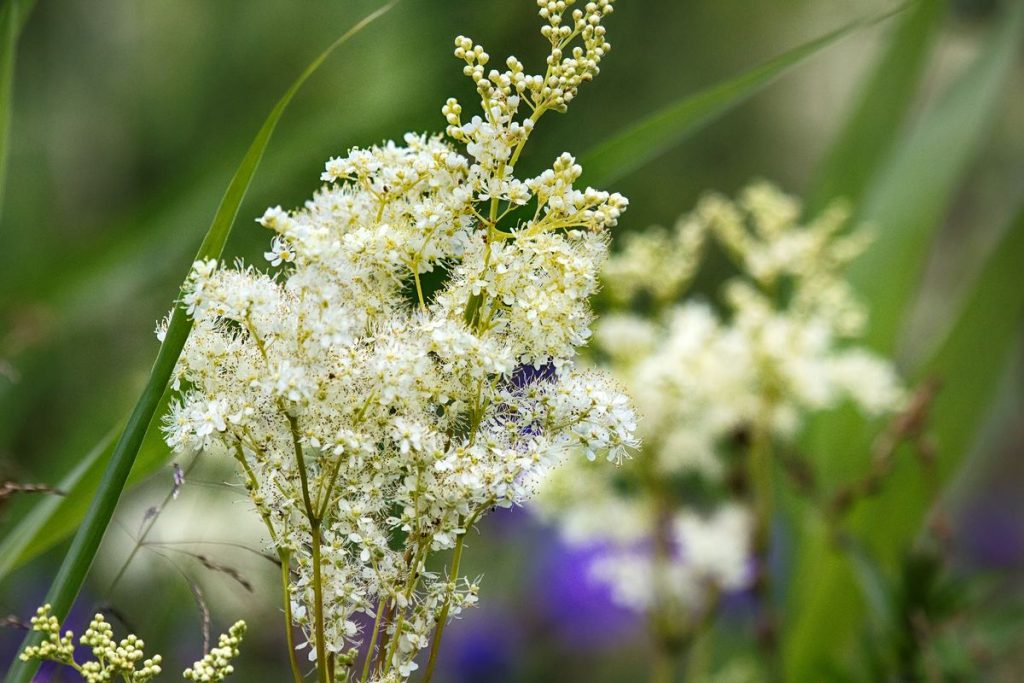
Our Hedgerow & Banks mix brings species chosen for the edge of hedges and banks, where light comes and goes through the day.
Sown together, the species sort themselves out. Shade-tolerant plants take the darker parts, sun-lovers the brighter ones, and the clay specialists hold the wetter ground. That is why a blend suits a site where the shade changes gradually or covers the whole area.
If the shade covers one clear strip, such as a band along a hedge with open ground beyond, sow two zones instead: Hedgerow & Banks in the strip and Heavy Clay across the open part.
Which format to use
Both mixes come as a 100% wildflower mix and an 80/20 grass and wildflower mix.
- 100% versions suit gardens, borders and smaller areas, and over-sowing into existing grass. A blend of two 100% mixes sows at 3 g/m².
- 80/20 versions suit larger areas, banks and ground that takes footfall. A blend of two 80/20 mixes sows at 5 g/m².
You can also set the wildflower to grass ratio in between, for example a 50/50 blend for a visible garden area on shaded clay.
How much seed
Multiply the area by the sowing rate and add a little for slopes or uneven ground.
- A 200 m² garden strip, 100% blend at 3 g/m²: 600 g of seed.
- A 1,000 m² field corner, 80/20 blend at 5 g/m²: 5 kg of seed.
Add up to 30% on slopes, exposed sites or when over-sowing. Mix the seed with three to four parts dry sand to one part seed so it spreads evenly.
Preparing shaded clay ground
Preparation matters more on this kind of site than the mix does.

Do this
- Clear the competition. Dig out docks, nettles and bramble. Cut back ivy and suckers along the hedge base.
- Rake off leaf litter. A mat of leaves smothers seedlings and adds nutrients as it rots. Repeat every Autumn.
- Let in more light where you can. Lifting low branches by a metre or two often turns heavy shade into partial shade.
- Work clay only when it is dry enough. If it sticks to your boots, wait. Cultivating sticky clay ruins its structure for years.
- Aim for at least half the surface as bare soil, with a fine, firm surface on top.
Avoid this
- Adding compost, manure, topsoil or fertiliser. Low fertility is essential, and shaded clay is often richer than it looks.
- Sowing under beech, conifers or other dense evergreen canopy. Little but woodland-floor species will cope there.
- Assuming shaded clay is wet. Ground under trees can be dust-dry by July because the roots take the water.
- Raking the seed in. Sow on the surface, no deeper than about 5 mm, and roll or tread it in.
When to sow
The best window is mid-August to late October, while the soil is still warm and Autumn rain is coming. Autumn sowing also gives yellow rattle and other species that need Winter cold the chill they need to germinate.
Heavy clay that lies wet through October can be sown from late March to May instead. Yellow rattle won’t germinate from a Spring sowing, so add it the following Autumn. Avoid November to February.
What to expect over the first five years
Shaded clay establishes more slowly than open ground. That is normal and not a sign the sowing has failed.
- Year one: mostly leaves and rosettes, with patchy germination in the darkest parts. Cut to 50–60 mm whenever growth reaches 100–150 mm, and remove the cuttings.
- Year two: the first proper flowering, usually strongest in the brighter parts. One species often dominates for a season.
- Years three to five: the planting settles. Shade-tolerant species spread into the darker areas and the balance steadies.
From year two, take an annual hay cut in late July or August to 50–75 mm and remove the cuttings. On shaded ground, which grows more slowly, one cut a year is often enough. Rake off fallen leaves each Autumn.
Ask us for a blend
We make this blend to order from our standard Heavy Clay and Hedgerow & Banks mixes, weighted to the light on your site. We can add yellow rattle, or extra on grassier ground. Every bespoke wildflower seed mix is quoted per project. Send us the area, postcode, hours of sun and a few photos through the Ask Us form, and we’ll recommend the proportions and quantity. Before sowing, read our complete guide to establishing a wildflower meadow.
Frequently Asked Questions
What is the best wildflower seed mix for partial shade on clay soil?
A blend of a heavy clay mix and a hedgerow or woodland-edge mix usually works best. Use roughly equal parts where the ground gets three to five hours of direct Summer sun, and shift towards the hedgerow mix where it gets less. Under a closed canopy, a woodland and heavy shade mix is the better choice.
Will wildflowers grow on clay soil in the shade?
Yes, if you choose species adapted to both. Plants of hedge and woodland edges, along with clay-tolerant meadow species such as betony, selfheal and meadowsweet, do well in partial shade on clay. Expect slower establishment than on open ground, and clear leaf litter and competition before sowing.
How much wildflower seed do I need for a shaded clay area?
Sow a blend of 100% wildflower mixes at 3 g/m², or a blend of 80/20 mixes at 5 g/m². A 200 m² area needs 600 g of a 100% blend or 1 kg of an 80/20 blend. Add up to 30% for slopes or over-sowing.
When should I sow wildflowers on shaded clay?
Mid-August to late October is best. The soil is warm, Autumn rain helps germination and Winter cold triggers species such as yellow rattle. If your clay lies wet through Autumn, sow from late March to May instead, and add yellow rattle the following Autumn.
Should I use a 100% or an 80/20 mix for partial shade on clay?
Use 100% wildflower mixes for gardens, smaller areas and over-sowing existing grass. Use 80/20 mixes for larger areas, banks and ground that takes footfall, where grass helps hold the soil. A bespoke blend can also sit in between, such as 50/50.
Why are my wildflowers not growing under trees?
The usual causes are too little light, competition from tree roots for water, and leaf litter smothering seedlings. Lift low branches where you can, rake off leaves every Autumn, and switch to a woodland and heavy shade mix where there is less than two hours of direct sun.
Do I need to remove topsoil on shaded clay before sowing wildflowers?
Not always. If the ground has been a lawn or border and grows lush, dark-green grass, fertility is probably too high, and stripping 100–200 mm of topsoil or several years of cut-and-remove will help. On poorer clay, clearing competition and scarifying to bare soil is usually enough.
Ready to get started?
Shop: Heavy Clay Wildflower Meadow Mix →