

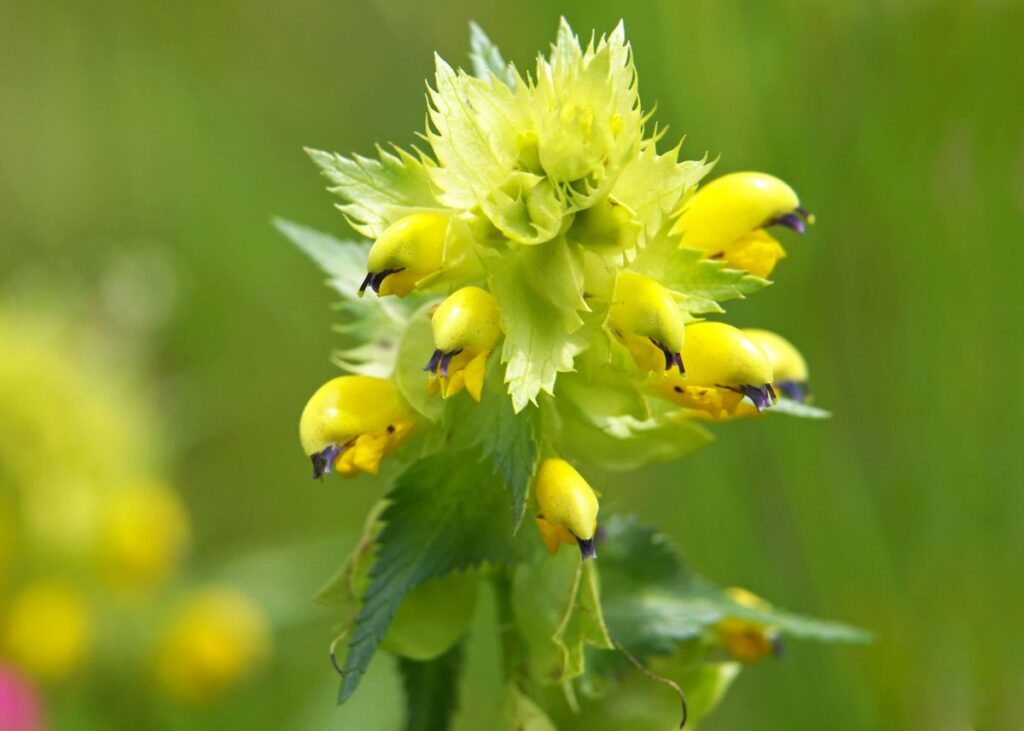
How to Sow Yellow Rattle: An Autumn Guide to Getting It to Take
Knowing how to sow yellow rattle properly is the difference between a meadow that opens up within two or three years and a sowing that simply never appears. Yellow rattle (Rhinanthus minor) is the most useful plant there is for turning a grassy lawn or paddock into a wildflower meadow, but it is also the fussiest seed most people will ever sow. It must go in at the right time of year, from fresh seed, onto ground that has been opened up for it. Get those three things right and it does the hard work for you.
This guide is the practical, step-by-step version: when to sow, how much seed to use, how to prepare the ground, what to expect next spring and summer, and why some sowings fail. If you want the background on what yellow rattle does and why it matters, our article why yellow rattle is essential for wildflower meadows covers it in more depth.
The short version: sow yellow rattle in autumn, by the end of November, onto short grass with plenty of bare soil, and leave it alone through winter.
Why yellow rattle is worth the effort
Yellow rattle is a native annual that is semi-parasitic. Its roots attach to the roots of nearby grasses and draw off water and nutrients. Where it grows well, it can cut grass growth by around half. That weakens the vigorous grasses that usually smother wildflowers, opens gaps in the sward, and gives slower-growing meadow flowers room to establish.
It is especially valuable when you are converting existing grassland rather than starting from bare soil. Over-sowing a lawn or field with wildflowers without it is hard work, because the established grass competes so strongly. With yellow rattle in place, each year the sward becomes a little thinner and more open, and each year more wildflowers take hold.
As an annual, it has to grow from seed every year. That is what makes it both powerful and fussy: if it fails to set seed one summer, it disappears.
When to sow yellow rattle
Yellow rattle must be sown in autumn. This is the rule that catches most people out.
The seed needs a long, cold winter before it will germinate, around four months of cold, moist conditions below roughly 5 °C. Sow it in spring and it won’t get that cold spell, so it won’t come up at all. It doesn’t wait until the following year either, as many wildflower seeds do; seed that misses its winter is usually lost.
- Best: September to the end of October, after the grass has been cut short.
- Still fine: November. Aim to have the seed on the ground by the end of November.
- Too late: December onwards, and any time in spring.
In a mild winter, or in the far south and west, earlier sowing within that window gives the seed the best chance of getting enough cold.
Use fresh seed
Yellow rattle seed has a short life. It stays viable for only about 12 to 18 months, and old seed germinates poorly or not at all. Always buy current-season seed and sow it the same autumn. Don’t keep a packet over for next year.
Our yellow rattle seed is sold for sowing this autumn, so order it in time to sow by the end of November.
How much yellow rattle seed to sow
Sow yellow rattle at about 1 to 2 g per square metre when over-sowing into existing grass. Use the higher rate on thick, vigorous grass and where you want a faster effect. Use the lower rate where the sward is already fairly thin.
That works out at 10 to 20 kg per hectare. A smaller amount spread across a big area is better than a heavy sowing in one corner: yellow rattle spreads outwards each year from wherever it establishes, so scattered patches soon join up.
If you are sowing a full meadow mix onto bare ground, yellow rattle can go in alongside it. It can be sown alongside any of our meadow mixes, and our seed coverage calculator will help with quantities for the main mix.
How to prepare the ground for yellow rattle
Yellow rattle seed is large for a wildflower and needs to sit on bare soil. Sown onto a thick mat of grass and thatch, it dries out or gets eaten before it can root. Preparation is all about opening the sward up.
- Cut short. In late summer or early autumn, mow or graze the grass down to about 25 mm.
- Remove everything. Rake up and take away all the cuttings. Leaving them feeds the soil and smothers the seed.
- Open the surface. Scarify, harrow or rake hard until at least half the surface is bare soil. More is better. A powered scarifier makes light work of a lawn; a chain harrow suits paddocks and fields.
- Don’t add anything. No compost, topsoil or fertiliser. Yellow rattle and wildflowers do best on poor ground.
If the grass is very lush and dark green, the ground may be too fertile for yellow rattle to make much headway on its own. Our guide on how to establish a wildflower meadow explains how to tell, and what to do about it.
How to sow yellow rattle, step by step
- Bulk it up. Mix the seed with dry sand so you can see where you have sown and spread it evenly.
- Sow in two passes. Spread half the seed walking one way, then the other half walking across at right angles.
- Press it in. Tread or roll the area so the seed is pressed firmly onto the soil surface. Don’t cover it with soil or rake it in.
- Leave it alone. Through the winter, keep the grass short if it grows, but don’t cultivate, rake or scarify again, as that disturbs the seed while it is chilling.
Sheep or cattle grazing lightly over the winter can help by treading the seed in and keeping the grass short. Take them off by early spring, before the seedlings appear.
What to expect after sowing yellow rattle
Yellow rattle works to a calendar. Knowing it helps you avoid undoing your work by cutting at the wrong time.
| When | What happens | What to do |
|---|---|---|
| Autumn | Seed is sown and sits on the soil | Keep grass short, don’t disturb |
| Winter | Seed chills | Nothing |
| February to March | Seedlings appear, small and easy to miss | Stop mowing and grazing |
| May to July | Yellow flowers; roots attach to grasses | Leave uncut |
| Late July to August | Seed pods dry and rattle when shaken | Cut once the pods rattle; leave the hay a few days, then remove it |
The timing of that summer cut is critical. Cut too early and the yellow rattle won’t have set seed, and it will vanish the following year. Wait until you can hear the seeds rattling in their pods when you brush through the meadow.
In the first summer, expect yellow rattle in patches rather than an even cover. Over the next two to three years those patches spread and the grass around them thins visibly.
Why yellow rattle sowings fail
If nothing came up, it is almost always one of these:
- Sown in spring, or too late in winter, so the seed never got its cold spell.
- Old seed, more than a year old or stored warm.
- Sown onto thick grass without cutting short and scarifying first.
- Raked in or covered with soil, compost or cuttings.
- Cut too early the following summer, before the seed set, so it established once and then disappeared.
- Ground too fertile, so lush grass shaded the seedlings out.
- Too much shade. Yellow rattle needs an open, sunny site.
The fix is usually to try again the following autumn with fresh seed and better preparation. Many established meadows were only won on the second attempt.
Combining yellow rattle with wildflower seed
Yellow rattle on its own opens up the sward, but you still need wildflower seed to fill the space it creates. There are two common approaches:
- Sow both together this autumn. Prepare the ground as above, then sow yellow rattle and a 100% wildflower mix at the same time. This is the quickest route on a lawn or paddock.
- Sow yellow rattle first, wildflowers a year later. Let the rattle weaken the grass for a season, then scarify and over-sow wildflowers the following autumn. This works well on vigorous grass.
On grassland with some existing wildflowers, our restoration wildflower mix suits over-sowing into existing grassland alongside yellow rattle. For a garden lawn, our guide to starting a wildflower meadow in a garden covers the whole process at a smaller scale. Not sure which format to choose? See 80/20 vs 100% wildflower mixes.
Yellow rattle on farms and larger sites
On hay meadows and pasture, yellow rattle reduces grass growth, so it will reduce your hay yield, often noticeably. That is the point for a meadow, but bear it in mind on productive grassland. On larger areas, a chain harrow after cutting gives enough bare ground, and seed can be broadcast by hand or with a spinner mixed with sand. Once established, the usual hay meadow routine keeps it going: shut the field up in spring, take a late hay cut once the rattle rattles, and graze the aftermath through autumn.
You can also spread yellow rattle across a farm by collecting it yourself. Harvest seed heads by hand or with a brush harvester once they rattle in July, and sow the seed straight away onto prepared ground. Fresh seed sown the same season gives the best results. We describe how we do this on our own meadows in how we manage the land at Tyn-y-Clyn.
Sow yellow rattle this autumn
There are only a few weeks left in this year’s window. If you have a lawn, paddock or field you want to turn into a meadow, now is the time to cut it short, open up the surface and get fresh yellow rattle onto it before the end of November. Order yellow rattle seed for sowing now, or ask us for help working out quantities and the right wildflower mix to go with it.
Frequently Asked Questions
When should I sow yellow rattle?
Sow yellow rattle in autumn, ideally September to October and no later than the end of November. The seed needs around four months of cold below roughly 5 °C before it germinates, so spring sowings fail.
How much yellow rattle seed do I need per square metre?
Sow about 1 to 2 g per square metre when over-sowing into existing grass, or 10 to 20 kg per hectare. Use the higher rate on thick, vigorous grass. Patches spread each year, so scattered coverage is fine.
How do I sow yellow rattle into an existing lawn?
In early autumn, mow to about 25 mm, remove all the cuttings, and scarify until at least half the surface is bare soil. Mix the seed with dry sand, sow it on the surface in two passes, then tread or roll it in. Don’t cover it.
Why didn’t my yellow rattle come up?
The usual reasons are spring sowing, old seed, sowing onto thick grass without scarifying, or covering the seed. It can also fail on very fertile ground or in shade. Try again next autumn with fresh seed and better preparation.
Can I keep yellow rattle seed until next year?
It is best not to. Yellow rattle seed stays viable for only about 12 to 18 months and loses germination quickly if stored warm. Buy current-season seed and sow it the same autumn.
When should I cut a meadow with yellow rattle in it?
Wait until the seed pods have dried and rattle when shaken, usually late July or August. Cutting earlier stops it setting seed, and because it is an annual, it will then disappear the following year.
How long does yellow rattle take to work?
Expect patches in the first summer after sowing. Over the next two to three years the patches spread and the grass around them visibly thins, giving wildflowers more room. It can cut grass growth by around half where it grows well.
Ready to get started?
Shop: Wildahome Seed Mixes →