

The Best Wildflower Seeds for Pollinators in the UK
Why native wildflower seeds produce better pollinator results
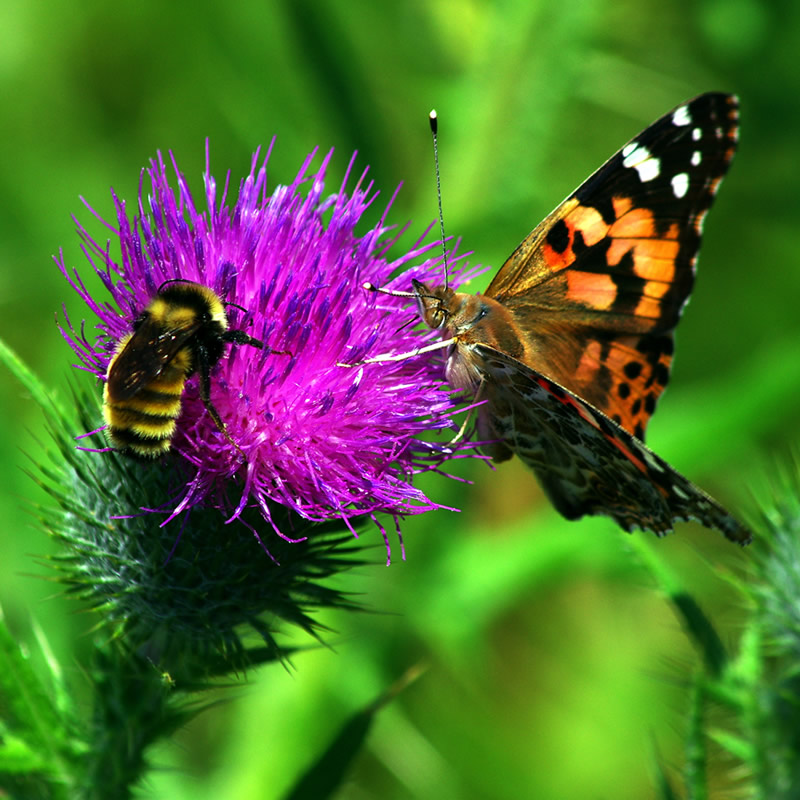
Native wildflowers and UK pollinators have evolved alongside each other over thousands of years. Long-tongued bumblebees need deep-tubed flowers like Red Clover and Common Knapweed. Orange-tip butterflies lay their eggs on Lady’s Smock. The Marsh Fritillary depends almost entirely on Devil’s-bit Scabious as a larval host.
Many garden-centre wildflower mixes contain ornamental varieties that look native but lack the right flower structure, nectar depth, or pollen chemistry. Some contain common poppies and cornflowers – plants that do not naturally occur together in any British habitat.
The best native wildflower mix for pollinators is one where every species earns its place ecologically, not just aesthetically.
The core species in a UK pollinator wildflower mix
A well-designed native mix should include a spread of flowering periods from early Spring to late Autumn.
Bird’s-foot Trefoil (Lotus corniculatus)
One of the most ecologically productive species you can sow. It flowers from late May through August and supports over 130 invertebrate species – including several mining bees, common blue butterflies, and multiple bumblebee species. It establishes well on low-nutrient soils and thrives on thin chalk, limestone, and free-draining loam.
Common Knapweed (Centaurea nigra)
A late-season workhorse that flowers from July into September. Its purple flowers are visited by bumblebees, carder bees, skippers, gatekeepers, and meadow browns. It establishes on a wide range of soils and self-seeds reliably once the sward is established.
Oxeye Daisy (Leucanthemum vulgare)
Reliable and fast-establishing. Oxeye Daisy is often the first species to flower in a new meadow and provides a broad, open nectar platform for hoverflies, beetles, and generalist bees. It flowers June to August and sets seed prolifically.
Field Scabious (Knautia arvensis)
Favoured by long-tongued bumblebees and essential for several fritillary butterflies. Flowers July to September. Slower to establish – expect flowering from year two onwards – but long-lived and worth the patience.
Meadow Cranesbill (Geranium pratense)
The blue-violet flower of neutral and calcareous grasslands, flowering June to August. Visited heavily by bumblebees and provides good nectar depth for longer-tongued species.
Devil’s-bit Scabious (Succisa pratensis)
Flowers September to October – later than almost everything else – providing critical late-season nectar for bumblebee colonies building winter reserves. It is the sole larval host plant of the Marsh Fritillary butterfly. Include it wherever soil moisture allows.
How to read a wildflower seed mix label
Not all pollinator mixes are equivalent. Check: grass-to-forb ratio (60-80% grasses, 20-40% forbs); species count (15-25 minimum); provenance (locally sourced where possible); flowering spread (April through October); and whether the mix is perennial rather than annual.
Matching your wildflower seeds for pollinators to your site
Chalk and limestone soils support the richest pollinator flora in the UK – Wild Marjoram, Horseshoe Vetch, Clustered Bellflower, and Rock Rose all thrive in thin, alkaline conditions. Heavy clay suits Meadow Buttercup, Ragged Robin, Yellow Rattle, and Common Fleabane. Acid soils call for Tormentil, Heath Bedstraw, and Harebell.
Managing your meadow for long-term pollinator benefit
A single late-summer cut in August or September removes bulk grass growth and keeps the sward open. Remove all arisings from the site – leaving them adds nutrients that favour coarse grasses over wildflowers. Yellow Rattle is worth including as a management tool: as a hemi-parasitic annual it reduces grass vigour and opens space for slower-establishing forbs. Sow it fresh in Autumn. Do not expect a fully species-rich meadow in year one – most perennial forbs flower properly from year two onwards.
Wildahome pollinator wildflower seed mixes
Wildahome’s seed mixes are sourced from meadows in Devon and Powys, matched to specific soil types and regions across England and Wales. Each mix is built around genuine native provenance. Seed mats are available for smaller areas, awkward banks, or sites where even distribution is difficult.
If you are not sure which mix suits your site, get in touch – describe your soil type, project scale, and what you have tried before.
Ready to get started?
Shop: Traditional Wildflower Meadow Mix →