


What is a Seed Mat?
What is Improver?
Traditional 80/20 Meadow Mix
£19.50 – £2,143.20Price range: £19.50 through £2,143.20 inc VAT
A classic hay meadow blend — 80% fine native grasses, 20% native wildflowers — for most well-drained soils with strong pollinator and bird value.
🚚 UK delivery £5.95 per order
Larger area or a bespoke mix? Ask us for a quote →
About this product
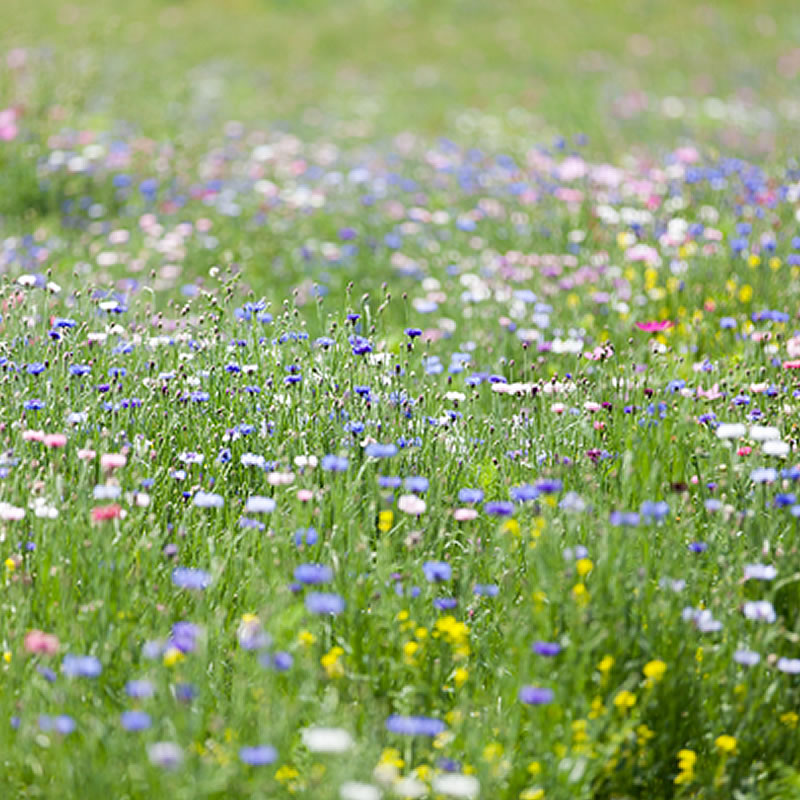
The Traditional 80/20 mix replicates the structure of a classic British hay meadow — fine native grasses forming the permanent sward, with a 20% native wildflower component providing colour, nectar, and seed for wildlife across the season.
It suits most well-drained soil types and is one of our most commonly sown 80/20 mixes for garden meadows, farm margins, and larger amenity areas. The grass matrix gives the meadow stability and resilience, while the wildflower component supports bees, butterflies, and seed-eating birds. Heights range from 30cm to 120cm.
Sow at 5g per square metre into scarified, low-nutrient, exposed soil. Spring (March–May) and early autumn (August–September) are both suitable sowing windows. The grass establishes in year one; wildflowers strengthen from year two. Cut once in late summer, remove cuttings, and allow regrowth — this keeps fertility low and the wildflower content high year on year.
Sourced from Wildahome’s own meadows and UK partner farms. 100% British native species, no cultivars.
Frequently asked questions
What is the Traditional 80/20 Meadow Mix suitable for?
It suits most well-drained soil types and is one of our most commonly sown 80/20 mixes for garden meadows, farm margins, and larger amenity areas. The grass matrix provides stability and resilience, while the wildflower component supports pollinators and wildlife across the season.
How does an 80/20 mix differ from a 100% wildflower mix?
An 80/20 mix includes 80% fine native grasses that form a permanent sward matrix. This gives the meadow a more traditional hay meadow structure and makes it more resilient over time. A 100% wildflower mix is suited to smaller areas or sites with very low-nutrient soil where grass competition is minimal.
How do I sow and establish the Traditional 80/20 Meadow Mix?
Sow at 5g per square metre into scarified, low-nutrient, exposed soil. Spring (March to May) or early autumn (August to September) are both good windows. Remove existing grass before sowing — it competes strongly. The grass establishes in year one; wildflowers strengthen from year two.
How should I manage the Traditional 80/20 mix year on year?
Cut once in late summer after seed has set and remove all cuttings. This keeps soil fertility low, which maintains the balance between grasses and wildflowers. Avoid cutting before August — earlier cuts remove the flowering stems that pollinators and seed-eating birds depend on.
Alsike Clover, (Trifolium hybridum), Bedstraw, Lady’s, (Galium verum), Birdsfoot Trefoil, (Lotus corniculatus), Black Medick, (Medicago lupulina), Burnet, Salad, (Sanguisorba minor), Buttercup, Meadow, (Ranunculus acris), Campion, Red, (Silene dioica), Campion, White, (Silene alba), Carrot, Wild, (Daucus carota), Catchfly, Night-Flowering, (Silene noctiflora), Chamomile, Corn, (Anthemis arvensis), Clover, Red, Clary, Wild, (Salvia verbenaca), Corn Cockle, (Agrostemma githago), Cornflower, (Centaurea cyanus), Cowslip, (Primula veris), Daisy, Ox-eye, (Leucanthemum vulgare), Forget-me-not, Field, (Myosotis arvensis), Foxglove, Wild, (Digitalis purpurea), Goatsbeard, (Aruncus dioicus), Knapweed, Common, (Centaurea nigra), Knapweed, Greater, (Centaurea scabiosa), Lady’s Bedstraw, (Galium verum), Marigold, Corn, (Chrysanthemum segetum), Musk Mallow, (Malva moschata), Poppy, Common, (Papaver rhoeas), Ribwort Plantain, Sainfoin, (Onobrychis), Self-heal, (Prunella vulgaris), Sorrel, Common, (Rumex acetosa), St John’s-wort, Common, (Hypericum perforatum), Yarrow, (Achillea millefolium), Yellow Rattle, (Rhinanthus minor), Hard Fescue, Slender Creeping Red Fescue, Timothy, Chewings Fescue, Strong Creeping Red Fecsue, Smooth-stalked meadow, Sheeps fescue, Tall Oat, Meadow foxtail
Ground Preparation
Sowing
Aftercare: Year 1 & Once Established
Flower Colours: Varied
Plant Height: up to 1.5 metres
Flowering Season: April to October
Setting: Range of soil types