

Brecks Wildflower Seeds: Working With Breckland Rather Than Against It
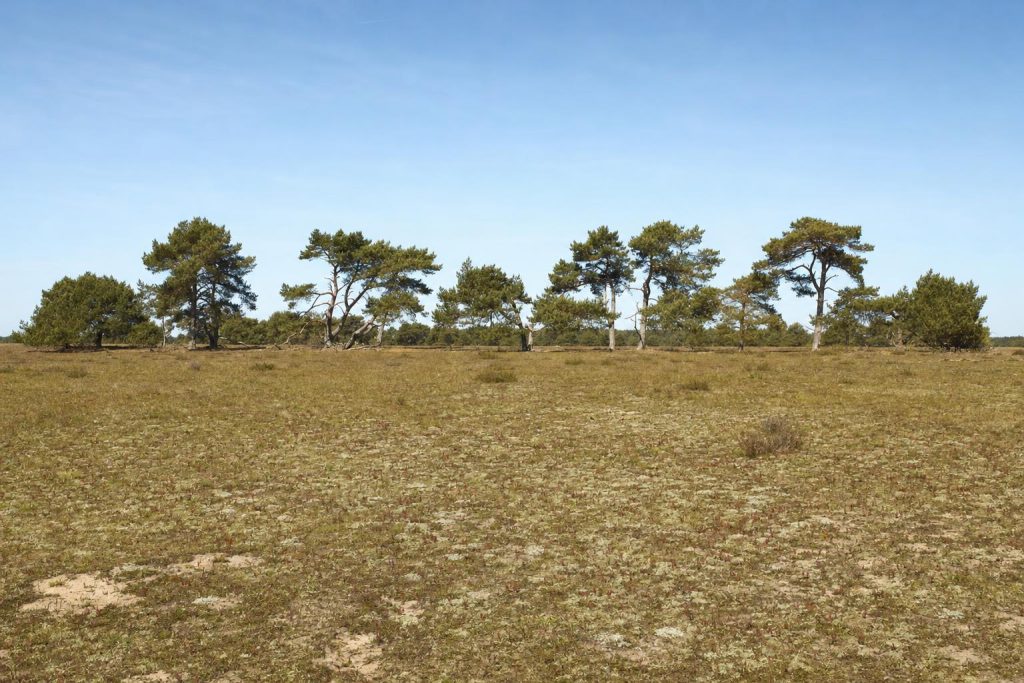
The Brecks, or Breckland, is one of the most unusual landscapes in Britain. On the border of Norfolk and Suffolk, sandy heaths, pine lines, forest and arable fields sit on a patchwork of acid sand and chalky sand, under a climate drier and more continental than almost anywhere else in the country. It covers less than 1% of the UK, yet a 2010 University of East Anglia audit found that around 28% of the UK’s priority species occur here.
That richness depends on disturbance and poor soil, not on sowing. If you are looking for Brecks wildflower seeds, it helps to know that most Breckland habitats are restored by grazing, turf stripping and cultivation, and that many of its rarest plants cannot be grown from a seed mix at all. Seed has a role, but a narrow one.
This guide explains the soils and habitats of the Brecks, why sowing is often the wrong tool, and where a seed mix can genuinely help.
Sand, chalk and patterned ground
The Brecks sit in a shallow chalk basin between Newmarket and Swaffham, covered by glacial and wind-blown sand. During the last Ice Age, freezing and thawing sorted the sand and chalk into stripes and polygons, which still show from the air. Soil can switch from strongly acid sand to lime-rich chalky sand within a few metres. Rainfall is around 600 mm a year, with hot summers, cold winters and frost possible in any month.
That mosaic supports four quite different dry habitats: acid grassland on the deep sands, heather heath, calcareous grass heath on the chalky patches, and arable fields with rare annual plants. It also explains why one seed mix can never suit the whole area.
The habitats of the Brecks
Grass heath and acid grassland
Breckland grass heaths are short, open and often lichen-rich, kept that way by sheep and rabbits. Bare sand is part of the habitat: the audit recommended far more bare ground than standard heathland targets allow, because so many Breckland insects and plants need it. Sowing seed into grass heath disrupts the poor soil and smothers the lichens and specialist plants.
Heather heath
On the most acid sands, heather heath survives in places such as Weeting, Thetford and Cavenham Heaths. It is maintained by grazing, scrub clearance and occasional turf stripping, not seed.
Arable field margins
Breckland’s rare arable plants, such as Breckland speedwell, fingered speedwell and spring speedwell, grow from seed already in the soil. They need margins ploughed each year and left unsown, without fertiliser or herbicide. Sowing a grass or wildflower mix onto these margins smothers them, which is why Plantlife advises never to sow grass margins where rare arable plants survive.
Meres, fens and chalk rivers
The Brecks also hold groundwater-fed meres, pingo ponds and the Little Ouse, Wissey and Lark rivers. These need water protection and buffer strips, not wildflower sowing.
Brecks rarities that cannot be sown
Many of Breckland’s signature plants depend on bare ground, grazing or cultivation at exactly the right moment, and none can be reliably established from a seed mix. They include prostrate perennial knawel, spiked speedwell, field wormwood, Spanish catchfly, grey hair-grass and the rare Breckland speedwells. Common grape-hyacinth is also a native Brecks rarity; garden Muscari bulbs risk swamping it, so do not plant them near Breckland sites. Conservation of these plants relies on careful habitat management and specialist seed banking by groups such as the Breckland Flora Group.
Where a seed mix can help in the Brecks
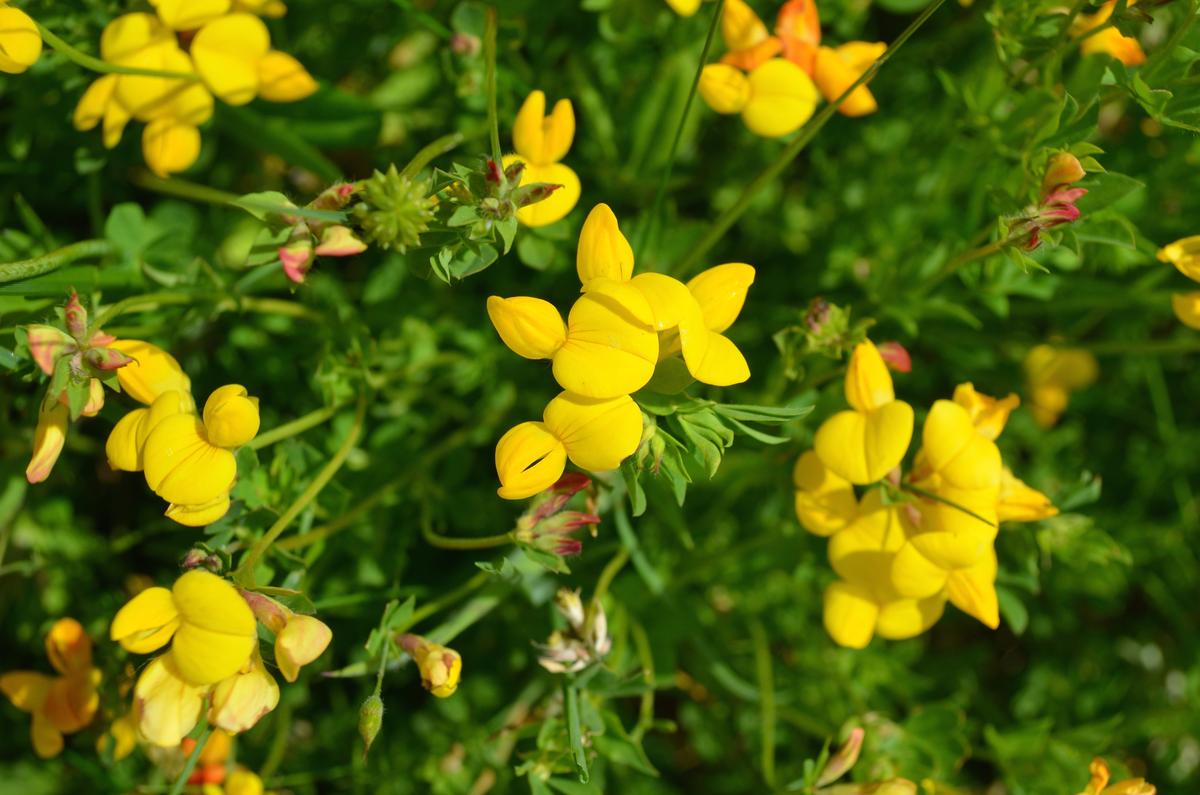
There is one setting where sowing makes sense: former arable land and buffer strips whose seed bank is exhausted, away from designated sites, grass heath and margins with rare arable plants. Wide grass buffers along the Little Ouse, Wissey and Lark catch soil and chemicals before they reach the water, and narrow grass strips beside cultivated margins give insects winter shelter.
In these places, keep the mix simple and native. Fine grasses such as sheep’s fescue (Festuca ovina) and common bent (Agrostis capillaris) with robust flowers such as bird’s-foot-trefoil (Lotus corniculatus) suit the sandy soils. Use yellow rattle only on more fertile reversion land, never near heath. Leave every Breckland specialist out.
Always test the soil first. A pH below about 5.5 points to acid grassland species; above 7 to chalky ground. On anything that already holds heath plants, lichens or arable rarities, manage it rather than sow it.
Wildlife of the Brecks
The Breckland Special Protection Area is designated for stone curlew, woodlark and nightjar. Stone curlews nest on stony, close-cropped heath and bare cultivated fields; ploughed strips and short grazed turf help them, while tall sown swards do not. Turtle doves feed on fumitory-rich cultivated margins in summer, and seed-rich margins in winter feed linnets, yellowhammers and corn buntings.
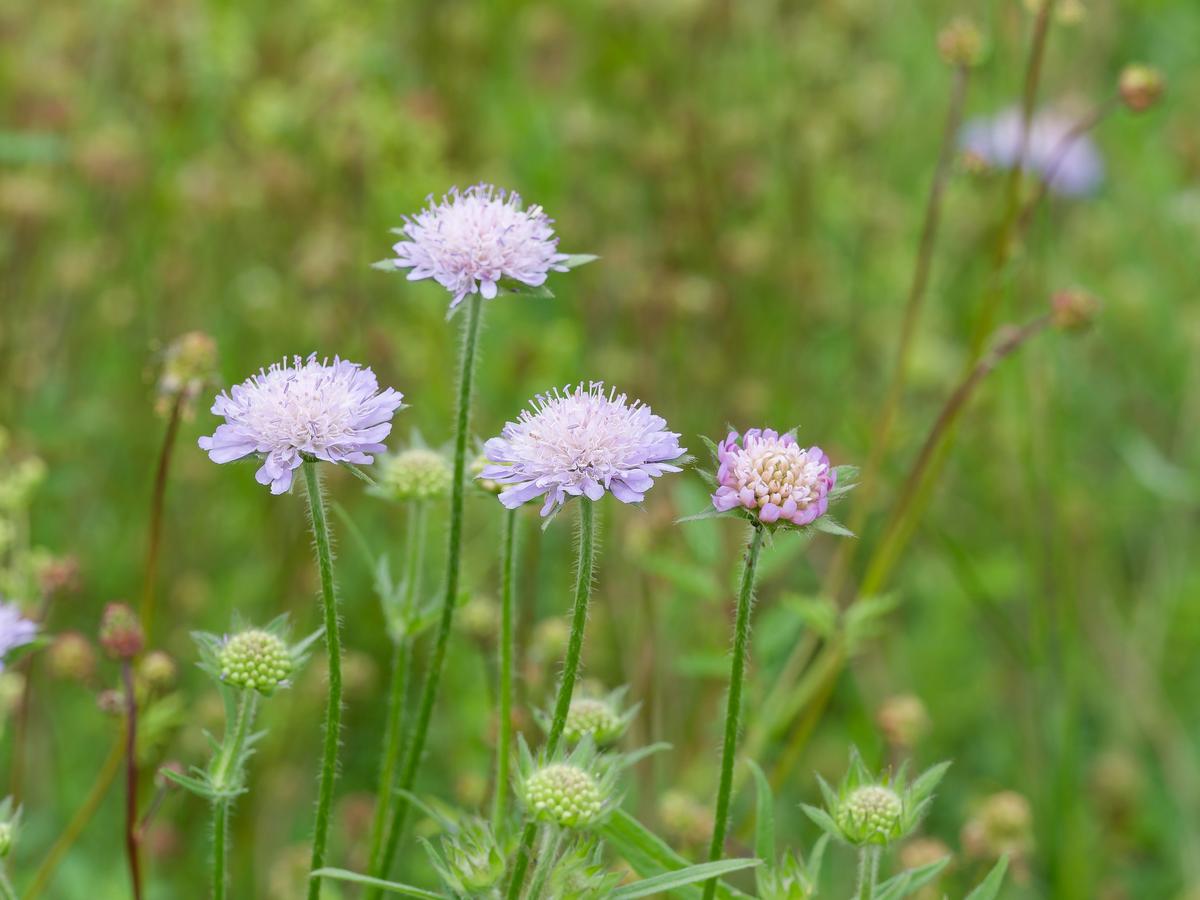
Insects tell the same story. Buglife and the audit found that more Breckland priority species depend on disturbed, open ground, such as cultivated margins, tracks and sandy rides, than on closed grassland. The scarce mining bee Andrena hattorfiana needs tall field scabious for pollen right beside bare sand for nesting. A mosaic of disturbed ground and flowering patches serves Breckland far better than a uniform meadow.
How to sow a Brecks buffer strip
Choose ex-arable ground with no surviving heath or arable rarities. Cultivate to a firm seedbed in late summer, let any weeds germinate and remove them, then sow between mid-August and late October. Mix the seed with kiln-dried sand, sow on the surface and roll it in. Use 5 g/m² for an 80/20 mix of grasses and wildflowers. Do not add fertiliser.
Cut in late summer once flowers have seeded and remove the cuttings. Sheep grazing in autumn and winter suits sandy soils. Keep cultivated margins and grass strips side by side rather than replacing one with the other.
A year of Breckland management
Autumn and winter
Autumn ploughing of arable margins triggers Breckland and fingered speedwells. Turf stripping and scrub clearance on heaths are done outside the bird nesting season. Sheep grazing over winter keeps grass heaths short and open. This is also the window for sowing buffer strips on exhausted arable land.
Spring and summer
Stone curlews return in March and April, so avoid disturbing their nesting areas and plan field work around them. Spring-cultivated margins suit other arable annuals. Through summer, flowering field scabious, viper’s-bugloss and thyme feed bees, while grass heaths are grazed lightly or rested where spiked speedwell is flowering. Cut sown buffer strips in late summer, after seed has set, and remove the cuttings.
Wildahome seed mixes for Brecks sites
For buffer strips on acid sandy ex-arable land, our Acidic Soils 80/20 mix of native grasses and acid-tolerant wildflowers is the best fit. On more neutral sandy loams, our Traditional Meadow 80/20 mix suits. Neither belongs on grass heath, heather heath, inland dunes or margins with rare arable plants, which need management guidance instead.
To be clear about provenance, our mixes contain UK-native species chosen for the soil. They are not harvested in the Brecks. Near designated sites or where local provenance matters, talk to us about a bespoke approach.
Plan your Brecks project
Start by working out what the ground holds now. If it has heath, lichens, bare sand plants or arable rarities, manage it with grazing, disturbance or annual cultivation. If it is exhausted arable land destined for a buffer strip, test the pH and choose a simple native mix. Email hello@wildahome.co.uk with your location and soil results, and see our Norfolk and Suffolk county guides for more.
Frequently Asked Questions
Can I sow wildflower seeds in the Brecks?
On the right ground. Seed suits exhausted ex-arable land and buffer strips away from designated sites, heath and rare arable margins. Grass heath, heather heath and margins with rare arable plants are managed by grazing, disturbance or cultivation instead.
Why are Breckland heaths not sown?
Breckland grass heaths depend on poor, open, sandy soil kept short by sheep and rabbits, with plenty of bare ground. Sowing adds competition, disrupts the soil and smothers lichens and specialist plants that cannot be replaced from seed.
What are Breckland arable plants?
They are rare annuals, such as Breckland speedwell, fingered speedwell and spring speedwell, that grow from seed already in the soil of cultivated field edges. They need margins ploughed each year and left unsown, without fertiliser or herbicide.
Which wildflower mix suits sandy Breckland soil?
For buffer strips on acid sand, an 80/20 mix of fine native grasses and acid-tolerant wildflowers suits. On neutral sandy loam, a traditional meadow 80/20 mix fits. Test the pH first and keep all Breckland specialists out of any mix.
Does sowing wildflowers help stone curlews?
Not directly. Stone curlews need bare, stony or very short ground to nest and feed. Ploughed strips and well-grazed heath help them more than tall sown swards, so keep sown buffers away from their nesting areas.
When should I sow a Brecks buffer strip?
Sow between mid-August and late October on a firm, weed-free seedbed. Sow on the surface, roll it in and avoid fertiliser. Autumn sowing gives seedlings time to root before the dry Breckland summer.
Can I plant grape-hyacinth bulbs in the Brecks?
Avoid garden grape-hyacinths near Breckland sites. Common grape-hyacinth is a native Brecks rarity, and garden forms can cross with it and swamp the wild plant.
Ready to get started?
Shop: Traditional Wildflower Meadow Mix →