

Yorkshire Dales Wildflower Seeds: Restoring Upland Hay Meadows the Dales Way
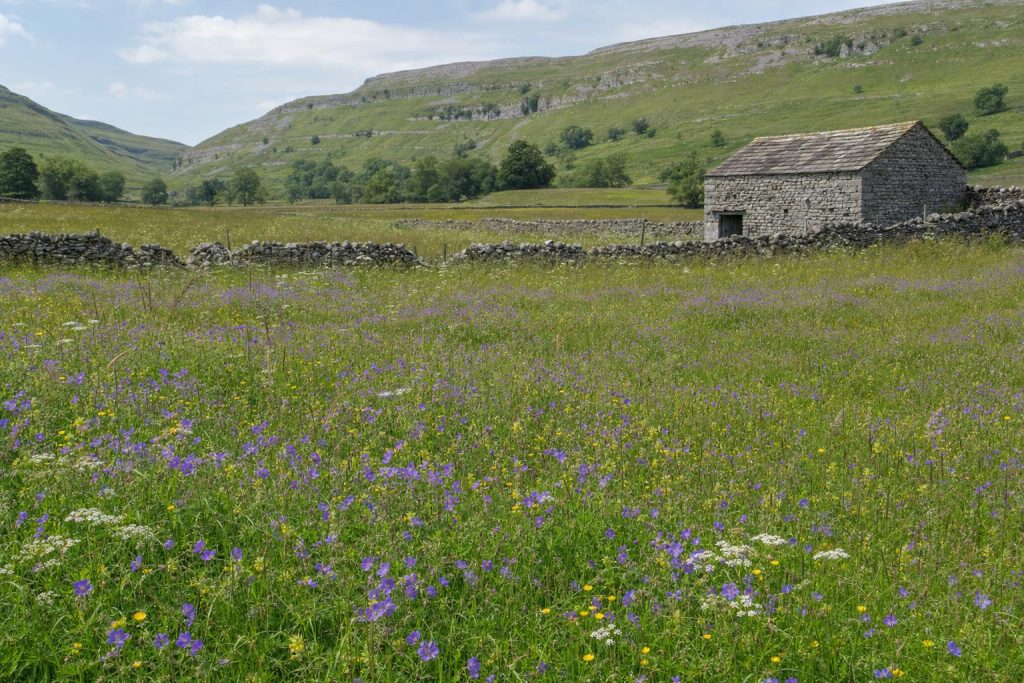
The hay meadows of the Yorkshire Dales are among the rarest grasslands in Britain. In June the dale floors of Swaledale, Wensleydale and Wharfedale turn purple, yellow and white with wood crane’s-bill, buttercups, pignut and yellow rattle, between stone walls and field barns. Fewer than about a thousand hectares of this upland hay meadow survive in the whole of the UK, much of it here and in the North Pennines.
If you are looking for Yorkshire Dales wildflower seeds, the most useful thing we can tell you is this: for real Dales hay meadows, the best seed is local seed, moved as green hay from a neighbouring meadow. Bought seed mixes, including ours, are not the right tool for restoring a Dales meadow. This guide explains why, how local restoration works, and where a mix can still help.
Three habitats, three approaches
Upland hay meadows on the dale floors
The meadows sit on sheltered valley floors, typically between 180 and 500 metres. Their mix of fine grasses with northern plants such as wood crane’s-bill, globeflower, great burnet, melancholy thistle and rare lady’s-mantles is found nowhere else in Europe in quite the same form. The North Pennine Dales Meadows are protected as a Special Area of Conservation.
Limestone grassland and pavement
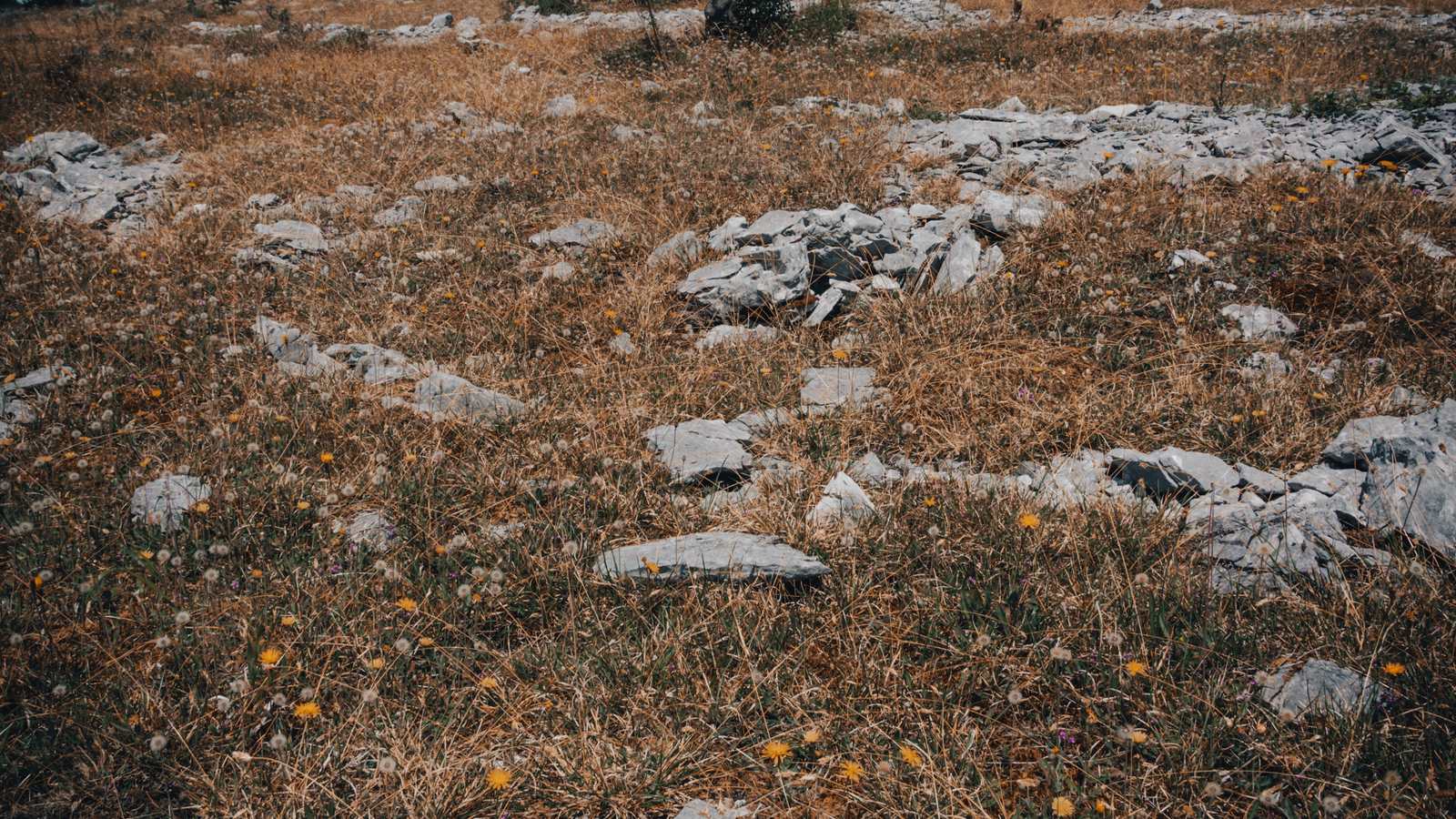
On the scars and benches above, around Malham, Ingleborough and Wharfedale, Carboniferous limestone carries blue moor-grass grassland, wild thyme turf and limestone pavement with ferns in the grikes. These are protected, irreplaceable habitats managed by grazing. They should never be sown.
Acid moorland tops
The fell tops are millstone grit and peat: heather moorland, acid grassland and blanket bog. Restoration means blocking drains, rewetting bog and balancing grazing. Seed has no role there.
Why bought seed is not the answer for Dales meadows
Meadow plants have short-lived seed in the soil, and the meadows are small and scattered, so flowers rarely return to an improved field on their own even when management changes. Seed has to be brought in. The question is where from.
Research in the Dales and North Pennines found that green hay outperforms dry seed mixes for upland meadow restoration. Commercial mixes from elsewhere also risk bringing non-local genetics into one of the country’s rarest plant communities, and they usually lack the slow-growing northern plants that make a Dales meadow what it is. That is why the National Park Authority and its partners use local donor meadows.
How Dales meadow restoration works
The Hay Time project, launched in 2006 by the Yorkshire Dales Millennium Trust and the National Park Authority, showed how. By its first phase it had restored or enhanced more than 140 fields using 100% locally harvested seed, and monitoring recorded clear gains in species richness. The Tees-Swale: Naturally Connected programme has since carried the approach across Upper Swaledale and Teesdale.
- Pick the right receiving field. It needs a committed manager, low phosphorus (index 0 or 1), neutral soil and few pernicious weeds.
- Find a donor meadow nearby. Ideally in the same dale, within about ten miles, and harvest no more than a third of it in any year.
- Prepare the ground. Cut and clear the receiving field, then open up around half the ground as bare soil by grazing or harrowing.
- Spread and tread in. Spread the hay the same day, leave it to drop seed, then graze with cattle to tread the seed in.
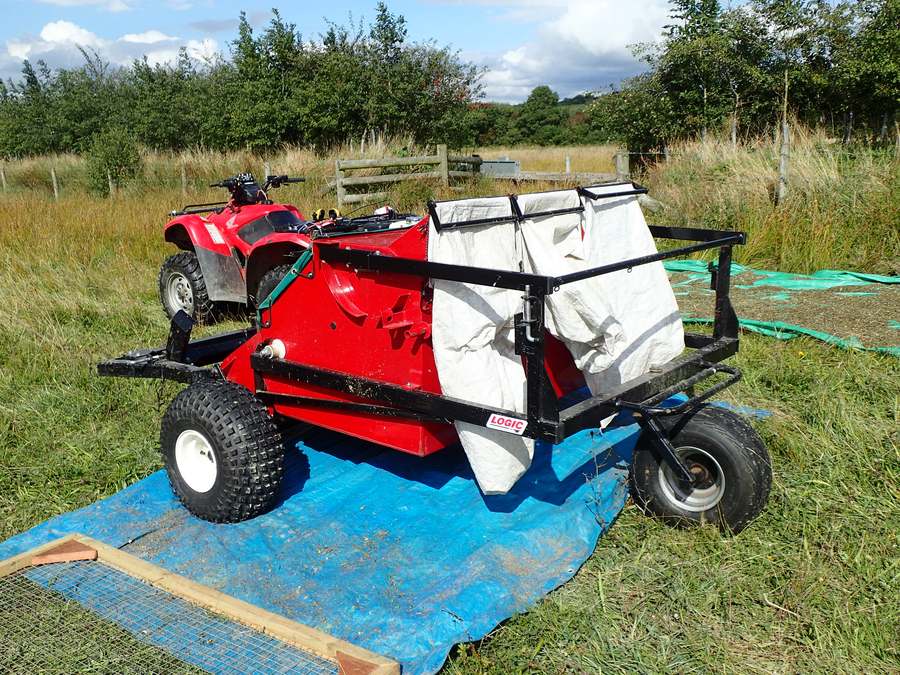
Brush harvesting and seed collected by hand or vacuum from the same donor meadows give more options when weather or access makes green hay difficult. Slow plants such as wood crane’s-bill, globeflower and great burnet often need adding later as plugs grown from local seed.
Wildlife of Dales meadows
The meadows, rushy pastures and moor edges support breeding curlew, lapwing, snipe and redshank, and the Dales help repopulate declining wader populations further south. Black grouse use all three habitats: open ground for leks, rush and heather for nesting, insect-rich meadows for chicks. Bumblebees are the main pollinators of yellow rattle and meadow legumes, and the limestone grasslands hold the northern brown argus butterfly.
Managing a Dales hay meadow
Traditional management is what keeps the meadows rich: light spring grazing, then shut up by late May, no inorganic fertiliser, a hay cut from mid-July once flowers have seeded, and aftermath grazing into autumn. Switching to silage, cutting early, heavy spring sheep grazing and fertiliser are the main reasons meadows have declined. Cattle grazing in autumn helps trample seed in and keep the sward open. Expect restoration to take several years, with yellow rattle and eyebright arriving first and the slower northern plants building up over time.
A year in a Dales hay meadow
Winter and spring
Sheep and cattle graze the meadows lightly through winter and early spring, opening the sward and trampling in seed. On higher dales the meadows are shut up by late May; lower meadows can be cleared of stock earlier so spring flowers get a head start. Keep stock off wet ground and watch for nesting curlew and lapwing from April.
Summer
June is peak flowering, with wood crane’s-bill, buttercups, pignut and yellow rattle. From mid-July, once seed has set, the hay is cut, dried and turned in the field before baling. This is also the time to cut donor meadows and spread green hay on prepared receiving fields.
Autumn
Graze the aftermath with cattle where possible to tread seed in and keep the sward open. Autumn is the time to test soils, plan next year’s receiving fields and plant locally grown plugs of slow species such as great burnet.
Where a seed mix can still help
There are a few situations where bought seed is reasonable, all of them away from the Dales’ meadows and protected sites.
- Gardens and village green spaces in Dales towns and villages, well away from meadows, where the aim is pollinator habitat rather than meadow restoration.
- New verges and community plots outside designated sites, where no donor meadow can be used and soil tests show low fertility.
- Yellow rattle on its own, to weaken grass on a receiving field before green hay goes on, ideally from a local source.
For a field that could become a true Dales meadow, local green hay or local-provenance seed is always the first choice. We can help you find a source, or put you in touch with the right local partners.
Wildahome and the Yorkshire Dales
For gardens and small plots away from the meadows, our Traditional Meadow range suits neutral soils, and yellow rattle can be added where grass is vigorous. To be clear about provenance, our mixes contain UK-native species chosen for the soil, not seed harvested in the Dales, so we do not recommend them for restoring Dales hay meadows. For that, local green hay is the right approach, and we are happy to advise.
Plan your Dales meadow
If you manage a field that could be a hay meadow, start with a soil test, look for a donor meadow nearby and contact the National Park Authority or Yorkshire Dales Millennium Trust about local restoration support. For a garden or small plot, email hello@wildahome.co.uk with your location and soil and we will help you choose. Our Yorkshire county guide and our guide to creating a meadow in Yorkshire cover more.
Frequently Asked Questions
Can I buy Yorkshire Dales wildflower seeds?
Seed genuinely from the Dales comes from local donor meadows, as green hay, brush-harvested or hand-collected seed. Standard commercial mixes, including ours, are UK-native but not Dales-harvested, so they suit gardens and small plots rather than meadow restoration.
What is green hay?
Green hay is freshly cut hay from a species-rich meadow, spread the same day on a prepared field so its seed drops into the soil. It carries local plants and genetics and is the proven method for restoring Dales hay meadows.
What flowers grow in Yorkshire Dales hay meadows?
Typical plants include wood crane’s-bill, meadow buttercup, pignut, yellow rattle, eyebright, great burnet, globeflower, melancholy thistle and lady’s-mantles, with sweet vernal-grass and common bent. Many of the northern specialists establish slowly and spread from local sources.
When are Dales hay meadows cut?
Traditionally from mid-July, once the main flowers have set seed, and later on higher or wetter meadows. The hay is dried and turned in the field so seed falls back, then the regrowth is grazed into autumn.
Why not sow a commercial mix on a Dales meadow?
Green hay has outperformed dry seed mixes in Dales and Pennine trials, and non-local seed risks diluting the genetics of a rare plant community. Commercial mixes also usually lack the slow-growing northern species that define a Dales meadow.
Can I sow wildflowers on limestone pavement or moorland?
No. Limestone grassland, pavement and moorland are protected habitats managed by grazing and hydrology. Sowing seed there is inappropriate and could damage them.
How long does a Dales meadow take to recover?
Expect several years. Yellow rattle and eyebright appear in the first summer, but characteristic perennials such as wood crane’s-bill and globeflower take longer and often need adding as locally grown plugs.
Ready to get started?
Shop: Traditional Wildflower Meadow Mix →