

Weald Wildflower Seeds: Meadows for Clay, Sand and Valley
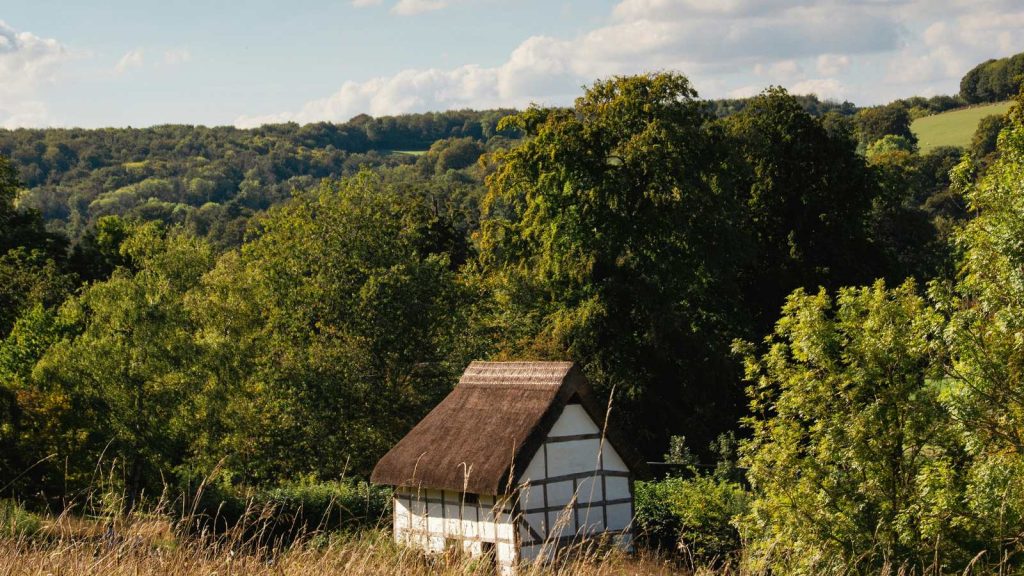
The Weald is one of the most wooded and intricate landscapes in England, a patchwork of small fields, shaws, hedges and streams stretching across Kent, Sussex and Surrey. It was once rich in hay meadows. Choosing Weald wildflower seeds well depends on one thing above all: knowing which part of the Weald you are standing on.
That matters because the Weald is not one soil. It is three quite different landscapes sharing a name. The Low Weald is a broad vale of heavy, wet clay. The High Weald is a maze of sandstone ridges and clay valleys, where soil can change from one field to the next. The Wealden Greensand runs from acid heathland sand to lime-rich beds and wet river meadows.
This guide explains how to tell them apart, which meadow plants suit each one, and how to sow and manage a meadow on Wealden ground. It is written for landowners, smallholders and gardeners who want a meadow that belongs here and lasts, not a single summer of colour.
Three Wealds: why one seed mix will not fit them all
Geologically, the Weald is the worn-down core of a great dome of rock. Erosion has exposed rings of different strata, ringed in turn by the chalk of the North and South Downs. Natural England divides it into three National Character Areas, and for anyone sowing wildflowers the differences between them are practical, not academic.
The Low Weald
The Low Weald wraps around the north, west and south of the High Weald as a flat or gently rolling clay vale, mostly between 15 and 40 metres above sea level. Natural England’s profile for the area records that around three-quarters of its soils are slowly permeable, seasonally wet, slightly acid but base-rich clays and loams. Add the soils with impeded drainage or high groundwater and the figure passes 90%.
That makes the Low Weald unusually consistent. Most fields share the same pattern: waterlogged in winter, hard and cracked in a dry summer, and naturally suited to grass rather than arable crops.
The High Weald
The High Weald is the raised heart of the area, a landscape of sandstone ridges up to about 240 metres, cut by more than a thousand steep, wooded valleys known as gills. Sands and clays sit in alternating layers, so one field may be light, dry and acid while the next is heavy and wet. The High Weald’s own guidance for landowners warns that a soil test in one field may tell you little about the field next door.
The Wealden Greensand
The greensand belt curves around the outside of the Weald, from Folkestone through Surrey to Hampshire and West Sussex. Its soils swing more widely than anywhere else in the region: free-draining, strongly acid sands supporting heathland at places such as Thursley and Woolmer Forest, lime-rich beds that grow quite different grassland, heavy clay vales, and wet floodplains along the Arun and Wey.
Testing your soil before buying Weald wildflower seeds
Because Wealden soils vary so much, a soil test is the single most useful thing you can do before choosing a mix. Test each field separately if you are in the High Weald or on the greensand. Sample across the middle of the field and avoid gateways and troughs, where the soil is compacted and enriched.
Look at two results. The pH tells you which family of plants will thrive: below about 5.5 points to acid grassland and heath, around 6 to 7 to neutral meadow, and above 7 to lime-loving species. The phosphorus index tells you whether wildflowers can compete at all. Index 0 or 1 is good. Index 2 needs careful management. Index 3 or above will favour vigorous grasses and weeds until fertility comes down.
Most improved Wealden pasture has had fertiliser over the years. If yours tests high, the usual route is to take a hay cut and remove it every year for several years before sowing, or to grow a crop without fertiliser on ex-arable land. Simply stopping fertiliser and waiting rarely brings wildflowers back on its own, because most meadow plants have short-lived seed banks and spread only a short distance.
The Low Weald clay meadow
Of the three Wealds, the Low Weald is the one with a clear, consistent meadow character, and it is where sowing makes most sense. The target is the classic lowland hay meadow of heavy neutral soils, known to ecologists as MG5 grassland: crested dog’s-tail and fine fescues with knapweed, buttercups, bird’s-foot-trefoil and, on the best sites, betony and orchids.
Very little of it survives. Natural England’s 2013 profile recorded around 71,600 hectares of grassland in the Low Weald but only about 95 hectares of mapped species-rich lowland meadow. Almost all the rest has been improved for grazing. That gap is the opportunity: a great deal of Low Weald grassland could, with the right management, become flower-rich again.
Species that establish well on Low Weald clay
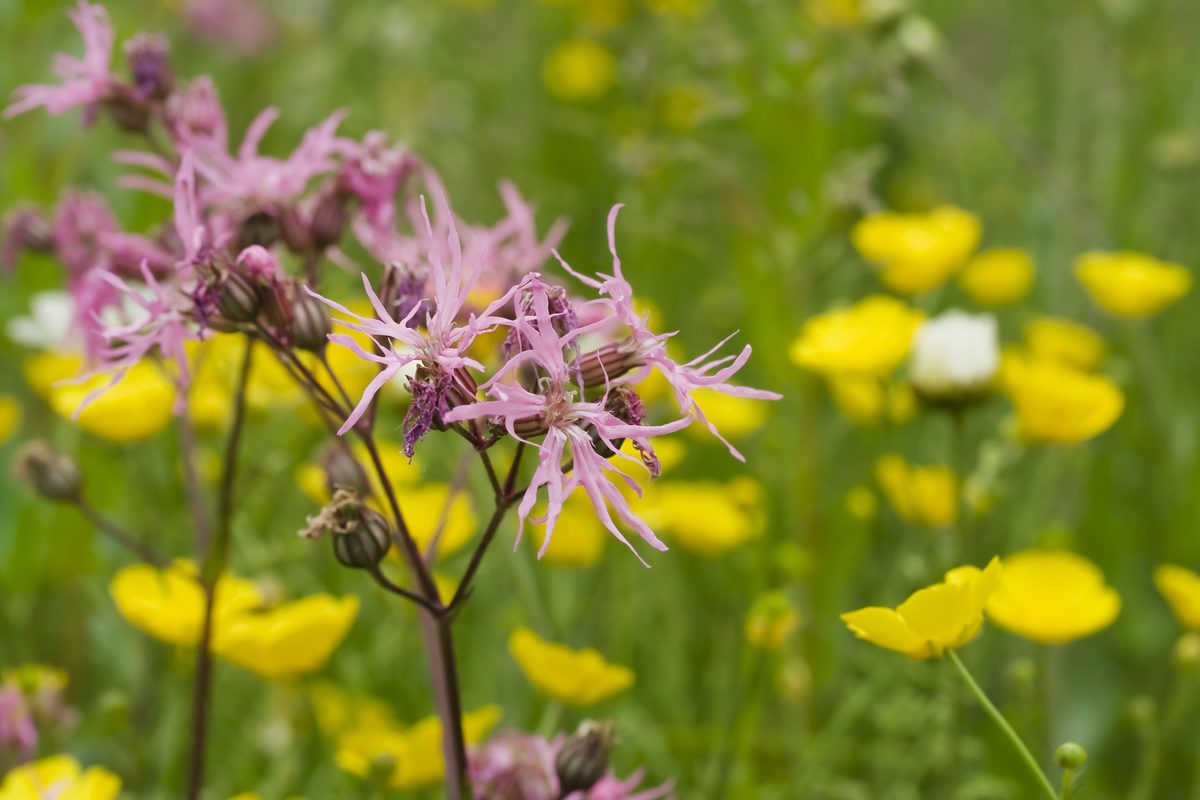
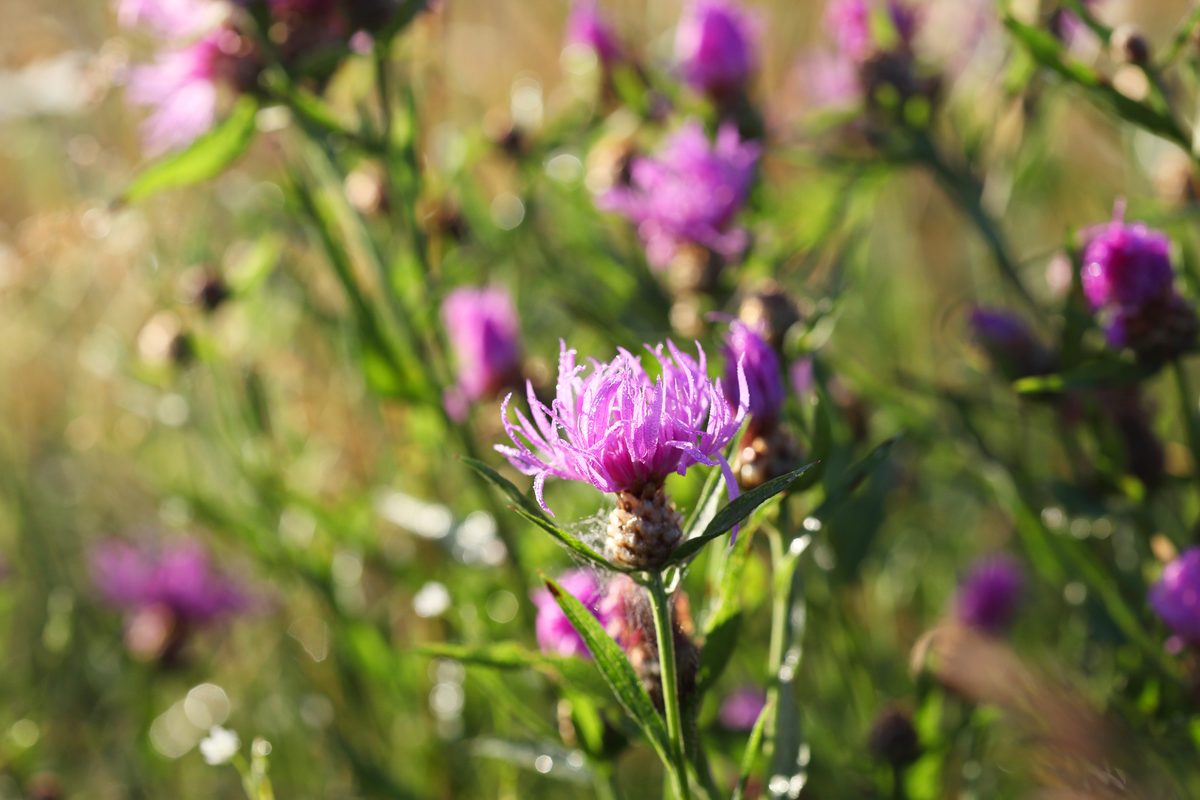
Build a clay meadow around plants that tolerate winter wet and summer drought. Common knapweed (Centaurea nigra) is the backbone, flowering from July into September. Meadow buttercup (Ranunculus acris), oxeye daisy (Leucanthemum vulgare), bird’s-foot-trefoil (Lotus corniculatus), selfheal (Prunella vulgaris) and yarrow (Achillea millefolium) all establish reliably from seed. Ragged-robin (Silene flos-cuculi) thrives in the damper hollows.
The grasses should be fine and slow-growing: crested dog’s-tail (Cynosurus cristatus), red fescue (Festuca rubra) and common bent (Agrostis capillaris). Yellow rattle (Rhinanthus minor) is especially useful on former pasture. It weakens the grasses and opens space for flowers, but it fails in dense ryegrass, so cut the sward hard and expose bare soil before sowing.
Slower clay specialists
Betony (Betonica officinalis), cowslip (Primula veris) and pepper-saxifrage (Silaum silaus) are characteristic of old Wealden clay meadows but slow to establish. Cowslip needs autumn sowing and winter cold to germinate. Pepper-saxifrage in particular is a sign of long-established grassland. Add these later, once the sward has settled, or by plug planting.
Where a clay mix does not belong
Even in the Low Weald there are exceptions. The river floodplains of the Arun, Adur, Ouse, Medway and Beult need wet grassland treatment, not a standard clay mix. Lighter loams in parts of Kent, small patches of acid heath and common, and lime-rich bands near the South Downs all need something different. Never sow a neutral meadow mix onto acid heath or common: it enriches the very ground those rarer habitats depend on.
High Weald meadows and the greensand: guidance before seed
The High Weald still holds some of the finest small meadows in south-east England, often within a medieval field pattern of irregular fields, wooded shaws and sunken lanes. Natural England records around 655 hectares of species-rich meadow and dry acid grassland within the High Weald National Landscape. Many more fields hold valuable grassland that does not meet formal definitions but still supports insects, fungi and small mammals.
Here, sowing a single commercial mix is usually the wrong first step. Soils change too quickly, many fields still hold remnants of their old flora, and introducing non-local seed beside ancient meadows is best avoided. Start by managing what is there: stop fertiliser, take a late hay cut, remove it, and see what returns over two or three years. Where seed is needed, green hay from a nearby species-rich meadow carries local plants and local genetics.
The greensand needs the same site-by-site approach. On the acid sands, heathland and acid grassland recover through grazing, scrub clearance and bare-ground creation rather than sowing. On the lime-rich beds, a chalk and limestone approach may suit. On the clay vales, follow the Low Weald advice above. In the Arun and Wey floodplains, look for specialist wet-meadow guidance.
Wildlife of Wealden meadows
Wealden meadows sit within one of the most wooded landscapes in England, and much of their wildlife value comes from that mix of grassland, hedge, shaw and woodland edge.
- Bumblebees and solitary bees feed heavily on knapweed, bird’s-foot-trefoil and selfheal through high summer, when much of the farmed countryside has little to offer.
- Common blue butterflies lay their eggs on bird’s-foot-trefoil, and meadow browns and other grass-feeding butterflies use the fine grasses of an uncut meadow.
- Damp clay hollows with ragged-robin and rushes support moths, beetles and amphibians, especially where a pond or ditch lies nearby.
Tussocky field edges and late-cut hay give cover for small mammals, which in turn feed barn owls and kestrels. Sowing the right plants gives this wildlife something to use, but it will only arrive and stay if the meadow is managed well and connected to hedges and woodland around it.
How to sow a wildflower meadow on heavy Weald clay
Prepare the ground
Clear perennial weeds such as docks, creeping thistle and nettles first. On existing grass, cut or graze the sward very short in late summer and scarify hard until at least half the ground is bare soil. On ex-arable land, aim for a firm, fine seedbed.
Clay is the hardest soil to prepare. Worked wet, it smears and compacts; worked dry, it sets into hard clods. Choose your moment, and if the ground is too wet in autumn, wait for the next sowing window rather than forcing it. Do not add compost, manure, topsoil or fertiliser.
Sow in late summer to autumn
Sow between mid-August and late October. Mix the seed with kiln-dried sand for an even spread, sow it on the surface and roll or tread it in. Never rake it in. Do not water. Use 3 g/m² for a 100% wildflower mix sown into prepared grassland and 5 g/m² for an 80/20 mix on bare ground. Autumn sowing gives yellow rattle and cowslip the winter cold they need.
Managing a Wealden meadow for the long term
In the first year, cut and remove annual weeds before they set seed so light reaches the young plants. From the second year, take a hay cut once the main flowers have seeded, usually from mid-July into early August on clay meadows and a little earlier on the wettest ground. Leave the hay to dry and drop its seed for a few days, then remove it all.
Graze the regrowth in autumn if you can, or cut and remove it again. Keep livestock off in spring and early summer so plants can flower. On wet clay, move stock off before the ground poaches badly in winter. Light hoof marks help seed into the soil; deep churning does not.
Grazing is becoming harder to find in the Weald. Natural England’s figures showed cattle and sheep numbers in the Low Weald falling sharply in the 2000s. If you have no stock, a neighbour’s sheep or a local conservation grazier can be worth seeking out; otherwise rely on a regular cut-and-collect. Expect three to five years for a sown clay meadow to settle.
Wildahome seed mixes for Weald sites
For the Low Weald clay we recommend our Heavy Clay range, built around species that cope with winter wet and summer cracking. Choose the 100% wildflower mix for sowing into prepared grassland or the 80/20 mix of native grasses and wildflowers for bare ground. For damp hollows and pond margins, our Wetland & Pond mix suits the wettest clay. On lighter loams, the Traditional Meadow mix is the better choice.
To be clear about provenance, these mixes contain UK-native species chosen to suit the soil. They are not harvested in the Weald. If your site lies beside an old meadow, within the High Weald, or needs a closer match to your clay, talk to us about a bespoke blend or a green hay approach.
Plan your Weald wildflower meadow
Start by working out which Weald you are in, then test your soil field by field. On Low Weald clay with a low phosphorus index, our Heavy Clay mixes and a well-prepared autumn sowing can work well. In the High Weald or on the greensand, start with management and talk to us before buying seed. Email hello@wildahome.co.uk with your location, soil results and what you hope to achieve, and we will help you plan.
Frequently Asked Questions
What wildflower seeds grow best on Weald clay?
On Low Weald clay, common knapweed, meadow buttercup, oxeye daisy, bird’s-foot-trefoil, selfheal and yarrow establish reliably, with ragged-robin in damp hollows and fine grasses such as crested dog’s-tail and red fescue. Add yellow rattle to weaken the grass. Betony, cowslip and pepper-saxifrage are characteristic but slower, so add them once the meadow has settled.
Are Weald wildflower seeds locally sourced?
Most are not. Standard mixes, including ours, contain UK-native species chosen for the soil rather than seed harvested in the Weald. Genuinely local seed comes from green hay or seed collected from nearby species-rich meadows with the owner’s permission. Local meadow networks in the High Weald can help match donor and receiving sites.
When should I sow wildflowers on heavy clay?
Sow between mid-August and late October, when the soil is moist but workable. Clay is easily damaged if cultivated wet, so if autumn is too wet to prepare the ground properly, wait for the next sowing window. Sow on the surface and roll the seed in rather than raking it.
What is the difference between the High Weald and the Low Weald?
The Low Weald is a broad, low clay vale with mostly heavy, wet soils and a consistent meadow character. The High Weald is higher ground of sandstone ridges and clay valleys, where soils change quickly between fields. That difference decides whether a single seed mix will work.
Can I sow a wildflower mix in the High Weald?
You can, but it is rarely the best first step. Many High Weald fields still hold remnants of their old meadow flora, and soils vary sharply between fields. Stop fertiliser, take a late hay cut and remove it for two or three years first. Where seed is needed, local green hay is the best option.
Will Weald wildflower seeds grow on greensand?
It depends on the greensand. Acid sands need heathland and acid grassland management, not a meadow mix. Lime-rich beds suit chalk and limestone species, and clay vales suit a clay meadow approach. Test the pH of each field before choosing anything.
How long does a Weald clay meadow take to establish?
Expect three to five years for a sown meadow on clay to settle, and longer on ground with a history of fertiliser. Early years are often dominated by quick colonisers such as oxeye daisy. Slower species like betony and cowslip build up over time with regular hay cutting and removal.
Ready to get started?
Shop: Traditional Wildflower Meadow Mix →