

Chilterns Wildflower Seeds: A Guide to Chalk Slopes and Plateau
The Chilterns are best known for their beechwoods, but between the trees lie some of the finest chalk grasslands in England. Steep slopes at places like Aston Rowant and Barton Hills hold orchids, gentians and pasqueflowers that draw visitors every spring and summer. If you are choosing Chilterns wildflower seeds, the first question is not which flowers you like but which ground you have.
The Chilterns have two very different soils. On the steep scarp and valley sides, thin chalk soils suit downland flowers. On the high plateau, a cap of heavy, acidic clay-with-flints supports woodland, commons and heath instead. Sow a chalk mix on the plateau and most of it will fail.
This guide explains how to tell the two apart, which chalk grassland plants establish from seed, which to leave to the old downland, and how to sow and manage a meadow that improves over time. It is written for landowners, smallholders and gardeners across Oxfordshire, Buckinghamshire, Hertfordshire and Bedfordshire.
What makes the Chilterns distinctive
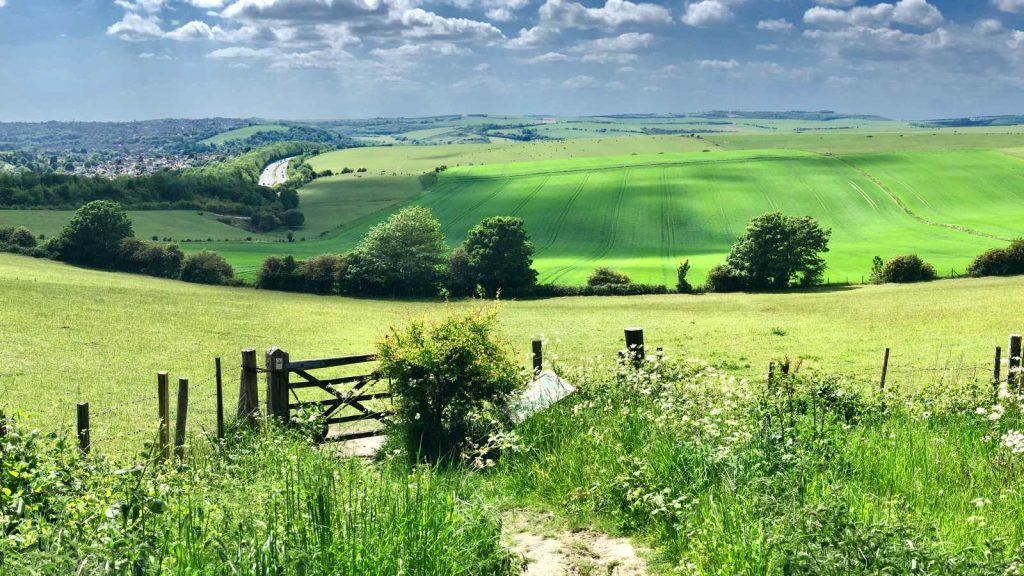
The Chilterns are a ridge of chalk running north-east from the Thames at Goring towards Hitchin, forming the north-western rim of the London Basin. Natural England maps the area as National Character Area 110, covering about 164,000 hectares. Around half of it lies within the Chilterns National Landscape, formerly the Chilterns Area of Outstanding Natural Beauty.
A steep north-west-facing scarp rises above the clay vales of Oxfordshire and Bedfordshire. Behind it, a long dip slope falls gently south-east, cut by dry valleys and a few chalk streams such as the Chess. The chalk is also an important aquifer, supplying water to much of the area.
Woodland defines the Chilterns more than any other chalk landscape. Natural England records more than 23,000 hectares of woodland across the area, over half of it ancient. Chalk grassland survives in pockets between the woods, often in a fine mosaic with scrub and woodland edge. Natural England describes it as less extensive and more fragmented than in other major chalk landscapes, and in Hertfordshire most surviving sites are under a hectare.
Chalk scarp or clay-with-flints: know your Chilterns ground
The chalk scarp and valley sides
Where erosion has stripped the slopes bare, a thin, free-draining chalky soil sits directly on the rock. It is lime-rich, typically above pH 7, low in nutrients and quick to dry in summer. These slopes were too steep to plough, which is why the old downland survives on them. This is chalk grassland country, and where a sown chalk meadow works best.
The clay-with-flints plateau
The higher ground between the valleys is capped with clay-with-flints, a heavy, stony, leached deposit that can be strongly acid. It holds water, so natural ponds are common on the plateau, and it was hard to farm, so it kept much of its woodland and many commons. Open commons on the plateau support heather, gorse and acid grassland. These plants need acid, nutrient-poor soil, and chalk grassland species will not grow there.
The chalk bedrock illusion
Being on chalk bedrock does not guarantee chalky soil. Valley bottoms and footslopes often carry deep, fertile soil washed down from above, and plateau farmland has often been limed for decades, raising its pH. Natural England’s guidance on interpreting soil tests notes that deeper soils over chalk often sit around pH 6.5 or below and support neutral meadow rather than chalk grassland. Test, rather than assume.
Testing your soil before buying Chilterns wildflower seeds
Two results matter. A pH above about 6.5 on a thin soil points to chalk grassland. Between about 5.5 and 6.5 suits a neutral meadow mix. Below that, you are looking at acid grassland or heath, which is restored through management rather than sowing.
Then check phosphorus. Index 0 or 1 is suitable for species-rich grassland. Index 2 is marginal, and index 3 or above will favour vigorous grasses and weeds. Natural England notes one exception on the Chilterns scarp: on very thin, drought-prone chalk, dry conditions can hold back grasses enough for chalk flowers to thrive even at moderate phosphorus.
Most Chilterns arable land has high phosphorus after years of fertiliser. It persists for a long time. Deep ploughing to dilute it gives only a short-lived benefit; repeated hay cutting and removal over many years, or growing crops without fertiliser, is more reliable.
Chilterns chalk grassland plants that grow from seed
The reliable backbone
Build a chalk meadow around species that establish well on thin, low-fertility soil. Salad burnet (Poterium sanguisorba), lady’s bedstraw (Galium verum), greater knapweed (Centaurea scabiosa), field scabious (Knautia arvensis), kidney vetch (Anthyllis vulneraria) and bird’s-foot-trefoil (Lotus corniculatus) form the core. Wild marjoram (Origanum vulgare), wild carrot (Daucus carota) and rough hawkbit (Leontodon hispidus) add later summer colour.
Fine grasses keep the sward open: sheep’s fescue (Festuca ovina), red fescue (Festuca rubra), crested dog’s-tail (Cynosurus cristatus) and quaking grass (Briza media). Include yellow rattle (Rhinanthus minor) to weaken the grasses, sown in autumn so the seed gets the winter cold it needs.
Keep two native grasses out of any sown mix. Upright brome (Bromopsis erecta) and tor-grass (Brachypodium pinnatum) take over chalk grassland wherever grazing eases, and are a management problem on many Chilterns slopes.
Slow starters
Cowslip (Primula veris), horseshoe vetch (Hippocrepis comosa), small scabious (Scabiosa columbaria) and dropwort (Filipendula vulgaris) are characteristic of Chilterns downland but slow to establish and easily outcompeted while fertility is still high. Treat them as a second phase, added once the sward has settled.
The Chilterns specialities to leave alone
The Chilterns are home to plants found in few other places. Chiltern gentian (Gentianella germanica) is the area’s emblem, pasqueflower (Pulsatilla vulgaris) grows on the northern scarp at Barton Hills and Knocking Hoe, and wild candytuft (Iberis amara) needs bare, disturbed chalk. Rare orchids, including monkey and military orchid, grow at a handful of protected sites, and the scarp holds important stands of juniper and native box.
None of these come reliably from seed, and several are rare and protected. Leave them to the old downland and help them by managing nearby grassland well. Be wary of any seed mix that promises them.
A year on Chilterns chalk grassland
Knowing how chalk grassland changes through the year helps you judge timing, from when to sow to when to cut.
Spring
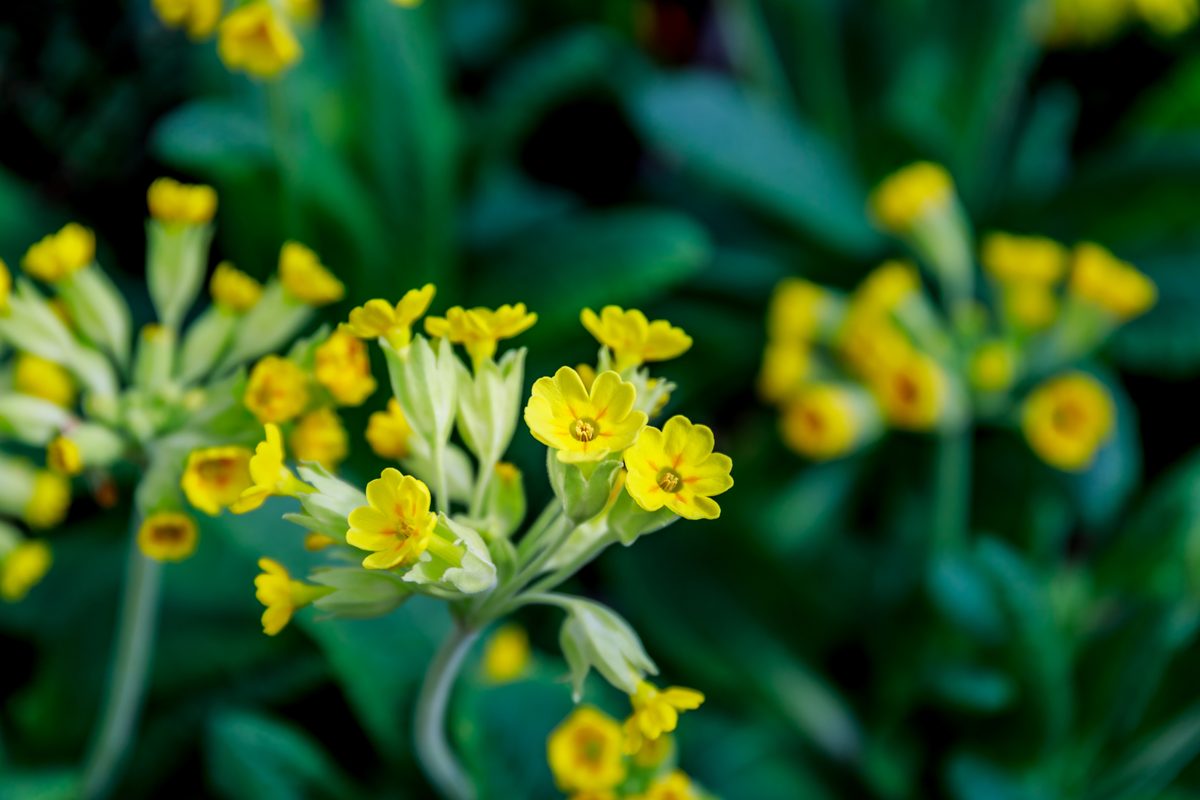
Cowslips open on the slopes in April, and on the northern scarp pasqueflowers bloom around Easter. The turf is still short from winter grazing, and on thin soils the first growth comes early on warm south-facing banks. Keep livestock off sown meadows from early spring so plants can grow and flower.
Early summer
May and June are the peak for orchids and for horseshoe vetch, whose yellow flowers carpet the best slopes. Bird’s-foot-trefoil, salad burnet and quaking grass follow. Yellow rattle flowers now and sets seed by early July.
High summer
From July, greater knapweed, field scabious, marjoram and wild carrot take over, and chalkhill blues fly across the slopes in July and August. This is when the hay cut is taken on sown meadows, once most plants have shed their seed. On thin chalk the turf can scorch brown in a dry summer; it recovers with autumn rain.
Autumn and winter
Chiltern gentian flowers late, from August into autumn, in short, grazed turf. Autumn is the main sowing window and the season for aftermath grazing, which knocks back coarse grass and presses seed into the soil. Winter is the time for scrub cutting, before birds begin nesting in spring.
Wildlife of Chilterns chalk grassland
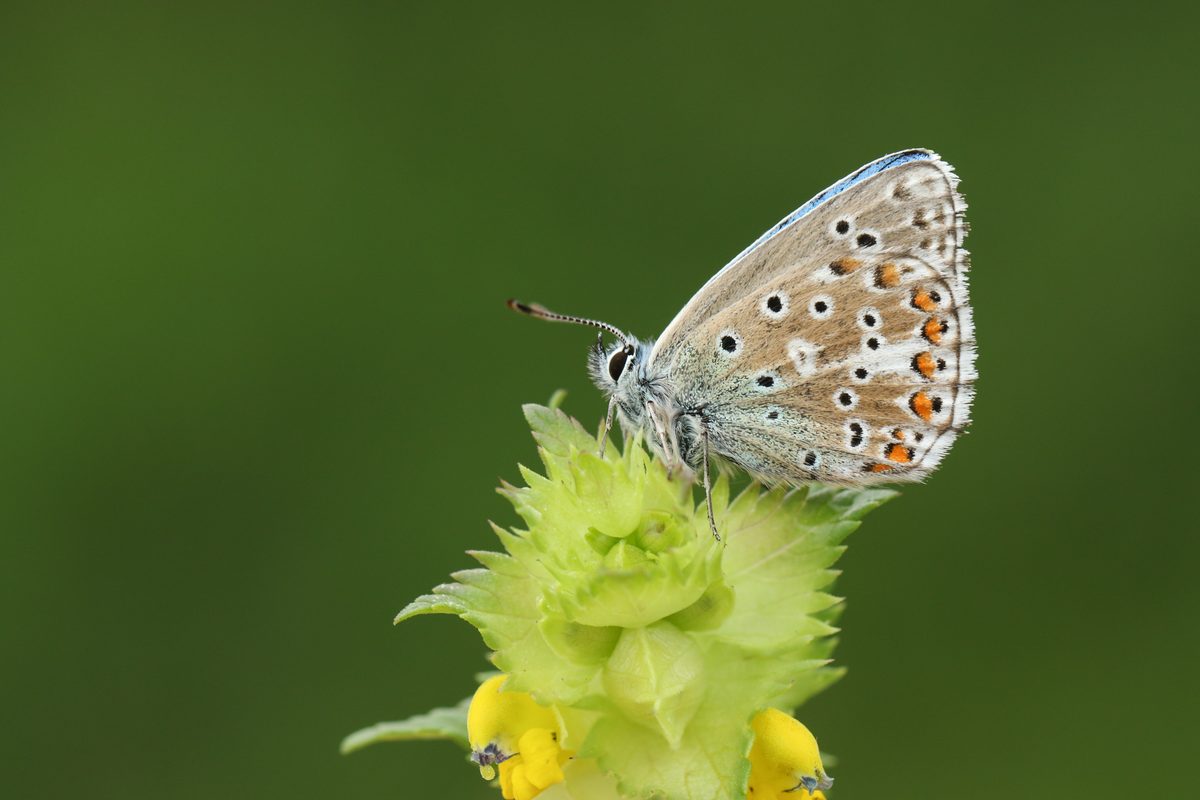
- Chalkhill blue caterpillars feed on horseshoe vetch, so the butterfly is tied to warm slopes where the plant grows.
- Duke of Burgundy lays its eggs on cowslip and primrose in the sheltered mix of grassland and scrub typical of the Chilterns scarp.
- Small blue depends on kidney vetch, laying eggs in its flowerheads, and needs open, bare-ish chalk to thrive.
Knapweeds, marjoram and bird’s-foot-trefoil feed a wide range of bumblebees and solitary bees, and the mix of scrub and grassland supports birds and invertebrates that neither habitat would on its own.
Sown grassland only becomes useful to these species if it sits close to existing colonies and is managed to the right height. Most surviving Chilterns sites are small and isolated, so new grassland that buffers or links them does far more than a stand-alone plot. Sowing the plants offers no guarantee the butterflies will follow.
How to sow a wildflower meadow on Chilterns chalk
Clear perennial weeds such as couch, docks, nettles and creeping thistle before sowing, because they are hard to control once wildflowers are in. Prepare a firm, fine seedbed with plenty of bare soil; flints at the surface do no harm. Do not add compost, manure, topsoil or fertiliser.
Sow between mid-August and late October. Mix the seed with kiln-dried sand, sow it on the surface and roll or tread it in. Never rake it in, and do not water. Use 3 g/m² for a 100% wildflower mix and 5 g/m² for an 80/20 mix of grasses and wildflowers.
Avoid sowing inside or right next to protected downland such as SSSIs and nature reserves. There, natural spread from the existing turf or green hay from a matched local site protects the local plants and their genetics. Many Chilterns slopes also carry archaeology, including the Ridgeway, Icknield Way and hillforts; check before disturbing ground on scheduled monuments.
Managing Chilterns chalk grassland for the long term
In the first year, cut and remove annual weeds before they seed. Once established, take a hay cut in July or August after the main flowers have set seed, leave it a few days to drop its seed, and remove it all. Graze the regrowth in autumn and winter if you can; cattle are especially good at tackling coarse grasses on chalk, and sheep keep the turf short.
Scrub needs regular attention. Hawthorn, dogwood and wayfaring tree spread fast on ungrazed chalk. Some scrub at the edges is valuable, especially for the Duke of Burgundy, but cut it back before it closes over the grassland.
Expect three to five years for a sown chalk meadow to settle. Slower species often show up in the third year, and the sward keeps improving under steady cutting and grazing.
Wildahome seed mixes for Chilterns sites
For the chalk scarp, valley sides and thin chalky farmland we recommend our Chalk & Limestone range. The 100% wildflower mix contains 23 native species for sowing into prepared grassland. The 80/20 mix combines 28 wildflowers with 9 fine native grasses for bare ground and arable reversion. On deeper, neutral valley soils, our Traditional Meadow mix is the better match.
To be clear about provenance, these mixes contain UK-native species chosen for the soil. They are not harvested in the Chilterns. For sites next to protected downland, or where local provenance matters, talk to us about a bespoke mix or green hay.
Plan your Chilterns meadow
Work out whether you are on chalk slope or clay-with-flints plateau, then test pH and phosphorus. Thin chalk with low phosphorus suits our Chalk & Limestone mixes; deeper valley soils suit a neutral meadow mix; acid plateau commons need management rather than seed. Email hello@wildahome.co.uk with your location, soil results and goals, and we will help you choose.
Frequently Asked Questions
What wildflower seeds grow best in the Chilterns?
On thin chalk soils, salad burnet, lady’s bedstraw, greater knapweed, field scabious, kidney vetch, bird’s-foot-trefoil and wild marjoram establish well, with fine grasses such as sheep’s fescue and quaking grass. Add yellow rattle in autumn. Cowslip, horseshoe vetch and small scabious are slower and best added later.
Are Chilterns wildflower seeds locally sourced?
Usually not. Most chalk mixes, including ours, contain UK-native species chosen for chalk soils rather than seed harvested in the Chilterns. Genuinely local seed comes from green hay or seed collected from nearby grassland with the owner’s permission. Ask us about bespoke options if local provenance matters.
What is clay-with-flints and can I sow wildflowers on it?
Clay-with-flints is a heavy, stony, often acidic deposit capping the Chilterns plateau. Chalk grassland mixes fail on it. Unlimed acid commons are best restored as heath or acid grassland through grazing and scrub control. Limed farmland on clay-with-flints may suit a neutral meadow mix; test the pH first.
Can I grow Chiltern gentian or pasqueflower from seed?
Not reliably. Chiltern gentian and pasqueflower depend on old, undisturbed, tightly grazed chalk turf and are slow and difficult to establish. Both are rare, so never take seed or plants from the wild. The best way to help them is good grazing management of existing downland and the grassland around it.
When should I sow a chalk meadow in the Chilterns?
Sow between mid-August and late October. Autumn sowing gives yellow rattle and cowslip the winter cold they need and lets seedlings establish before summer drought on thin chalk. Sow on the surface, roll it in and do not water.
Is Chilterns chalk grassland different from the South Downs?
The core plants are much the same, but the setting differs. Chilterns grassland is smaller, more fragmented and set among beechwoods, with specialities such as Chiltern gentian and pasqueflower. The South Downs have larger open downs and coastal chalk, with round-headed rampion as their emblem. Both suit the same chalk seed mixes.
Will a chalk seed mix attract chalkhill blue butterflies to my land?
It can help but cannot guarantee it. Chalkhill blues lay on horseshoe vetch, which is slow to establish from seed, and they rarely travel far from existing colonies. New grassland near a known colony, kept short by grazing or cutting, has the best chance of being used.
Ready to get started?
Shop: Traditional Wildflower Meadow Mix →