

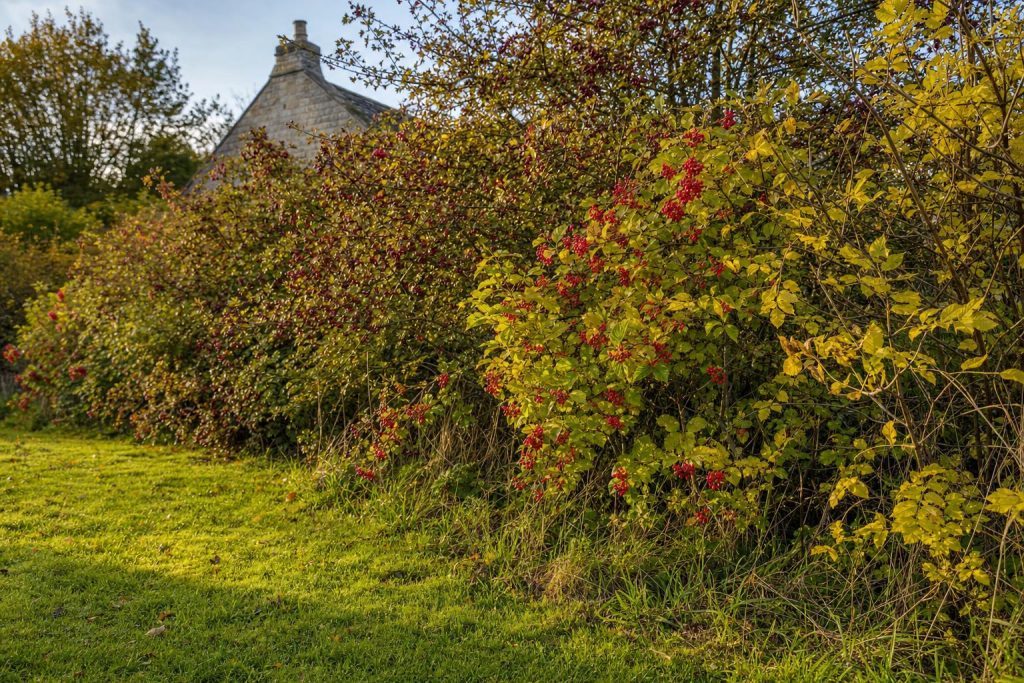
Choosing a Native Hedge for Your Garden: Wildlife, Privacy and Family Hedges
A native hedge for your garden can do several jobs at once: mark the boundary, screen a view, shelter a terrace, and feed and house more wildlife than almost any other feature you could plant. The right mix depends on which of those jobs matters most, and on who will be living alongside it. A hedge for a family garden with toddlers needs different species from a screen for a holiday let or a boundary beside a horse paddock.
This guide walks through how to choose a native hedge mix, which species do what, and how to match a mix to your garden. It’s written for gardens, large plots and small landholdings rather than farm-scale hedgerows, though the principles are the same.
Why plant a native hedge rather than laurel or leylandii?
Laurel and leylandii make a quick screen, but they give little back. Native hedging species have grown alongside British wildlife for thousands of years, and the insects, birds and mammals that depend on them are adapted to them. Hawthorn alone supports hundreds of insect species, which in turn feed the birds that nest in the hedge.
A mixed native hedge also changes through the year: blossom in spring, fruit in autumn, colour as the leaves turn, and shelter in winter. It is easier to keep in proportion than leylandii, and it is far more forgiving of a missed trim.
For a deeper look at hedges as habitat, see our guide to wildflowers for hedgerows and banks.
What to decide before choosing a native hedge mix
Answer four questions first:
- What is the hedge for? Wildlife, screening, keeping animals in or out, or a mix of all three.
- Who uses the space next to it? Children, dogs, horses, footpath users.
- How much winter cover do you need? Most natives drop their leaves; a few hold them.
- What is the site like? Soil type, shade, exposure and whether it is wet in winter.
Once you have those, the right mix usually becomes obvious.
Native hedge mixes compared
| Mix | Best for | Key species | Thorny? | Winter cover |
|---|---|---|---|---|
| Wildlife Garden | All-round wildlife boundary | Hawthorn, blackthorn, hazel, field maple, dog rose, guelder rose | Yes | Low |
| Thornless Family | Children, paths, terraces | Hazel, field maple, hornbeam, guelder rose, dogwood, wayfaring tree | No | Medium |
| Bee & Bird | Pollinators and fruit-eating birds | Hawthorn, blackthorn, crab apple, wild cherry, dog rose, hazel, rowan | Yes | Low |
| Privacy & Shelter | Screening and winter shelter | Hornbeam, beech, holly, hawthorn, field maple, hazel | Partly | High |
| Paddock Edge | Horse and donkey paddocks | Hawthorn, hazel, field maple, hornbeam, dogwood, dog rose | Partly | Low |
A wildlife hedge for an all-round garden boundary
If wildlife is the main aim, build the hedge on hawthorn. It flowers heavily in May, produces haws that thrushes and blackbirds strip in autumn, and its thorny framework gives nesting birds protection from cats. Add blackthorn for early blossom and sloes, hazel for catkins and nuts, field maple for autumn colour, and dog rose and guelder rose for flowers and berries. Our Wildlife Garden Hedge is built this way, with six species in every metre.
A thornless hedge for family gardens
Thorny species can be a real problem beside a lawn where children play, a path, a patio or a terrace. A thornless native hedge leaves out hawthorn, blackthorn and roses, and builds the hedge from hazel, field maple and hornbeam instead, with guelder rose, dogwood and wayfaring tree for flowers and berries. It still supports a wide range of wildlife. See the Thornless Family Hedge.
A pollinator hedge for bees and birds
To support pollinators, choose a mix with a long flowering season. Blackthorn and wild cherry flower in March and April, when early bumblebee queens need food. Hawthorn, crab apple and rowan follow in May, and dog rose carries on into June. The fruit that follows feeds birds well into winter. The Bee & Bird Hedge is designed around that sequence, and it pairs well with a Bee & Butterfly wildflower mix on nearby open ground. For more on pollinator planting, see the best wildflower seeds for pollinators.
A native privacy hedge that keeps its cover in winter
Most native hedges are bare in winter, which is why people turn to laurel. The native answer is hornbeam and beech. When clipped, both hold their dry brown leaves until new growth pushes them off in spring, so the hedge stays dense all winter. Add holly for evergreen cover and winter berries. The Privacy & Shelter Hedge combines these with hawthorn, field maple and hazel for a thicker base and more wildlife value.
A hedge for horse and donkey paddocks
Around grazing animals, leave out species with known toxicity concerns, such as yew, privet, sycamore and oak, and avoid blackthorn’s long thorns. A hawthorn-based mix with hazel, field maple, hornbeam, dogwood and dog rose gives a stock-resistant boundary and useful browse. Our Paddock Edge Hedge is chosen this way and sits well with our Grazing Garden wildflower mix.
Matching a native hedge to your soil and site
Most native hedging species are tolerant, but a few preferences are worth knowing:
- Heavy clay: hawthorn, field maple, hornbeam, hazel and guelder rose all do well. Beech dislikes waterlogging.
- Chalk and limestone: beech, field maple, dogwood, wayfaring tree and hawthorn thrive.
- Acidic or sandy soil: holly, rowan, hazel and hawthorn are reliable.
- Wet ground: guelder rose and dogwood cope well. Avoid beech.
- Shade: hazel, holly and hornbeam tolerate partial shade better than most.
On exposed sites, choose hawthorn and blackthorn-rich mixes, which handle wind well.
How big a hedge do you need?
Work out the length of the boundary in metres, then multiply by the planting density. A double staggered row at 5 plants per metre is standard for a dense garden hedge. Our guide to how many hedge plants per metre explains spacing in full. Our kits are sized to make this easy: 5 m, 10 m, 25 m and 50 m.
Don’t forget the base of the hedge
The strip along the foot of a hedge is one of the richest habitats in Britain when it is given the chance. A sown band of shade-tolerant wildflowers, and spring bulbs such as bluebells, turns a hedge into a proper wildlife corridor. We cover this in what to plant under a hedge.
How our native hedging kits work
Each native hedging kit contains 40–60 cm bare-root native plants mixed to a set recipe, enough for a double staggered row at 5 plants per metre. It also includes seed of our Hedgerow & Banks wildflower mix for the hedge base and a planting and aftercare guide, with delivery included. Kits are dispatched November to March. For step-by-step planting, see how to plant a bare-root hedge.
Still not sure which hedge to choose?
Tell us about your garden through our advice page: the length of the boundary, the soil, how much shade it gets and what you want the hedge to do. We’ll recommend a mix and quantities. For BNG or planning-led projects, see our biodiversity net gain page, and for anything larger or unusual, contact us for a bespoke quote.
Frequently Asked Questions
What is the best native hedge for a garden?
For most gardens, a hawthorn-based mixed native hedge with five or six other species gives the best balance of density, wildlife value and seasonal interest. If children or paths are close by, choose a thornless mix built on hazel, field maple and hornbeam. For winter screening, choose a mix rich in hornbeam, beech and holly.
Which native hedge keeps its leaves in winter?
Holly is the main evergreen native hedging plant. Hornbeam and beech are deciduous, but when clipped as a hedge they hold their dry brown leaves through winter until spring growth pushes them off. A mix of all three gives the best winter cover of any native hedge.
What is a good thornless native hedge for a garden?
A thornless native hedge can be built from hazel, field maple, hornbeam, guelder rose, dogwood and wayfaring tree. It suits gardens with children, dogs, footpaths and patios, and still provides flowers, berries and nesting cover. Leave out hawthorn, blackthorn and wild roses.
How fast does a native hedge grow?
Most native hedging species grow 30–60 cm a year once established. A 40–60 cm hedge planted in winter will usually reach 1.2–1.5 m in three to four years with formative cutting. Hazel, hawthorn and field maple are among the faster species; holly and beech are slower.
Is a native hedge good for wildlife in a small garden?
Yes. Even a 5 m native hedge gives nesting cover, nectar and berries, and links your garden to neighbouring habitat. Choose a mix with several species for a longer season, trim it in late winter rather than summer, and leave a strip of wildflowers along the base.
Can I plant a native hedge instead of a fence?
Yes, and it will outlast any fence. Plant inside the boundary line so the mature hedge stays on your land, protect it with guards or temporary fencing for the first few years, and keep the base weed-free. A double staggered row at 5 plants per metre gives a dense, stock-resistant hedge in three to five years.
Which native hedge is safe for horses?
A mix of hawthorn, hazel, field maple, hornbeam, dogwood and dog rose is widely used around horses and donkeys. Avoid yew, privet, sycamore, oak and box, and keep blackthorn out of paddock hedges because of its long thorns. Fence new hedging off until it is established.
Ready to get started?
Shop: Native Hedging Kits →