

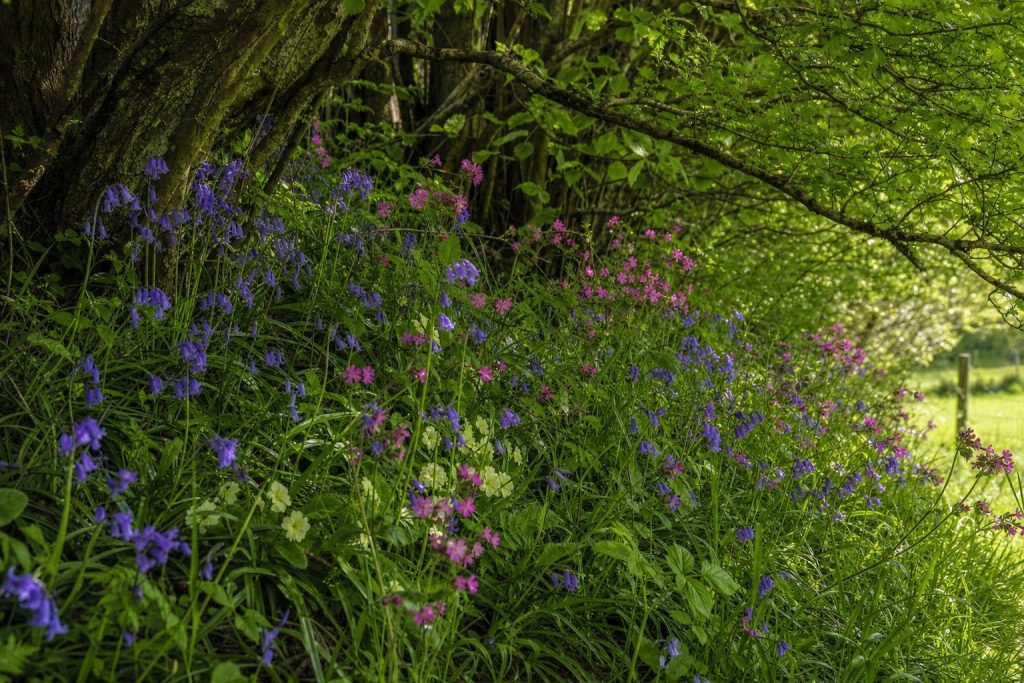
What to Plant Under a Hedge: Wildflowers, Bulbs and Hedge-Bottom Habitat
The strip along the bottom of a hedge is easy to overlook, but it can be one of the richest pieces of habitat in a garden. If you’re wondering what to plant under a hedge, the answer is a band of native shade-tolerant wildflowers and spring bulbs. These mirror the old hedge banks of the British countryside, where primroses, red campion and bluebells flower before the hedge comes into full leaf. This guide explains what grows well at a hedge base, when to plant it, and how to manage it so it lasts.
Why the hedge base matters for wildlife
A hedge gives height, cover and food; the strip at its foot adds what the hedge alone lacks. Ground-nesting bumblebees use the tussocky base, beetles and spiders overwinter in the leaf litter, and hedgehogs, voles and wrens forage along it. Flowers at the base also feed pollinators before and after the hedge itself is in blossom.
Hedge-bottom flora in the countryside has declined where hedges are fertilised, sprayed or cut to the ground every year. A garden or small plot is a good place to bring it back.
For background on this habitat, see our guide to wildflowers for hedgerows and banks.
What grows under a hedge: the conditions
The base of a hedge is not like open ground. Plan for:
- Dappled or partial shade, which deepens as the hedge grows.
- Drier soil close to the hedge, because the roots take much of the water.
- Root competition, so vigorous lawn grasses struggle while woodland-edge plants cope.
- Leaf litter in autumn, which suits spring-flowering woodland species.
That makes woodland-edge and hedge-bank species the natural choice, rather than sun-loving meadow flowers.
Native wildflowers to plant under a hedge
These native species are well suited to a hedge base:
- Red campion (Silene dioica): pink flowers from May to July; tolerates shade. Red campion seed
- Foxglove (Digitalis purpurea): tall spires loved by bumblebees, best at the sunnier edge. Wild foxglove seed
- Wood avens (Geum urbanum): small yellow flowers in deep shade. Wood avens seed
- Primrose (Primula vulgaris): one of the earliest flowers of the hedge bank, for early bees.
- Hedge woundwort, garlic mustard and hedge bedstraw: classic hedge-bottom plants that feed moths and butterflies.
The simplest approach is a mix designed for the job. Our Hedgerow & Banks wildflower mix is selected for dappled shade and the base of hedges, and is 100% wildflowers with no grasses. Where you want a little grass to hold a bank or a slope, use the Hedgerow & Banks 80/20 mix. For deep shade under an older hedge or trees, the Woodland & Heavy Shade mix is better suited.
How to sow wildflowers under a hedge
Sow from mid-August to late October, the same window as our other wildflower mixes. If you’re planting a new hedge in November, you can sow the strip at the same time.
- Clear the strip of grass and weeds, and lightly scuff the surface.
- Mix the seed with kiln-dried sand for an even spread.
- Sow on the surface at the rate on the pack; don’t rake it in.
- Tread or roll it in firmly so the seed is in contact with the soil.
- Don’t water routinely, and don’t add compost, manure or fertiliser.
A low-nutrient soil is what lets wildflowers compete.
Spring bulbs under a hedge
Bulbs flower before the hedge casts full shade, which makes the hedge base a natural home for them.
- Native bluebells (Hyacinthoides non-scripta): the classic hedge-bank flower, best in partial shade. Plant bluebells in the green in late winter to spring, or dry bluebell bulbs in autumn. Our guide to buying and planting native bluebells explains the difference.
- Wild garlic (Allium ursinum): white flowers and edible leaves in damp, shady ground. Wild garlic in the green
- Wood anemone (Anemone nemorosa): a slow-spreading carpet of white flowers, for undisturbed shade. Wood anemone rhizomes
Always buy native bluebells from cultivated stock, never from the wild, and avoid Spanish or hybrid bluebells, which cross with native plants. Bulbs in the green ship from January to April, so they can arrive alongside bare-root hedging. See what arrives in the box for how our bulbs are supplied.
When to plant under a new hedge versus an established one
A new hedge
For the first two to three years, keep a 1 m strip along a new hedge clear of grass so the young plants establish. You can sow a low wildflower mix into that strip, since wildflowers compete far less than grass. Keep vigorous weeds pulled, and leave a small clear ring around each young plant.
An established hedge
Under an older hedge, clear patches of grass and sow or plant into them. Where the hedge base is bare soil and leaf litter, bulbs and woodland species usually do better than seed. Work on a section at a time and let it settle before moving on.
Managing the hedge base
- Cut the strip once a year, in late summer after flowers have set seed, and remove the cuttings so the soil doesn’t get richer.
- Leave some areas uncut each year for overwintering insects.
- Don’t spray or feed the hedge base.
- Don’t cut the hedge between March and August, so birds can nest and the base flowers can bloom undisturbed.
For a grassy hedge base, adding Yellow Rattle helps weaken the grass and let wildflowers in. See how to sow Yellow Rattle.
A complete hedge with the base included
Every one of our native hedging kits includes seed of the Hedgerow & Banks mix for a 1 m strip along the full length of the hedge, so the base is planned from the start. Add bluebells or wild garlic in the green for spring colour. The Wildlife Garden Hedge and Bee & Bird Hedge are particularly good partners for a flowering hedge bank.
Ask us about your hedge base
If your hedge is old, very shaded or on a bank, tell us about it through our advice page and we’ll suggest the right seed mix and bulbs. You can also browse our full shop of native wildflower seed and bulbs.
Frequently Asked Questions
What can I plant under a hedge in the UK?
Native shade-tolerant wildflowers and spring bulbs suit the base of a hedge best. Good choices include red campion, foxglove, wood avens, primrose, native bluebells, wild garlic and wood anemone. A hedge-bank wildflower seed mix sown into a cleared strip is the easiest way to establish a varied hedge base.
Will wildflowers grow under a hedge?
Yes, if you choose shade-tolerant species and clear the grass first. Woodland-edge and hedge-bank wildflowers such as red campion, wood avens and foxglove cope with dappled shade and root competition. Sun-loving meadow flowers will struggle close to a mature hedge.
When should I sow wildflower seed under a hedge?
Sow from mid-August to late October. Sow on the surface, tread it in, and don't add compost or fertiliser. If you're planting a new bare-root hedge in November, you can sow the strip at the same time and let winter cold break the seeds' dormancy.
Can you plant bluebells under a hedge?
Yes. Native bluebells are a classic hedge-bank flower and do well in the partial shade at a hedge base. Plant bluebells in the green from late winter to spring, or dry bulbs in autumn. Always buy cultivated native bluebells, never wild-dug bulbs or Spanish bluebells.
What should I plant under a hedge for bees?
Choose early and late flowers that bloom while the hedge itself isn't flowering. Primrose, bluebell and wood anemone feed early bees in spring; red campion and foxglove follow in early summer. Leave a tussocky, uncut section for ground-nesting bumblebees.
Should I mow under my hedge?
Cut the hedge-base strip once a year in late summer, after the flowers have set seed, and remove the cuttings. Regular mowing prevents wildflowers from flowering and seeding. Leave some sections uncut each year as winter shelter for insects.
How do I stop grass growing under a new hedge?
Clear a 1 m strip before planting and keep it weeded for the first three years. A mulch mat or wood-chip mulch helps. Once the hedge is established, sowing a hedge-bank wildflower mix with Yellow Rattle reduces grass competition naturally.
Ready to get started?
Shop: Native Hedging Kits →