

Wildflower Seeds for the West Midlands: Native Mixes for Heathland, Black Country Brownfield and Urban Parks
Wildflower Seeds for the West Midlands: Native Mixes for Heathland, Black Country Brownfield and Urban Parks
The West Midlands metropolitan county — Birmingham, Wolverhampton, and the Black Country boroughs of Sandwell, Dudley, Walsall, plus Solihull and Coventry — is one of England’s most heavily built-up areas, but it holds more genuine wildflower potential than its urban reputation suggests. Sutton Park, at Birmingham’s northern edge, is one of the largest urban National Nature Reserves in Europe, preserving sandy heathland and acid grassland that predates the city around it. The old industrial heartland of the Black Country has left behind a legacy of brownfield ground that, counterintuitively, often supports richer wildflower communities than tidier modern development. And the wider county’s clay lowland, an extension of neighbouring Warwickshire’s Arden country, underlies most of the remaining green space. Choosing wildflower seeds for the West Midlands means matching the mix to which of these three very different contexts your site sits in.
The region is also home to Purple Horizons, one of the more ambitious landscape-scale nature recovery projects in England — a genuine sign that habitat restoration at real scale is achievable even in one of the country’s most densely populated counties.
Understanding the West Midlands’ ground before you sow
The West Midlands splits into three practical zones: heathland and acid ground, Black Country brownfield, and urban clay.
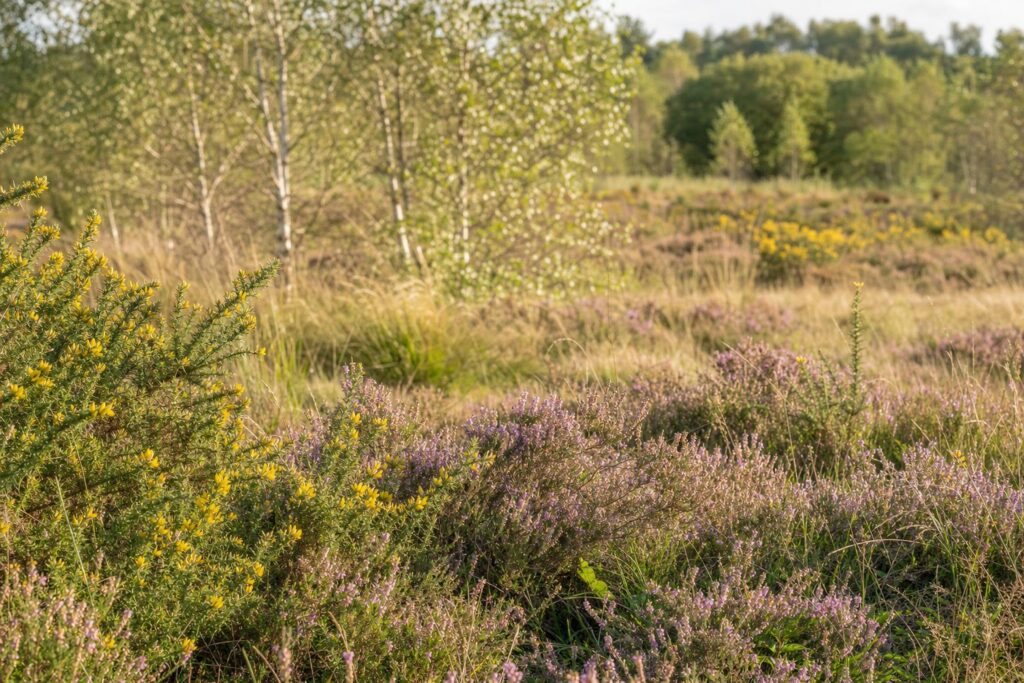
Heathland and acid grassland
Sutton Park and the sandy ground around it, along with pockets of surviving heath elsewhere in the north of the county, sit on acidic, free-draining, low-nutrient sand. An acidic soils mix is the right fit here, and this ground often establishes faster than clay precisely because it’s naturally low in nutrients already.
Black Country brownfield
Former industrial land across Sandwell, Dudley and Walsall — old quarries, spoil heaps, disused railway sidings and demolition sites — is hugely variable, but frequently low-fertility and free-draining, sometimes calcareous where limestone or industrial spoil is present. A general-purpose neutral grassland mix usually suits this ground well, and a soil test is worth doing before committing to a chalk-leaning or acid-leaning blend, since brownfield chemistry varies enormously site to site.
Urban clay
Most of Birmingham, Coventry and Solihull sits on heavier clay, an extension of the Arden clay found across neighbouring Warwickshire. A heavy clay mix suits open ground here, while a wildflower seed mat is often the more reliable choice for smaller or disturbed urban plots.
Choosing the right wildflower seeds for the West Midlands’ habitats
Purple Horizons is the standout case study for what’s achievable at scale in this county. Led by Birmingham & Black Country Wildlife Trust, the project spans up to 12,000 hectares of Walsall and south Staffordshire countryside, connecting Sutton Park National Nature Reserve to Cannock Chase Area of Outstanding Natural Beauty — home to the region’s largest remaining heathland. The project has already created 42 hectares of new habitat, reconstructing fragmented heathland, grassland, woodland and wetland to strengthen ecological connectivity across a landscape that’s otherwise heavily built-up and fragmented. Within six months of new sandy nesting habitat being created, the nationally endangered tormentil mining bee had already moved in — a genuinely fast result that shows how responsive some species are to well-targeted habitat creation, even in a heavily developed part of the country.
What makes Purple Horizons particularly relevant for landowners is its funding model: the project combines biodiversity net gain and sustainable farming incentives to make habitat creation financially viable for farmers, generating between roughly £15,000 and £35,000 per biodiversity unit created. It’s a genuine, working example of conservation and land management economics aligning, rather than competing, in the West Midlands specifically.
Birmingham & Black Country Wildlife Trust also runs the Magnificent Meadows project, working with local landowners and community groups to restore and create species-rich grassland across the region — a good route in for anyone with a smaller site wanting to connect to wider conservation expertise rather than starting entirely from scratch. Between the heathland restoration around Sutton Park and the grassland work happening across the Black Country’s brownfield sites, there’s a genuinely active conservation network in the West Midlands to draw on.
Sowing wildflower seeds in the West Midlands: timing and ground preparation
Autumn sowing, ideally August to October, is the standard optimal window across the West Midlands. On heathland and acid ground, and on much of the free-draining Black Country brownfield, autumn sowing reduces drought stress on seedlings established before a dry spell. On urban clay, it avoids working wet ground the following spring. Our guide to why Yellow Rattle is essential for wildflower meadows explains its role in suppressing the vigorous grass typical of much of the region’s improved and urban ground.
Heathland and acid ground is often naturally low-fertility already, needing minimal preparation. Brownfield sites need individual assessment — some are genuinely low-nutrient and ready to sow into with minimal work, while others carry contaminated or highly variable ground that needs professional assessment before any planting. Urban clay, and any former arable or improved pasture, needs standard preparation: topsoil removal where practical, or several seasons of cropping off without fertiliser. Our guide to establishing a wildflower meadow and note on the best times to sow cover the general sequence in more depth.
Managing your West Midlands wildflower meadow long-term
Budget three years for a proper result on any West Midlands site: modest establishment growth in year one, a partial flowering display in year two, and a full meadow from year three onward. An annual late-summer cut with arisings removed is the backbone of long-term management, whether it’s a domestic garden, a community plot, a former brownfield site or land connected to a larger scheme like Purple Horizons.
Around Sutton Park and other heathland fragments, grazing or periodic scrub clearance is often used alongside cutting to stop birch and bramble encroaching on open heath — a genuine risk on ungrazed acid ground left unmanaged for more than a season or two. Elsewhere in the county, the standard rule applies: resist fertilising, and always remove what you cut rather than leaving it to rot down and re-enrich the soil.
Wildflower seeds for larger-scale projects and Biodiversity Net Gain in the West Midlands
Birmingham City Council and the other West Midlands boroughs apply the mandatory England-wide 10% Biodiversity Net Gain requirement to qualifying developments, following the standard three-step hierarchy: on-site habitat creation or enhancement first, off-site mitigation on owned or purchased land second, and statutory credits only as a genuine last resort. Councils across the region require early consideration of biodiversity through site selection and layout design, and prohibit strategic habitat clearance ahead of a planning application specifically to prevent developers gaming the baseline assessment.
Purple Horizons itself demonstrates how BNG funding can work at real scale here, channelling development-linked income into farmer-led habitat creation across the Sutton Park to Cannock Chase corridor. For developers working across the West Midlands, and for landowners at the region’s rural fringe considering off-site habitat delivery, that project is a useful working model of how the economics can align. Our guide to wildflower seeds for Biodiversity Net Gain beyond the baseline and our housing and development page cover sourcing seed for projects at this scale.
Locally sourced wildflower seeds for the West Midlands
Wildahome’s seed is harvested from donor meadows in Devon and Powys, then selected specifically as wildflower seeds for the West Midlands’ heath-to-clay soil range and the region’s climate, rather than sold as one generic UK mix. For most gardens, community spaces and BNG sites, that regional matching gives noticeably better establishment than seed with no connection to local conditions at all. Read more about why locally sourced wildflower seeds really matter.
For larger or mixed-ground West Midlands sites — a former brownfield plot, or a habitat scheme responding to Biodiversity Net Gain requirements — our bespoke wildflower seed mixes service builds a blend around your actual site survey.
Ready to choose the right mix?
Whether you’re sowing a garden meadow in Birmingham, restoring heathland ground near Sutton Park, or working with a former Black Country industrial site, matching the mix to your ground is the decision everything else depends on. Browse our full range of wildflower seed mixes, explore our advice section, or get in touch if your site needs a bespoke approach.
Frequently Asked Questions
What are the best wildflower seeds for the West Midlands?
It depends on your site. Sandy heathland ground near Sutton Park suits an acidic soils mix; Black Country brownfield sites vary enormously and often suit a general-purpose neutral grassland mix, best confirmed with a soil test; and urban clay across Birmingham, Coventry and Solihull needs a heavy clay mix.
Can brownfield land in the Black Country grow good wildflower meadow?
Often, yes — former industrial ground is frequently low-fertility and free-draining, conditions wildflowers favour over vigorous grass. But brownfield chemistry varies hugely from site to site, sometimes including contamination, so a soil test or professional assessment is worth doing before planting rather than assuming any brownfield site is automatically suitable.
When should I sow wildflower seeds in the West Midlands?
Autumn, ideally August to October, is the standard window across the region. It reduces drought risk on free-draining heathland and much brownfield ground, and avoids working wet clay the following spring.
Does the West Midlands have a mandatory Biodiversity Net Gain requirement?
Yes. Birmingham City Council and the other West Midlands boroughs apply the England-wide mandatory 10% Biodiversity Net Gain requirement, following a three-step hierarchy of on-site delivery, off-site mitigation, then statutory credits as a last resort.
What is Purple Horizons?
Purple Horizons is a landscape-scale nature recovery project led by Birmingham & Black Country Wildlife Trust, spanning up to 12,000 hectares between Sutton Park National Nature Reserve and Cannock Chase AONB. It has created 42 hectares of new habitat so far, funded partly through biodiversity net gain and sustainable farming incentives that pay farmers for habitat creation.
Is West Midlands seed the same as seed from other counties?
Not exactly, but it’s closely matched. Wildahome’s seed is harvested from donor meadows in Devon and Powys, then selected specifically as wildflower seeds for the region’s heath-to-clay soil range and climate, rather than sold as one generic UK mix.
How long does it take to establish a wildflower meadow in the West Midlands?
Budget three years for a proper result: modest growth in year one, a partial flowering display in year two, and a full meadow from year three onward. Don’t judge a new meadow’s success by its first summer alone, whether it’s a garden plot or a former industrial site.
Ready to get started?
Shop: Traditional Wildflower Meadow Mix →Frequently asked questions
What are the best wildflower seeds for the West Midlands?
It depends on your site. Sandy heathland ground near Sutton Park suits an acidic soils mix; Black Country brownfield sites vary enormously and often suit a general-purpose neutral grassland mix, best confirmed with a soil test; and urban clay across Birmingham, Coventry and Solihull needs a heavy clay mix.
Can brownfield land in the Black Country grow good wildflower meadow?
Often, yes — former industrial ground is frequently low-fertility and free-draining, conditions wildflowers favour over vigorous grass. But brownfield chemistry varies hugely from site to site, sometimes including contamination, so a soil test or professional assessment is worth doing before planting rather than assuming any brownfield site is automatically suitable.
When should I sow wildflower seeds in the West Midlands?
Autumn, ideally August to October, is the standard window across the region. It reduces drought risk on free-draining heathland and much brownfield ground, and avoids working wet clay the following spring.
Does the West Midlands have a mandatory Biodiversity Net Gain requirement?
Yes. Birmingham City Council and the other West Midlands boroughs apply the England-wide mandatory 10% Biodiversity Net Gain requirement, following a three-step hierarchy of on-site delivery, off-site mitigation, then statutory credits as a last resort.
What is Purple Horizons?
Purple Horizons is a landscape-scale nature recovery project led by Birmingham & Black Country Wildlife Trust, spanning up to 12,000 hectares between Sutton Park National Nature Reserve and Cannock Chase AONB. It has created 42 hectares of new habitat so far, funded partly through biodiversity net gain and sustainable farming incentives that pay farmers for habitat creation.
Is West Midlands seed the same as seed from other counties?
Not exactly, but it's closely matched. Wildahome's seed is harvested from donor meadows in Devon and Powys, then selected specifically as wildflower seeds for the region's heath-to-clay soil range and climate, rather than sold as one generic UK mix.
How long does it take to establish a wildflower meadow in the West Midlands?
Budget three years for a proper result: modest growth in year one, a partial flowering display in year two, and a full meadow from year three onward. Don't judge a new meadow's success by its first summer alone, whether it's a garden plot or a former industrial site.
More county guides
Find the right native wildflower mix for your county, or browse our full list by region.