

Wildflower Seeds for Greater Manchester: Native Mixes for Mosslands, Pennine Fringe and Urban Green Space
Wildflower Seeds for Greater Manchester: Native Mixes for Mosslands, Pennine Fringe and Urban Green Space
Greater Manchester’s landscape is shaped by two very different stories. To the west and south-west, the county sits on what was once one of the largest expanses of lowland raised peat bog in England — the mosslands around Chat Moss, Astley Moss and Little Woolden Moss — now reduced to fragments after centuries of drainage and peat extraction. To the east, the ground rises sharply into the Pennine fringe around Saddleworth and Tameside, genuinely upland in character. And in between sits one of England’s largest urban areas, where most wildflower projects actually happen: gardens, parks, road verges and community green space on soil that’s been built on, dug up and built on again for two centuries. Choosing wildflower seeds for Greater Manchester means being honest about which of these three contexts you’re in.
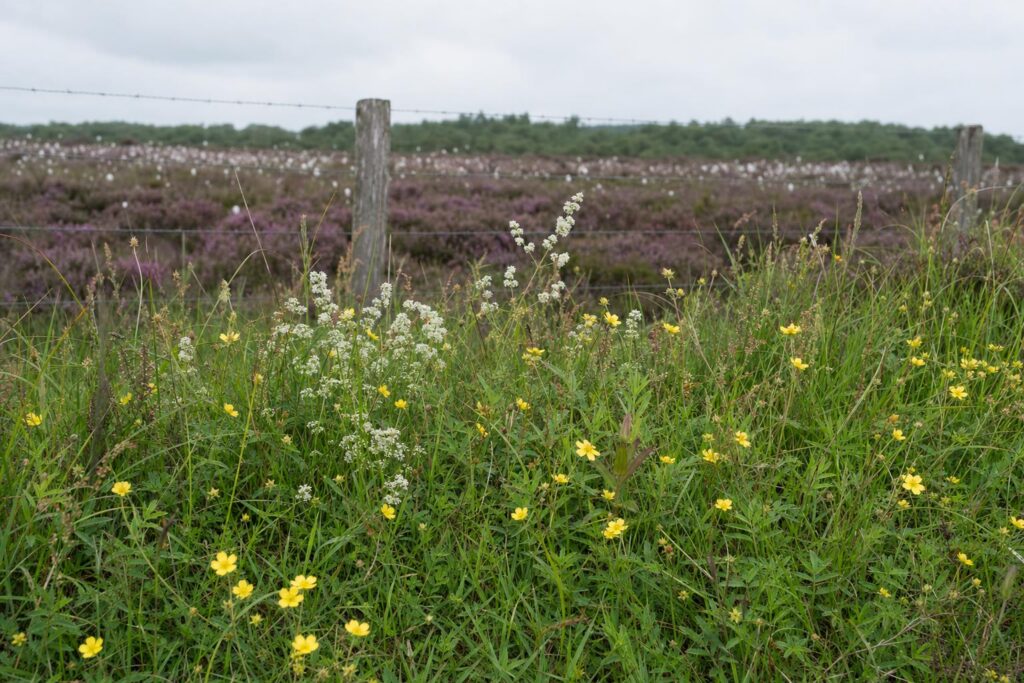
It’s worth saying plainly: the mosslands themselves are being restored as lowland raised bog, using sphagnum moss, cotton grass and heather rather than a conventional wildflower meadow mix — a specialist discipline in its own right, not something a standard seed mix is designed for. But the acid, low-nutrient ground at the margins of the mosslands and across much of the wider county’s older grassland responds very well to the right wildflower approach, and that’s where most practical projects here actually sit.
Understanding Greater Manchester’s ground before you sow
Greater Manchester splits into three practical zones: the mossland margins, the Pennine fringe, and the urban core.
Mossland margins and acid low-lying ground
Land bordering the county’s remaining mosslands — Chat Moss, Astley Moss, Little Woolden Moss, Red Moss and others — tends to be acidic and low-fertility once you’re off the actively managed peat itself. An acidic soils mix suits this margin ground well, though the bog habitat proper needs specialist peatland restoration rather than a wildflower mix.
The Pennine fringe
Around Saddleworth, upper Tameside and the eastern edge of Oldham and Rochdale, ground rises into genuine upland moorland fringe, cold and acid, similar in character to the Pennine dales further north. A general-purpose neutral grassland mix, sown with patience, suits improved pasture in this zone.
Urban parks, verges and gardens
The bulk of Greater Manchester is built-up, and most wildflower projects here are gardens, community spaces, school grounds and road verges on disturbed, often compacted or rubble-laden soil. A general-purpose neutral grassland mix works on most reasonably prepared urban ground, while a wildflower seed mat is often the more reliable choice on smaller or harder-to-prepare plots.
Choosing the right wildflower seeds for Greater Manchester’s habitats
The Great Manchester Wetlands Partnership’s mossland restoration work is the clearest large-scale conservation story in the county, and it’s worth understanding even though it sits outside conventional wildflower meadow territory. The partnership is restoring 157 hectares of fragmented lowland raised peat bog across sites including Little Woolden Moss, Highfield Moss, New Moss Wood, Astley Moss, Pestfurlong Moss and Red Moss — habitat that once covered around 35 square kilometres of Greater Manchester and neighbouring Lancashire but has lost 99% of its original extent to peat extraction and agricultural conversion. Restoration here means scrub clearance, invasive species removal, sphagnum moss and cotton grass reintroduction, and new bog pools, aimed at bringing back species like the black darter and broad-bodied chaser dragonfly, with a feasibility study underway into reintroducing the locally extinct white-faced darter. The work is funded largely through corporate partnership, since the Lancashire Wildlife Trust — which leads much of this restoration — receives no government funding for it.
For anyone with land bordering these mosslands, that context matters practically as well as ecologically: acid grassland at the margins, managed with a low-nutrient wildflower approach, complements the bog restoration happening next door rather than competing with it, and helps buffer the sensitive peatland core from nutrient run-off and disturbance.
Away from the mosslands, Greater Manchester’s urban meadow projects tend to be smaller in scale but no less valuable — road verges, park corners and community green spaces increasingly managed for pollinators rather than mown flat, following a pattern seen across most major English cities in the last decade. There’s no single flagship urban meadow site in the way Bristol or London have, but the direction of travel across the ten boroughs is consistent: less intensive mowing, more genuine wildflower planting on appropriate ground.
Sowing wildflower seeds in Greater Manchester: timing and ground preparation
Autumn sowing, ideally August to October, is the standard optimal window across Greater Manchester, though the county’s relatively high rainfall and heavier urban clay in places mean ground can stay wet later into autumn than in drier parts of England — check that soil is genuinely workable, not waterlogged, before sowing. On mossland-margin acid ground and the Pennine fringe, autumn sowing gives seed the winter chill it needs before spring germination. Our guide to why Yellow Rattle is essential for wildflower meadows explains its role in suppressing the vigorous grass typical of much of the county’s improved and urban ground.
Urban ground preparation across Greater Manchester usually means dealing with compaction, poor or imported topsoil, and buried debris before sowing — a legacy of the county’s industrial and building history. Where ground can’t realistically be improved, a seed mat gives more reliable results than loose seed. On mossland-margin and Pennine fringe ground, and any former arable or improved pasture, standard preparation applies: topsoil removal where practical, or several seasons of cropping off without fertiliser. Our guide to establishing a wildflower meadow and note on the best times to sow cover the general sequence in more depth.
Managing your Greater Manchester wildflower meadow long-term
Budget three years for a proper result on any Greater Manchester site: modest establishment growth in year one, a partial flowering display in year two, and a full meadow from year three onward. An annual late-summer cut with arisings removed — after flowering finishes and seed has dropped — is the backbone of long-term management, whether it’s a domestic garden, a community plot or a managed verge.
On mossland-margin ground specifically, avoid any activity that could dry out or disturb the adjacent peat — no deep cultivation close to the bog edge, and check with the relevant Wildlife Trust site manager before undertaking any significant work near an actively restored mossland. Elsewhere in the county, the standard rule applies: resist fertilising, and always remove what you cut rather than leaving it to rot down and enrich the soil.
Wildflower seeds for larger-scale projects and Biodiversity Net Gain in Greater Manchester
All ten Greater Manchester boroughs apply the mandatory England-wide 10% Biodiversity Net Gain requirement to qualifying developments, in force for major developments since February 2024 and small sites since April 2024. The Greater Manchester Combined Authority has published its own Biodiversity Net Gain guidance for local planning authorities across the conurbation, giving a consistent approach to how BNG should be assessed and delivered across borough boundaries — genuinely useful for developers working across more than one Greater Manchester borough, since it reduces the risk of inconsistent local interpretation.
Given how densely built much of Greater Manchester is, off-site BNG delivery is often the realistic route, and the mossland-margin ground and Pennine fringe land at the county’s edges are well placed to deliver it — low-nutrient acid grassland restoration here supports both the statutory biodiversity metric and the wider Great Manchester Wetlands Partnership’s peatland recovery goals. Our guide to wildflower seeds for Biodiversity Net Gain beyond the baseline and our housing and development page cover sourcing seed for projects at this scale.
Locally sourced wildflower seeds for Greater Manchester
Wildahome’s seed is harvested from donor meadows in Devon and Powys, then selected specifically as wildflower seeds for Greater Manchester’s acid-to-clay soil range and the North West’s climate, rather than sold as one generic UK mix. For most gardens, community spaces and BNG sites, that regional matching gives noticeably better establishment than seed with no connection to local conditions at all. Read more about why locally sourced wildflower seeds really matter.
For larger or mixed-ground Greater Manchester sites — land bordering mossland, or a habitat scheme responding to Biodiversity Net Gain requirements — our bespoke wildflower seed mixes service builds a blend around your actual site survey.
Ready to choose the right mix?
Whether you’re sowing a small urban garden meadow, restoring acid grassland at the edge of one of the county’s mosslands, or working with Pennine fringe pasture, matching the mix to your ground is the decision everything else depends on. Browse our full range of wildflower seed mixes, explore our advice section, or get in touch if your site needs a bespoke approach.
Frequently Asked Questions
What are the best wildflower seeds for Greater Manchester?
It depends on your ground. Land bordering the county’s mosslands suits an acidic soils mix; the Pennine fringe around Saddleworth and Tameside suits a general-purpose neutral grassland mix sown with patience; and most urban gardens, parks and verges do well with a general-purpose mix or, on harder-to-prepare plots, a wildflower seed mat.
Can I sow wildflower seeds directly onto the mosslands?
No. The mosslands are being restored as lowland raised peat bog, using sphagnum moss, cotton grass and other specialist peatland species reintroduced by conservation bodies like the Lancashire Wildlife Trust — a different discipline from conventional wildflower meadow sowing. Land at the margins of the mosslands is a better fit for a standard acidic soils wildflower mix.
When should I sow wildflower seeds in Greater Manchester?
Autumn, ideally August to October, is the standard window, though the county’s relatively high rainfall means ground can stay wet later into autumn than in drier parts of England — check it’s genuinely workable before sowing.
Does Greater Manchester have a mandatory Biodiversity Net Gain requirement?
Yes. All ten Greater Manchester boroughs apply the England-wide mandatory 10% Biodiversity Net Gain requirement, and the Greater Manchester Combined Authority has published its own guidance for local planning authorities to keep the approach consistent across the conurbation.
What’s the best way to sow wildflowers on a small urban plot in Greater Manchester?
A wildflower seed mat is often more reliable than loose seed on the compacted or disturbed soil typical of much of the county’s built-up area, since it holds seed in direct contact with the ground and offers some protection while it establishes.
Is Greater Manchester seed the same as seed from other counties?
Not exactly, but it’s closely matched. Wildahome’s seed is harvested from donor meadows in Devon and Powys, then selected specifically as wildflower seeds for the county’s acid-to-clay soil range and the North West’s climate, rather than sold as one generic UK mix.
How long does it take to establish a wildflower meadow in Greater Manchester?
Budget three years for a proper result: modest growth in year one, a partial flowering display in year two, and a full meadow from year three onward. Don’t judge a new meadow’s success by its first summer alone, whether it’s a garden plot or a managed verge.
Ready to get started?
Shop: Traditional Wildflower Meadow Mix →Frequently asked questions
What are the best wildflower seeds for Greater Manchester?
It depends on your ground. Land bordering the county's mosslands suits an acidic soils mix; the Pennine fringe around Saddleworth and Tameside suits a general-purpose neutral grassland mix sown with patience; and most urban gardens, parks and verges do well with a general-purpose mix or, on harder-to-prepare plots, a wildflower seed mat.
Can I sow wildflower seeds directly onto the mosslands?
No. The mosslands are being restored as lowland raised peat bog, using sphagnum moss, cotton grass and other specialist peatland species reintroduced by conservation bodies like the Lancashire Wildlife Trust — a different discipline from conventional wildflower meadow sowing. Land at the margins of the mosslands is a better fit for a standard acidic soils wildflower mix.
When should I sow wildflower seeds in Greater Manchester?
Autumn, ideally August to October, is the standard window, though the county's relatively high rainfall means ground can stay wet later into autumn than in drier parts of England — check it's genuinely workable before sowing.
Does Greater Manchester have a mandatory Biodiversity Net Gain requirement?
Yes. All ten Greater Manchester boroughs apply the England-wide mandatory 10% Biodiversity Net Gain requirement, and the Greater Manchester Combined Authority has published its own guidance for local planning authorities to keep the approach consistent across the conurbation.
What's the best way to sow wildflowers on a small urban plot in Greater Manchester?
A wildflower seed mat is often more reliable than loose seed on the compacted or disturbed soil typical of much of the county's built-up area, since it holds seed in direct contact with the ground and offers some protection while it establishes.
Is Greater Manchester seed the same as seed from other counties?
Not exactly, but it's closely matched. Wildahome's seed is harvested from donor meadows in Devon and Powys, then selected specifically as wildflower seeds for the county's acid-to-clay soil range and the North West's climate, rather than sold as one generic UK mix.
How long does it take to establish a wildflower meadow in Greater Manchester?
Budget three years for a proper result: modest growth in year one, a partial flowering display in year two, and a full meadow from year three onward. Don't judge a new meadow's success by its first summer alone, whether it's a garden plot or a managed verge.
More county guides
Find the right native wildflower mix for your county, or browse our full list by region.