

Wildflower Seeds for Bristol: Native Mixes for Limestone Gorge, Urban Verges and the Avon Fringe
Wildflower Seeds for Bristol: Native Mixes for Limestone Gorge, Urban Verges and the Avon Fringe
Bristol is a compact county with an outsized wildflower story. The Avon Gorge, cutting through the city’s western edge, holds some of the rarest limestone flora in Britain — plants found nowhere else on Earth. Beyond the gorge, the city itself runs on a mix of urban parkland, road verges and post-industrial ground, much of it now given over to a genuinely ambitious meadow-creation programme. And at the city’s edges, where Bristol meets North Somerset and South Gloucestershire, ground shifts toward the limestone of the Mendips and the clay of the wider Severn Vale. Choosing wildflower seeds for Bristol means thinking about which of these three contexts you’re actually working in — a garden, a verge, or open ground at the urban fringe.
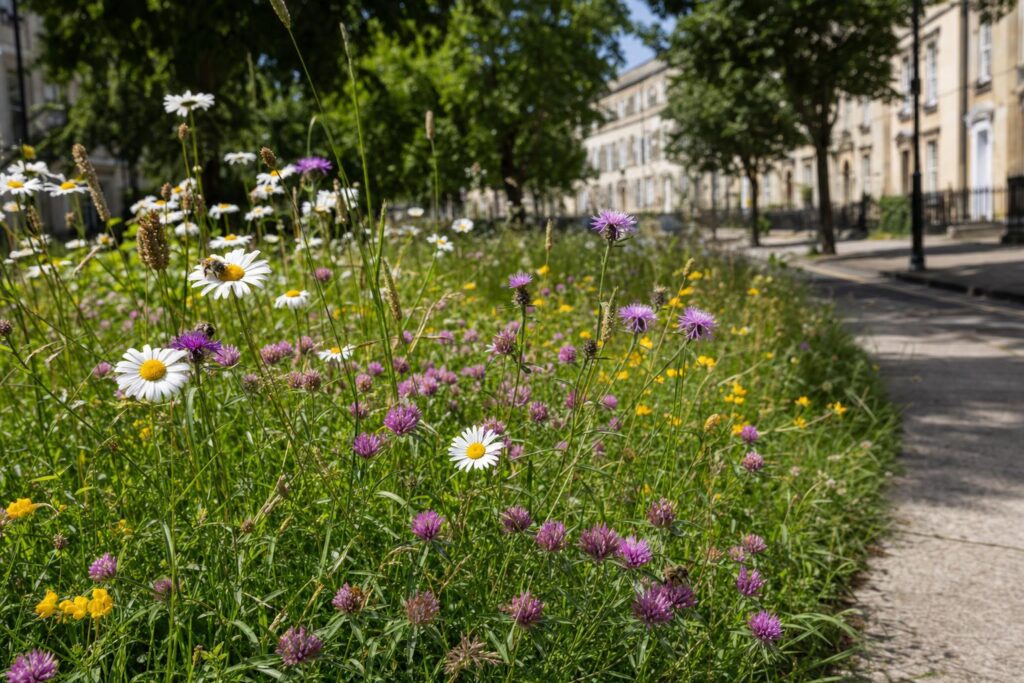
Bristol City Council runs one of the more developed urban meadow programmes of any English city, treating road verges, parks and public open space as genuine habitat opportunities rather than just amenity grass — a useful model for anyone establishing wildflowers on Bristol ground of any size.
Understanding Bristol’s ground before you sow
Bristol splits into three practical contexts: the Avon Gorge’s limestone, the city’s urban green space, and the clay-and-limestone fringe beyond the built-up area.
The Avon Gorge and limestone edges
The gorge itself is a Site of Special Scientific Interest with shallow, alkaline, free-draining soil over Carboniferous limestone — home to some of the rarest plants in the country, several found only here. This isn’t ground to sow directly into if it borders the gorge’s protected cliffs and grassland, but land nearby on similar limestone, including much of the city’s southern and western fringe, suits a chalk and limestone mix well.
Urban parks, verges and small plots
Most Bristol wildflower projects are urban by nature — a garden, a community green space, a road verge, a school grounds project. Soil here is hugely variable, often disturbed or compacted, and a general-purpose neutral grassland mix is usually the safer starting point unless a site-specific soil test says otherwise. For smaller or awkward urban plots, a wildflower seed mat often gives more reliable establishment than loose seed on ground that’s hard to prepare properly.
The rural fringe
Where Bristol meets the Mendips to the south and the wider Severn Vale to the north and east, ground shifts toward heavier clay and, on the Mendip fringe, further limestone. A heavy clay mix suits the clay ground, while limestone fringe land follows the same chalk and limestone approach as the gorge edges.
Choosing the right wildflower seeds for Bristol’s habitats
The Avon Gorge is Bristol’s headline habitat, and it’s worth understanding even if you’re never planting directly within it. Its limestone cliffs and grassland hold several plant species found nowhere else in the world, including the Bristol whitebeam and Bristol rock-cress — true Bristol endemics, the product of thousands of years of isolation on this one stretch of gorge. That’s not seed you’ll find in a mix, and it shouldn’t be: these populations are protected precisely because they’re irreplaceable. What it does tell you is how well-suited this limestone geology is to species-rich grassland generally, which is exactly why a chalk and limestone mix performs well on comparable ground elsewhere in the city.
Bristol’s own Meadow Bristol programme is the clearest practical case study for urban establishment at scale. The council runs three parallel approaches: annual meadows reseeded every year on low-value sites like the M32 verges, left uncut through winter to provide seed and shelter for birds; perennial meadows using a mix of native and non-native species, reseeded every three to five years; and dedicated wildflower meadows managed jointly with conservationists and volunteers to build up native plant diversity over time, under a published wildflower meadow management policy that governs cutting and hay-removal practice. Avon Wildlife Trust’s Get Bristol Buzzing project runs alongside this, working with residents and community groups directly on pollinator-friendly planting across gardens and shared green space — a good route in for anyone wanting to connect a small urban project to the wider city effort rather than working in isolation.
Sowing wildflower seeds in Bristol: timing and ground preparation
Autumn sowing, ideally August to October, is the standard optimal window for Bristol, and the city’s relatively mild, sheltered climate gives a reasonably long workable window either side of that. On gorge-adjacent limestone and the Mendip fringe, autumn sowing suits naturally free-draining ground that can dry out hard in summer. On heavier clay at the northern and eastern fringe, it avoids working wet ground in spring. Our guide to why Yellow Rattle is essential for wildflower meadows explains its role in suppressing competitive grass — genuinely useful on the more vigorous, often previously fertilised turf found on much of Bristol’s urban green space.
Urban ground preparation in Bristol usually means dealing with compaction, buried rubble or genuinely poor topsoil before anything else — a legacy of decades of building, road-building and amenity mowing across much of the city. Where soil can’t realistically be stripped or improved, a seed mat gives seed direct soil contact and some protection while it establishes, which matters more on disturbed urban ground than it does on open countryside. On the rural fringe, standard preparation applies: topsoil removal where practical, or several seasons of cropping off without fertiliser, before sowing into former arable or improved pasture. Our guide to establishing a wildflower meadow and note on the best times to sow cover the general sequence in more depth.
Managing your Bristol wildflower meadow long-term
Budget three years for a proper result on any Bristol site: modest establishment growth in year one, a partial flowering display in year two, and a full meadow from year three onward. An annual late-summer cut with arisings removed is the backbone of long-term management, whether that’s a domestic garden meadow or a shared community green space.
Bristol City Council’s own published wildflower meadow management policy is a useful local reference: on managed urban sites, the standard approach is a single late cut after flowering and seeding, with cuttings removed rather than left to rot down and re-fertilise the ground, and annual meadow sites on low-value verges left standing through winter for birds before being reseeded the following spring. For a domestic or community plot, the same principle applies at a smaller scale — resist the urge to tidy a meadow before late summer, and always remove what you cut.
Wildflower seeds for larger-scale projects and Biodiversity Net Gain in Bristol
Bristol City Council applies the mandatory England-wide 10% Biodiversity Net Gain requirement, in force for major developments since February 2024 and, from April 2024, extended to small sites — defined as residential schemes of one to nine dwellings on land under one hectare, or any site under half a hectare. Applicants must follow the mitigation hierarchy and biodiversity gain hierarchy, submit a completed statutory biodiversity metric and GIS mapping of baseline and post-development habitat, and commit to a 30-year Habitat Management and Monitoring Plan once permission is granted. The council gives particularly close scrutiny to high-distinctiveness habitats, scoring four or above on the statutory metric — a category that includes much of the limestone grassland found around the Avon Gorge and its wider fringe.
Given how dense and largely built-up Bristol is, on-site BNG delivery is often genuinely difficult, which makes well-located off-site habitat creation, including new wildflower meadow on the rural fringe, a realistic route for developers working across the city and a genuine opportunity for landowners just outside it. Our guide to wildflower seeds for Biodiversity Net Gain beyond the baseline and our housing and development page cover sourcing seed for projects at this scale.
Locally sourced wildflower seeds for Bristol
Wildahome’s seed is harvested from donor meadows in Devon and Powys, then selected specifically as wildflower seeds for Bristol’s limestone-to-clay soil range and the mild South West climate, rather than sold as one generic UK mix. For most gardens, community spaces and BNG sites, that regional matching gives noticeably better establishment than seed with no connection to local conditions at all. Read more about why locally sourced wildflower seeds really matter.
For larger or awkward Bristol sites — a verge, a community green space, or a habitat scheme responding to Biodiversity Net Gain requirements — our bespoke wildflower seed mixes service builds a blend around your actual site rather than a generic city-wide guess.
Ready to choose the right mix?
Whether you’re sowing a small urban garden meadow, restoring limestone grassland near the Avon Gorge, or planning habitat creation on Bristol’s rural fringe, matching the mix to your ground is the decision everything else depends on. Browse our full range of wildflower seed mixes, explore our advice section, or get in touch if your site needs a bespoke approach.
Frequently Asked Questions
What are the best wildflower seeds for Bristol?
It depends on your site. Ground near the Avon Gorge and the city’s limestone fringe suits a chalk and limestone mix; most urban gardens, verges and community spaces do well with a general-purpose neutral grassland mix or, on disturbed ground, a wildflower seed mat; and the clay fringe beyond the city needs a heavy clay mix.
When should I sow wildflower seeds in Bristol?
Autumn, ideally August to October, is the standard window, and Bristol’s mild, sheltered climate gives a reasonably long workable period either side of that. Spring sowing is possible as a fallback on urban ground where the growing season allows it.
Can I grow the rare plants found in the Avon Gorge?
No — species like the Bristol whitebeam and Bristol rock-cress are true Bristol endemics, found nowhere else in the world, and their populations are protected rather than available as seed. What their presence does confirm is that Bristol’s limestone geology suits species-rich grassland generally, which is why a standard chalk and limestone mix performs well on comparable ground elsewhere in the city.
Does Bristol have a mandatory Biodiversity Net Gain requirement?
Yes. Bristol City Council applies the England-wide mandatory 10% Biodiversity Net Gain requirement, extended to small sites of one to nine dwellings, or any site under half a hectare, since April 2024. High-distinctiveness habitats, including much of the city’s limestone grassland, receive particularly close scrutiny.
What’s the best way to sow wildflowers on a small urban plot in Bristol?
A wildflower seed mat is often more reliable than loose seed on disturbed or compacted urban ground, since it holds seed in direct contact with the soil and offers some protection while it establishes. It’s a good option for a garden, school grounds or a small community green space where full ground preparation isn’t practical.
Is Bristol seed the same as seed from other counties?
Not exactly, but it’s closely matched. Wildahome’s seed is harvested from donor meadows in Devon and Powys, then selected specifically as wildflower seeds for Bristol’s limestone-to-clay soil range and the mild South West climate, rather than sold as one generic UK mix.
How long does it take to establish a wildflower meadow in Bristol?
Budget three years for a proper result: modest growth in year one, a partial flowering display in year two, and a full meadow from year three onward. Don’t judge a new Bristol meadow’s success by its first summer alone, whether it’s a garden plot or a managed city verge.
Ready to get started?
Shop: Chalk & Limestone Wildflower Mix →Frequently asked questions
More county guides
Find the right native wildflower mix for your county, or browse our full list by region.