


Lincolnshire Wolds Wildflower Seeds: A Guide to Northern Chalk Meadows
The Lincolnshire Wolds are the highest ground in eastern England between Yorkshire and Norfolk: a long, rolling chalk upland running some 70 kilometres from the Humber to the edge of the Fens. Most of it is open arable land today, but the steep scarp, dry valleys, old chalk pits and wide verges still hold fragments of flower-rich chalk grassland. If you are choosing Lincolnshire Wolds wildflower seeds, the first job is to work out which kind of Wolds ground you are on.
The Wolds are not all chalk. The plateau and western scarp sit on thin, lime-rich chalk soils. In the south and west, valleys cut down into sandstone, ironstone and clay, and the south-eastern edge is blanketed in heavy boulder clay left by the ice. Each needs a different approach, and only one of them suits a chalk seed mix.
This guide explains how to read your ground, which chalk wildflowers establish from seed, how northern chalk differs from the South Downs and Chilterns, and how to sow and manage a meadow that will last. It is written for farmers, landowners, parish councils and gardeners across Lincolnshire.
The Lincolnshire Wolds landscape
Natural England maps the Wolds as National Character Area 43, and around two-thirds of it lies within the Lincolnshire Wolds National Landscape, designated in 1973. Natural England describes its chalk grassland as less extensive and more fragmented than in other chalk areas. Most of the old sheep walk was ploughed after enclosure and again after the Second World War, so what survives is largely on slopes too steep to plough, in disused pits and along road verges.
That is why the verges matter so much here. Lincolnshire Wildlife Trust has run a network of Roadside Nature Reserves since 1960, and many Wolds verges are now Local Wildlife Sites. Reserves such as Red Hill near Goulceby, a Coronation Meadow, show what Wolds chalk turf can be: cowslips, kidney vetch, greater knapweed, yellow rattle and eyebright, with orchids on the open chalk.
Know your Wolds ground before choosing a seed mix
The Chalk Wolds and the western scarp
The central and northern plateau and the west-facing scarp sit on shallow, free-draining, lime-rich soils over chalk. Dry valleys carved by meltwater at the end of the last Ice Age cut deep into it. This is the only part of the Wolds where a chalk seed mix belongs, on arable reversion, field corners, buffer strips beside chalk streams and restored quarries.
The south-west ridges and valleys
Around the Bain and Lymn valleys, the chalk gives way to Spilsby Sandstone, ironstone, the Tealby Beds and Kimmeridge Clay. Springs rise where water meets the clay, feeding wet flushes, rushy pasture and alder carr. Small pockets of acid sandy soil occur on the sandstone. These valleys need wetland and grazing management rather than a chalk mix.
The south-eastern claylands
Towards Louth and the coast, glacial boulder clay covers the chalk. The soils are heavier, hold more moisture and suit neutral meadow plants such as common knapweed, meadow buttercup and bird’s-foot-trefoil rather than chalk specialists.
A soil test settles it. Chalk grassland wants a pH above about 7 and a phosphorus index of 0 or 1. Index 2 needs careful management, and index 3 or more favours vigorous grasses and weeds until fertility comes down.
How Wolds chalk differs from southern downland
The Lincolnshire Wolds sit on the same chalk belt as the Chilterns and South Downs, and the core plants are shared: sheep’s fescue, glaucous sedge, cowslip, salad burnet, lady’s bedstraw and greater knapweed grow on all of them. The differences are practical rather than botanical.
- Scale. Wolds chalk grassland survives in small, isolated fragments within a large arable landscape, so new grassland does more work linking what is left.
- Coarse grasses. Where sheep grazing lapsed, tor-grass has taken over many Wolds scarp slopes. Keep it out of any sown mix and use grazing and yellow rattle to hold grasses back.
- Climate. The Wolds are cooler and cloudier than the South Downs. Stick to species that are already native here rather than adding southern downland rarities.
So a well-chosen chalk and limestone mix suits the Wolds plateau as well as the southern downs. What makes a meadow belong to the Wolds is good grazing, low fertility and, where possible, local seed.
Which chalk wildflowers grow well from seed
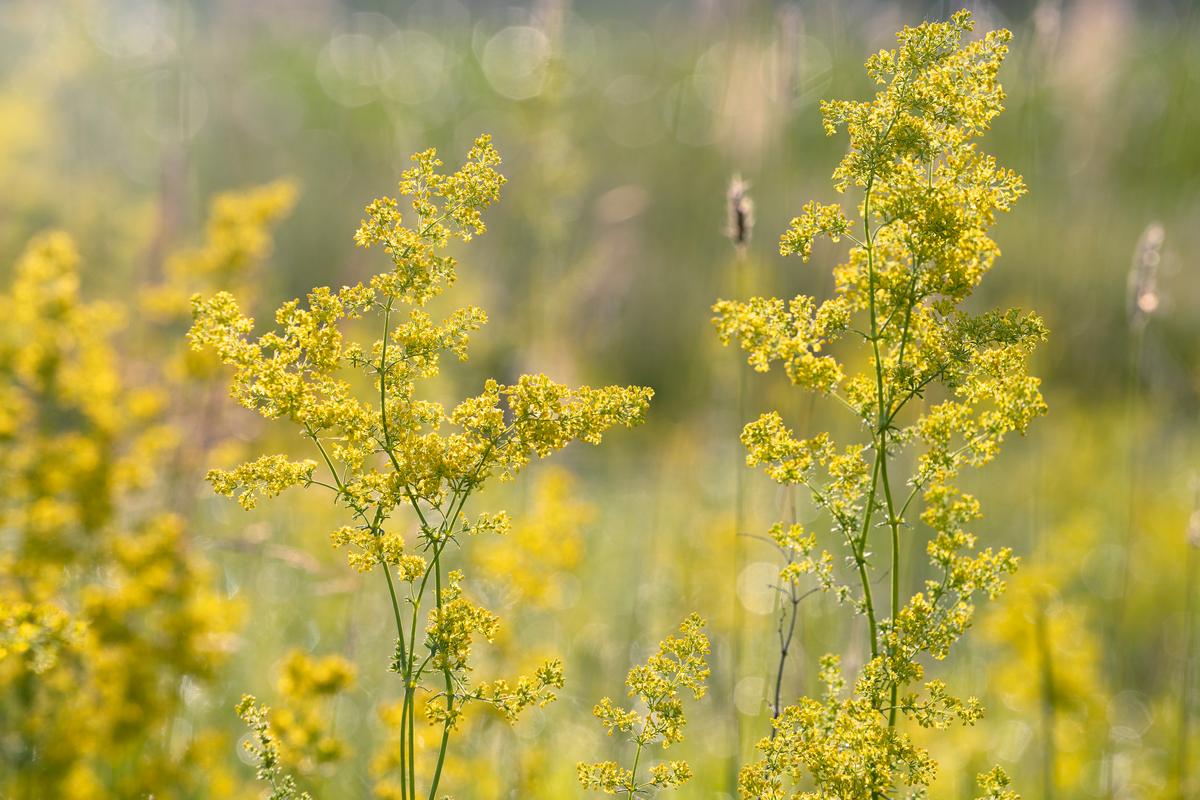
On thin Wolds chalk, build the meadow around reliable species. Salad burnet (Poterium sanguisorba), lady’s bedstraw (Galium verum), greater knapweed (Centaurea scabiosa), bird’s-foot-trefoil (Lotus corniculatus), kidney vetch (Anthyllis vulneraria) and wild marjoram (Origanum vulgare) all establish well. Fine grasses such as sheep’s fescue and quaking grass leave space for flowers.
Yellow rattle (Rhinanthus minor) is a semi-parasite that weakens grasses and opens the sward. It needs winter cold to germinate, so it must be sown in autumn. Cowslip (Primula veris) also needs a cold winter and is slower to establish.
Leave out what will not work. Orchids, autumn gentian, yellow-wort and basil thyme belong to open, undisturbed chalk and fail when sown into a new meadow. Tor-grass and upright brome should never be sown. Near Red Hill or any other designated site, ask for advice before sowing anything.
Wildlife of Wolds chalk grassland
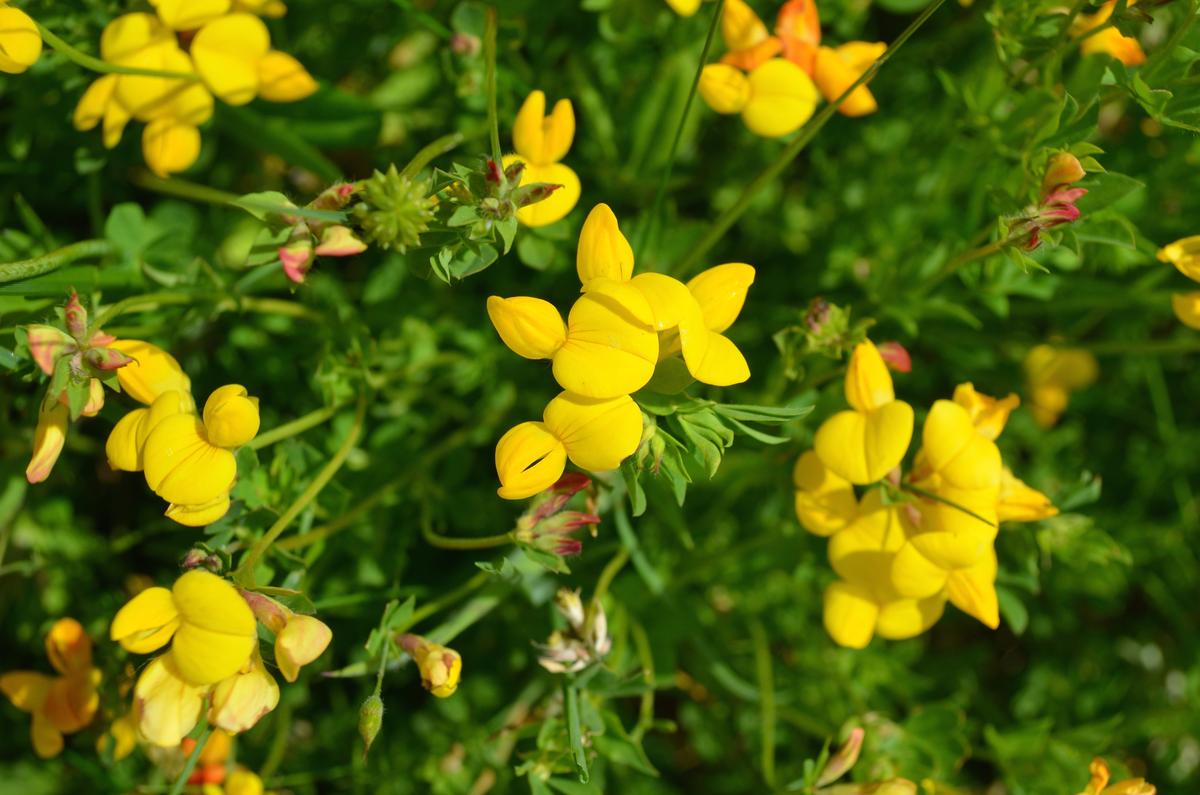
Warm chalk slopes and pits such as Red Hill and Mill Hill Quarry hold marbled whites, common blues, small coppers, walls and six-spot burnet moths. Lincolnshire Wildlife Trust names bird’s-foot-trefoil, horseshoe vetch, rock-rose and knapweeds as key butterfly food plants on the county’s chalk.
The open Wolds also support important farmland birds: skylark, lapwing, grey partridge, corn bunting, yellowhammer and turtle dove. Flower-rich field margins and buffer strips give them insects in summer and seed in winter. The chalk streams below, such as the Great Eau and the Bain, hold brown trout, water voles and native white-clawed crayfish, so grass buffers that catch soil before it reaches the water are doubly valuable.
How to sow Lincolnshire Wolds wildflower seeds on chalk
Clear perennial weeds first, then cultivate to a fine, firm seedbed. On ex-arable land, let a flush of weeds germinate and remove it before sowing. Stones and flints at the surface are normal. Do not add compost, manure, topsoil or fertiliser.
Sow between mid-August and late October. Autumn sowing gives yellow rattle and cowslip the winter cold they need and lets seedlings root before spring. Mix the seed with kiln-dried sand, sow on the surface and roll or tread it in. Never rake it in, and do not water. Use 3 g/m² for a 100% wildflower mix and 5 g/m² for an 80/20 mix of grasses and wildflowers.
Where a species-rich donor meadow lies close by, green hay or locally harvested seed is better than any bought mix. It carries Wolds plants and Wolds genetics, and is the best choice beside designated sites and Roadside Nature Reserves.
Managing a Wolds chalk meadow
In the first year, cut and remove annual weeds before they set seed. From the second year, take a hay cut after flowering and seed set, usually from mid-July, leave it a few days to drop seed, then remove it all. Graze the regrowth in autumn and winter if you can; sheep are traditional on the Wolds and keep tor-grass in check. On verges, cut and collect rather than mulching, and leave some strips uncut each year as shelter for insects.
Expect three to five years for a sown chalk meadow to settle, and longer on former arable land with a history of fertiliser.
Wildahome seed mixes for Lincolnshire Wolds sites
For the chalk plateau and scarp we recommend our Chalk & Limestone range. The 100% wildflower mix contains 23 native species for sowing into prepared grassland, and the 80/20 mix combines 28 wildflowers with fine native grasses for bare ground and arable reversion. On the south-eastern boulder clay, our heavy clay guidance is the better starting point. The wet valleys of the south-west need wetland management, and the sandstone pockets acid grassland care, rather than a chalk mix.
To be clear about provenance, our mixes contain UK-native species chosen for the soil. They are not harvested in the Lincolnshire Wolds. Near designated sites, or where local provenance matters most, talk to us about a bespoke approach or local green hay.
Plan your Wolds meadow
Work out whether you are on chalk, clay or sandstone, then test pH and phosphorus. Thin chalk with low phosphorus suits our Chalk & Limestone mixes. Email hello@wildahome.co.uk with your location, soil results and goals, and we will help you choose. You can also read our wider guide to wildflower seeds for Lincolnshire.
Frequently Asked Questions
What wildflower seeds grow best in the Lincolnshire Wolds?
On thin chalk, salad burnet, lady’s bedstraw, greater knapweed, bird’s-foot-trefoil, kidney vetch and wild marjoram establish well with fine grasses such as sheep’s fescue. Add yellow rattle in autumn. Cowslip is slower and benefits from autumn sowing.
Can I use a southern chalk mix in the Lincolnshire Wolds?
Yes, if it contains widespread chalk species rather than southern rarities. The core chalk grassland plants are shared from the South Downs to the Wolds. Avoid mixes with tor-grass or upright brome, and leave out orchids and gentians, which do not establish from sown seed.
Are Lincolnshire Wolds wildflower seeds locally sourced?
Most are not, including ours. Standard mixes contain UK-native species chosen for chalk, not seed harvested in the Wolds. Genuinely local seed comes from green hay or seed collected from nearby species-rich grassland with the owner’s permission.
When should I sow wildflowers on chalk?
Sow between mid-August and late October. Autumn sowing gives yellow rattle and cowslip the winter cold they need to germinate and lets seedlings root before dry summer weather on thin chalk soils. Sow on the surface and roll it in.
Will a chalk mix work on the boulder clay around Louth?
Usually not. The south-eastern Wolds are covered in heavier, moisture-holding boulder clay that suits neutral meadow plants such as common knapweed and meadow buttercup. Test the soil and choose a clay or traditional meadow approach instead.
How do I stop tor-grass taking over a chalk meadow?
Never sow it, keep fertility low, and graze. Sheep grazing in autumn and winter and a hay cut each summer keep tor-grass in check, and yellow rattle helps weaken vigorous grasses. On neglected slopes, regular grazing is the most effective tool.
How long does a Wolds chalk meadow take to establish?
Expect three to five years for a sown chalk meadow to settle, and longer on former arable land. Keep grazing off for the first year or two, take a hay cut each summer and remove it, and slower species will build up over time.
Ready to get started?
Shop: Traditional Wildflower Meadow Mix →