

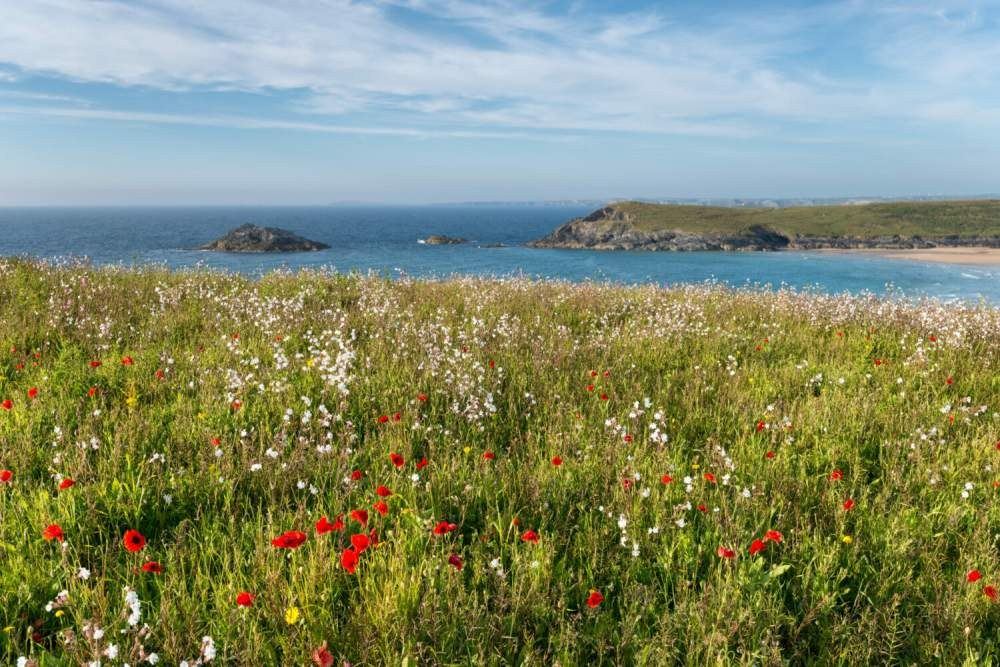
Coastal Wildflower Seeds: A Complete Guide to Our Coastal Mix
Coastal sites can grow some of the best wildflower meadows in Britain. The soils are often thin, sandy or chalky and naturally low in nutrients, which suits wildflowers. But wind, salt spray and Summer drought will defeat a standard seed mix within a season. Coastal wildflower seeds need to come from species that already grow by the sea: plants that are low, tough, deep-rooted and happy in sharp drainage.
This guide covers both versions of our Coastal mix: the 100% wildflower mix and the 80/20 meadow mix. It explains what makes a coastal site different, which species are in the mix and why, where in Britain the mix suits best, and where you should not sow at all. It also covers establishment on sand and shingle, and the light management these meadows need.
It is written for caravan parks, campsites and golf courses near the sea, seafront councils, coastal smallholdings and gardens, and anyone sowing on the sandy or stony land just back from the shore.
The short answer
- What it is: 19 wildflowers suited to wind, salt-laden air and dry, free-draining ground, flowering from May to October.
- Two formats: 100% wildflowers at 3 g/m², or 80/20 with fine meadow grasses at 5 g/m². The flowers are the same in both.
- Best ground: sandy, stony or chalky loams within sight and smell of the sea, including the backs of dunes, cliff-top fields and coastal parks.
- Where not to sow: on existing natural dune, shingle, saltmarsh or cliff grassland, especially protected sites. These are already valuable habitats.
- When to sow: early Autumn, September to October, so seedlings root before Summer drought.
What makes a coastal site different
Four things shape what will grow by the sea.
- Salt. Spray carried on onshore winds scorches leaves and draws water out of plants that are not adapted to it. Its effect falls away quickly inland, but on exposed cliff tops it reaches well back from the edge.
- Wind. Constant wind dries plants out and snaps tall stems. Coastal plants tend to be low, wiry or tough-leaved.
- Drought. Sand and shingle drain fast and hold little water. Coastal sites often get less rain than inland, and Summer drought is the main cause of seedling losses.
- Low fertility. This is the advantage. Most coastal soils are naturally poor, which keeps grasses in check and gives wildflowers room.
There is also a mild side. Coastal winters are generally less severe than inland, and on the south and west coasts the growing season is longer. Many coastal meadows flower well into October.
What’s in our Coastal mix: species by species
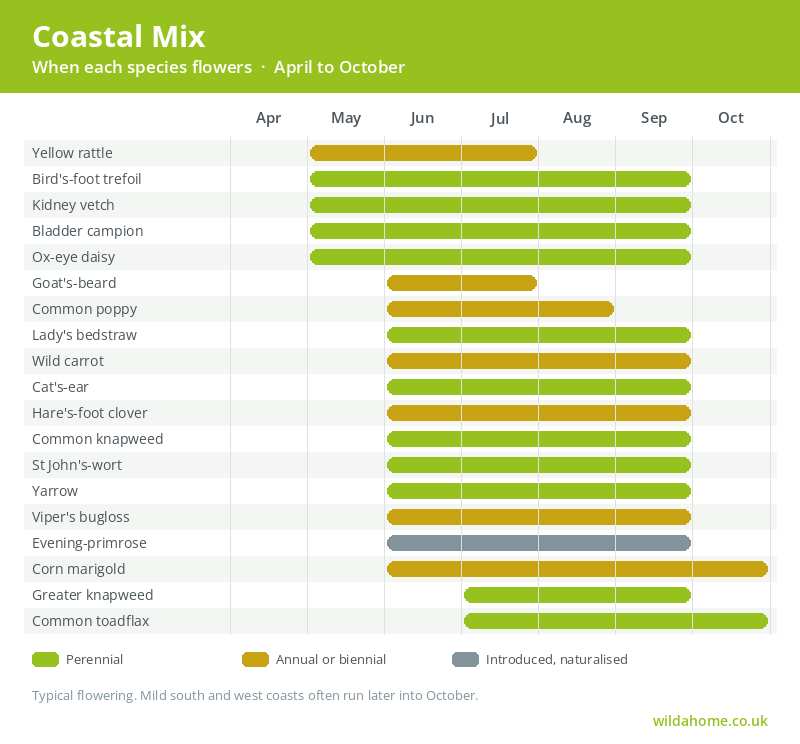
Both versions share the same 19 wildflowers. The 80/20 adds nine fine and meadow grasses, including fescues, which tolerate dry, poor ground well.
| Species | Flowers | Type | Coastal value |
|---|---|---|---|
| Bird’s-foot trefoil (Lotus corniculatus) | May–Sep | P | Widespread on coastal turf; bees, common blue |
| Kidney vetch (Anthyllis vulneraria) | May–Sep | P | Cliffs and dunes; small blue food plant |
| Bladder campion (Silene vulgaris) | May–Sep | P | Exposure-tolerant; moths |
| Ox-eye daisy (Leucanthemum vulgare) | May–Sep | P | Establishes fast; hoverflies |
| Yellow rattle (Rhinanthus minor) | May–Jul | A | Weakens grasses |
| Lady’s bedstraw (Galium verum) | Jun–Sep | P | Dunes and dry grassland; deep roots |
| Wild carrot (Daucus carota) | Jun–Sep | B | Salt-tolerant; hoverflies, beetles |
| Cat’s-ear (Hypochaeris radicata) | Jun–Sep | P | Dry, sandy turf |
| Hare’s-foot clover (Trifolium arvense) | Jun–Sep | A | Dry sand and shingle |
| Common knapweed (Centaurea nigra) | Jun–Sep | P | Bumblebees, butterflies |
| St John’s-wort (Hypericum perforatum) | Jun–Sep | P | Dry, free-draining ground |
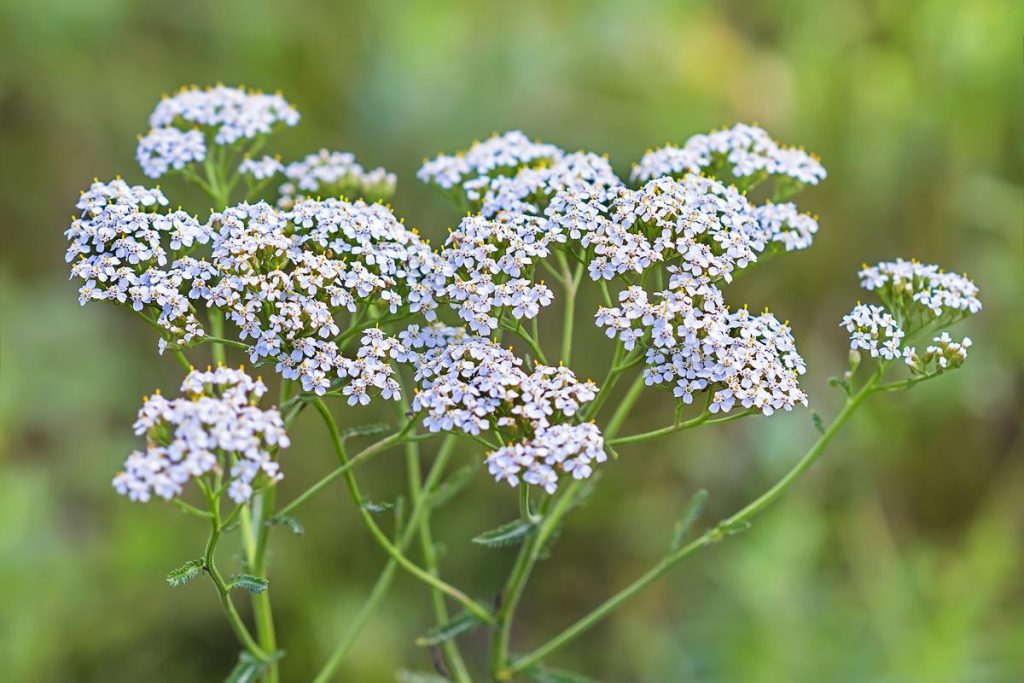
| Yarrow (Achillea millefolium) | Jun–Sep | P | Drought and wind tolerant |
| Viper’s bugloss (Echium vulgare) | Jun–Sep | B | Dunes and shingle; top nectar plant |
| Evening-primrose (Oenothera biennis) | Jun–Sep | B | Introduced; naturalised on dunes; moths |
| Goat’s-beard (Tragopogon pratensis) | Jun–Jul | B | Dry grassland |
| Common poppy (Papaver rhoeas) | Jun–Aug | A | First-year colour; pollen |
| Corn marigold (Glebionis segetum) | Jun–Oct | A | Light sandy soils; first-year colour |
| Greater knapweed (Centaurea scabiosa) | Jul–Sep | P | Chalky cliff tops; butterflies |
| Common toadflax (Linaria vulgaris) | Jul–Oct | P | Late flowers; bumblebees |
The seaside specialists
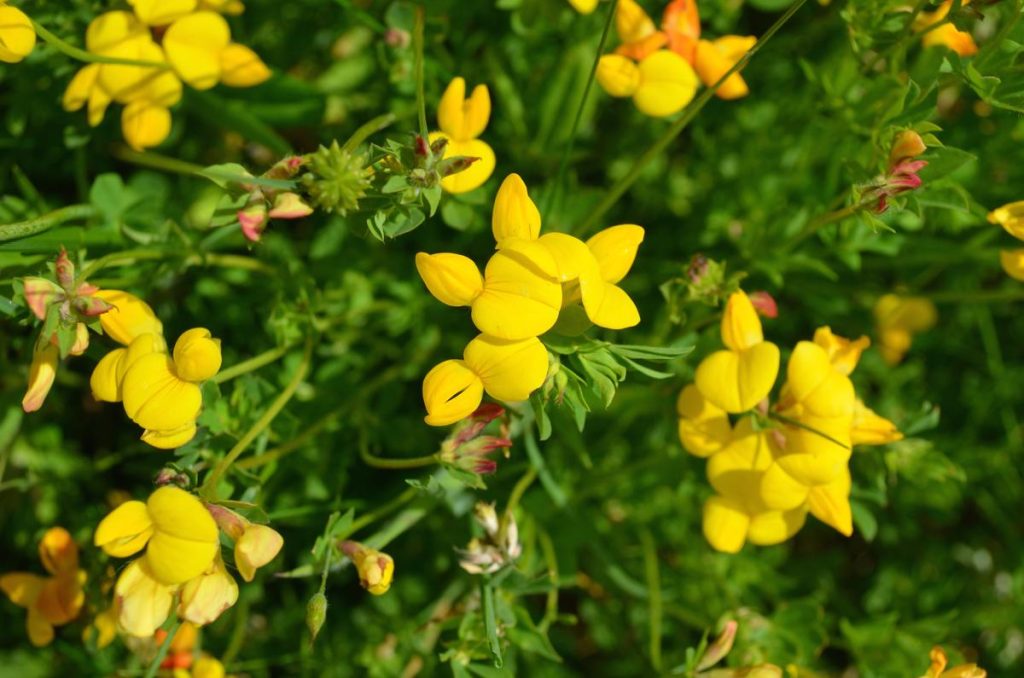
Kidney vetch (Anthyllis vulneraria) is a classic plant of cliff tops and dunes, and the only food plant of the small blue butterfly’s caterpillars. Bladder campion (Silene vulgaris) is a close relative of sea campion and copes with exposure well. Hare’s-foot clover (Trifolium arvense) grows on dry sand, with soft, furry flower heads. Viper’s bugloss (Echium vulgare) is a biennial of dunes and shingle and one of the best nectar plants in the mix.
Lady’s bedstraw, bird’s-foot trefoil, wild carrot and yarrow are common on coastal grassland across Britain. Each one has deep or spreading roots that cope with drought. On the coast, wild carrot often grows low and fleshy-leaved, a form adapted to sea spray.
Tough perennials for the meadow body
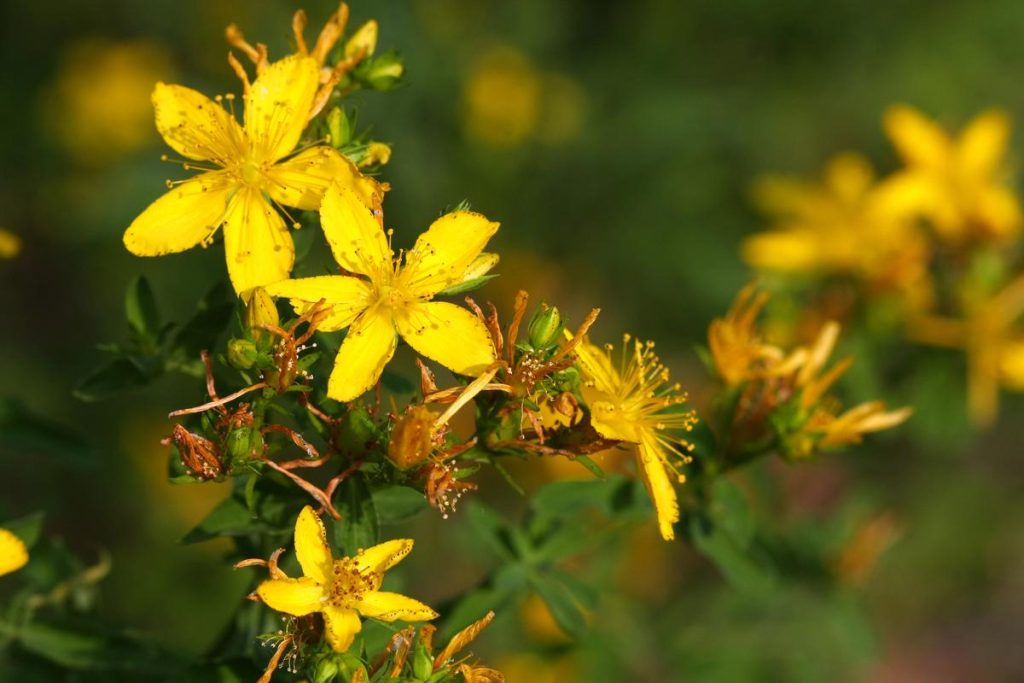
Common and greater knapweed, ox-eye daisy, cat’s-ear, common toadflax and St John’s-wort give the mix its structure and a long run of flowers. Toadflax is one of the latest-flowering native plants, often still in bloom in October, and is visited by bumblebees strong enough to open its closed flowers.
Annuals, biennials and colour in the first year
Common poppy and corn marigold flower in the first Summer. Corn marigold does particularly well on light, sandy soils and keeps going into October on mild coasts. Both fade once the perennials close over the ground. Goat’s-beard, wild carrot and viper’s bugloss are biennials that flower in year two. Yellow rattle is included to weaken grasses, which matters less on poor coastal soils than inland, but still helps.
A note on evening-primrose
Common evening-primrose (Oenothera biennis) is not a British native. It came from North America and has been naturalised on sand dunes and waste ground for centuries. Its night-scented flowers are valuable for moths. We include it because it thrives on dry coastal sand. If you are working to a strictly native specification, such as a protected site, talk to us about a version without it.
Where in Britain the coastal mix suits best
The mix is designed for sites on or near the coast with sandy, stony or chalky loam. Typical places include:
- The south-west peninsula. Cliff-top fields and coastal parks in Cornwall and north Devon, on slate and granite loams.
- The south coast chalk. The Kent and Sussex cliffs and the Isle of Wight. On the thinnest chalk, our chalk and limestone mixes may do better.
- East Anglia. The Suffolk Sandlings and the north Norfolk coast, on light, sandy soils. See our Suffolk and Norfolk guides.
- Wales. Pembrokeshire, Gower and the Glamorgan Heritage Coast, Anglesey, and the Carmarthenshire coast.
- The north. The Sefton coast and other Merseyside dune country, the Lincolnshire coast and Northumberland.
Exposure matters more than the exact county. A sheltered garden a mile inland may suit a standard mix, while an exposed cliff-top field needs the coastal species.
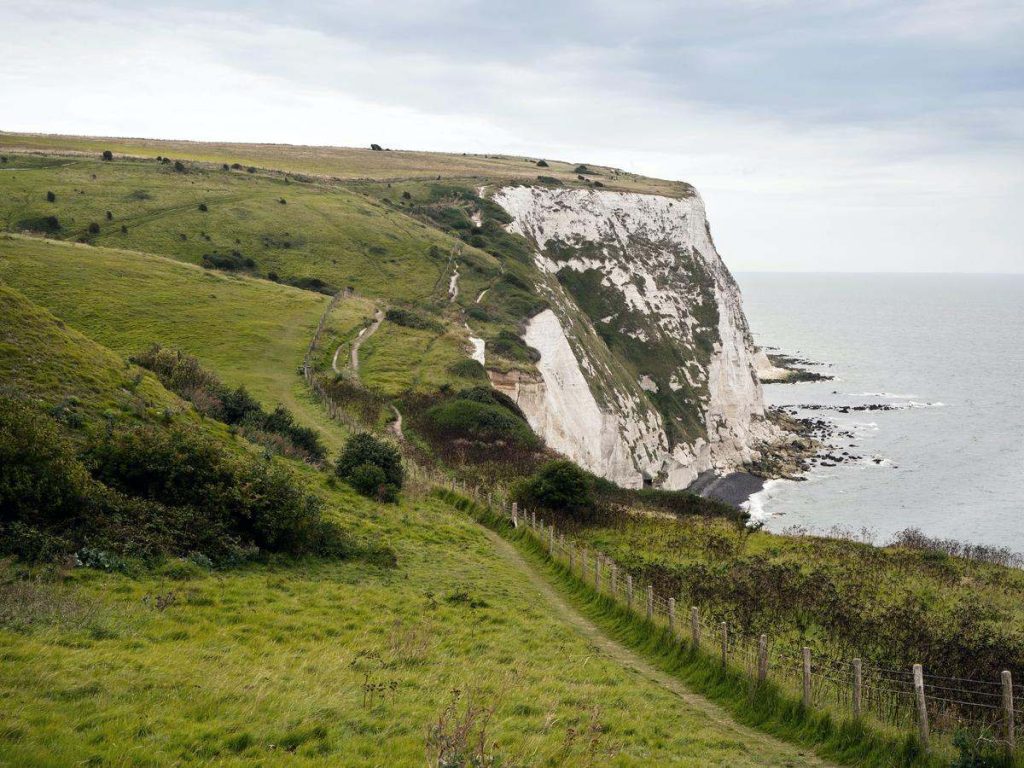
Where not to sow coastal wildflower seeds
Britain’s coastal habitats include some of its most important and most protected wildlife sites. Sowing seed into them can do more harm than good, however well meant.
- Do not sow on existing dunes, shingle, saltmarsh or natural cliff grassland. These habitats already have their own plants, often including rare ones. Leave them to regenerate naturally.
- Check for designations. Much of the coastline is a Site of Special Scientific Interest or similar. Sowing or changing management on or next to one may need consent from Natural England or Natural Resources Wales.
- Do not use seed to stabilise moving dunes. Wildflower seed will not hold blowing sand. Marram grass planting, fencing and access management are the tools for that.
Where this mix comes into its own is on land already altered by people: caravan and campsites, car parks and seafronts, golf course roughs, coastal farmland coming out of arable use, and gardens.
Preparing and sowing on sandy and coastal ground
The full method is in our complete meadow guide. On the coast, a few points matter more than usual.
- Sow in early Autumn, September to October. Autumn rain and mild coastal winters give seedlings months to root before Summer drought. Spring sowings on sand often fail in a dry May.
- Choose a still day. Fine seed blows away easily. Bulk it with three or four parts dry sand and sow low to the ground.
- Firm the seedbed well. Roll before and after sowing. On loose sand, good contact between seed and soil is the difference between success and failure.
- Sow on the surface, no deeper than about 5 mm. Never bury the seed.
- Add nothing. No compost or topsoil. Coastal soils are already the right fertility for these plants.
On banks, verges and sloping ground where seed would wash or blow off, use Seed & Mulch Mats. Pin them down well on exposed sites.
100% or 80/20 on coastal sites
The flowers are the same in both. The choice depends on what is already growing and how the area will be used. Our 80/20 vs 100% guide explains the general principle.
Choose 100% wildflowers if…
- You are over-sowing an existing coastal sward, such as a park, holiday-park field or golf rough.
- You want a flower strip or border.
- Sow at 3 g/m². Scarify existing grass to at least 50% bare soil first.
Choose 80/20 if…
- You are starting from bare ground, such as a new development, a reclaimed car park or former arable land.
- The area will be walked on or needs to look tidy year-round.
- Erosion is a concern: fine grasses bind the surface faster than flowers alone.
- Sow at 5 g/m².
What success looks like
- Year one: poppies and corn marigold flower; perennials form low rosettes. Growth is slower than inland, so cut less often: once or twice, when the sward reaches 100–150 mm, removing the cuttings.
- Year two: bird’s-foot trefoil, kidney vetch, ox-eye, knapweed, bedstraw and the biennials flower.
- Years three to five: the meadow settles. Expect shorter, more open swards than inland, with plenty of bare patches. That is normal and good for ground-nesting bees and basking insects.
A dry first Summer can thin the sowing. Give it a second season before deciding to resow: many perennials survive as small rosettes and recover with Autumn rain.
Long-term management
- Cut once a year in late Summer, usually late August to September, and remove the cuttings. On poor sandy soils, growth may be light enough that a cut every other year is enough.
- Light grazing works well. Sheep or ponies grazing in Autumn and Winter keep coastal turf open and flower-rich.
- Watch for rabbits. They keep turf short, which suits many coastal flowers, but they eat seedlings. On small sowings, fence them out for the first season.
- Control scrub. Gorse, bramble and blackthorn spread quickly on neglected coastal grassland. Cut or pull young growth each Winter.
- No fertiliser or irrigation. Coastal flowers are adapted to poor, dry ground.
Our guides to wildflowers for hotter, drier summers and the meadow in Winter cover drought resilience and off-season jobs.
Coastal wildflowers for holiday parks, campsites and golf courses
Many coastal sowings are for businesses. A wildflower area gives guests something worth looking at, cuts mowing costs and supports insects and birds. Our guides for caravan parks, campsites and golf courses cover the practicalities: where to put meadow areas, how to explain them to visitors, and how to fit cutting around the season.
Our Coastal seed mixes
Both mixes come from our own meadows and UK partner farms. The Coastal Wildflower Meadow Mix is the flowers-only version for over-sowing existing turf and for flower strips. The Coastal 80/20 Meadow Mix adds fine grasses for a complete sward on bare ground. To add a species such as kidney vetch or viper’s bugloss, see our single-species range. On sheltered sites set back from the sea, our Bee & Butterfly guide covers a pollinator mix that may suit as well.
Sowing a coastal site? Tell us where it is, how exposed it is, the soil type and the size of the area, and we will recommend the right format and quantity and check whether there are designations to be aware of. Larger and bespoke orders can be quoted directly. Email paul@wildahome.co.uk or call 0333 242 0602.
Frequently Asked Questions
What wildflowers grow best by the sea in the UK?
Kidney vetch, bird’s-foot trefoil, bladder campion, lady’s bedstraw, viper’s bugloss, wild carrot, yarrow, hare’s-foot clover and common toadflax all cope with wind, salt spray and dry, sandy soil. They are low, tough or deep-rooted, and all grow naturally on British coasts.
Can I sow coastal wildflower seeds on sand?
Yes. Sandy ground suits many coastal wildflowers because it is low in nutrients. Sow in early Autumn so seedlings root before Summer drought, roll firmly before and after sowing, and choose a still day so fine seed does not blow away.
When is the best time to sow coastal wildflower seeds?
September to October. Autumn rain and mild coastal winters give seedlings months to establish before the dry Summer. Spring sowings on free-draining coastal ground often fail if May and June are dry.
Are coastal wildflower mixes salt tolerant?
The species are chosen for coastal conditions and cope with salt-laden wind. No meadow mix is suitable for ground flooded by seawater, such as saltmarsh. Those habitats have their own specialist plants and should be left to regenerate naturally.
Can I sow wildflower seeds on sand dunes?
Not on natural dunes. They are valuable habitats with their own plants, and many are protected. Seed will not stabilise moving sand either; marram grass and fencing do that. Coastal mixes suit dune backs already altered by people, such as car parks, campsites and gardens.
Should I choose the 100% or 80/20 coastal mix?
Use the 100% mix (3 g/m²) to over-sow existing coastal turf or for flower strips. Use the 80/20 (5 g/m²) on bare ground, or where the area will be walked on or needs binding against erosion. The wildflowers are the same in both.
How do I manage a coastal wildflower meadow?
Cut once a year in late Summer and remove the cuttings, or graze lightly with sheep or ponies in Autumn and Winter. On very poor sand, a cut every other year may be enough. Keep scrub such as gorse and bramble in check each Winter.
Ready to get started?
Shop: Traditional Wildflower Meadow Mix →