

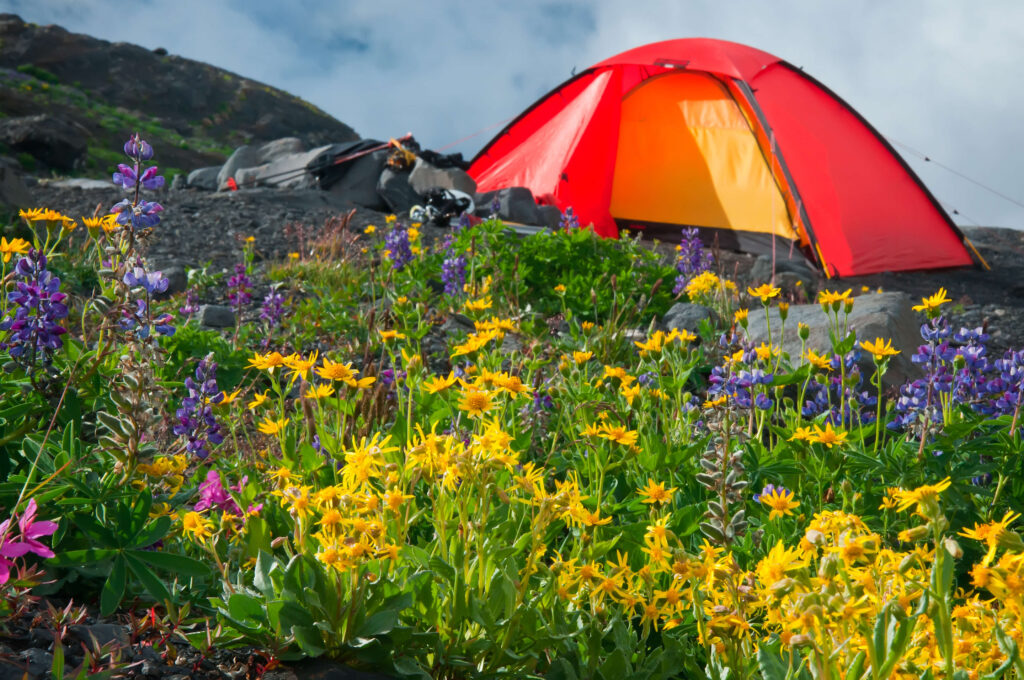
Creating a Nature-Friendly Campsite with Wildflower Seeds
Most campsites already hold the raw material for good habitat. There is grass, there are hedges and field edges, there is usually a corner nobody pitches on because it slopes the wrong way. What is often missing is a plan that turns those areas into something of genuine ecological value without making the site harder to run.
A nature-friendly campsite is not one that has stopped mowing. It is one where the mowing, the pitching and the planting have all been thought about together. Wildflower areas are the most visible part of that, and for good reason: they change what a site looks like from June onwards, they bring insects and birds into view, and they give guests something to notice on the walk from the tent to the shower block.
They also need managing. A wildflower area sown in the wrong place, or cut at the wrong time, looks scruffy rather than considered, and you will spend two seasons undoing it. What follows is the practical version: where wildflowers work on a functioning site, how to choose and sow the seed, what the first three years actually look like, and how to talk about the project to guests without it sounding like a marketing line.
Why campers increasingly look for a nature-friendly campsite
The shift in what people want from outdoor accommodation has been steady rather than sudden. Guests book a field because they want to be in a field. Sites that feel managed like municipal parkland — short grass to every boundary, everything strimmed on the same fortnightly cycle — lose the thing that brought people out of town in the first place.
There is a commercial dimension too. Booking platforms, review sites and members’ organisations increasingly ask about environmental practice, and guests read those sections. Biodiversity-friendly camping has moved from a niche interest to something a proportion of your bookings actively search for. That said, guests are quick to spot a claim with nothing behind it. A visible, well-managed meadow is evidence; a line on a website is not. Habitat work is worth doing on its own merits, and the marketing benefit follows from doing it properly.
What wildflower areas add to the guest experience
Colour is the obvious gain, but the more useful benefit is seasonal interest. A mown sward looks the same in May as it does in August. A meadow does not. Cowslip and Bugle in Spring, Ox-eye Daisy and Knapweed through Summer, Devil’s-bit Scabious into September — the site changes over the season, and returning guests notice.
Structure matters as much as flowers. Long grass moving in the wind, seed heads catching low evening light, the sound of grasshoppers on a warm afternoon: these are the things people remember about a pitch, and they are what makes a site photograph well.
Then there is sense of place. Locally sourced seed reflects the flora of your county rather than a generic bright mix that could be anywhere. A Herefordshire site should not look like a roadside verge in Kent. Provenance is a real ecological principle, and the most defensible thing you can say about your planting.
The wildlife that benefits
Wildflower areas support a longer food chain than most people expect.
- Bees. Bumblebees need a succession of forage from March to September, not a single flush in July. Red Clover, Bird’s-foot Trefoil, Knapweed and Vetches carry long-tongued species through the season. Solitary bees need bare ground and dead stems nearby as much as they need flowers.
- Butterflies and moths. Adults feed on nectar; caterpillars need specific food plants. Uncut grass supports Meadow Brown, Ringlet and Gatekeeper, Sorrel supports Small Copper, and most moth species depend on native grasses and forbs.
- Hoverflies. Underrated, and useful — larvae of many species eat aphids. They favour open, accessible flowers such as Yarrow and Wild Carrot.
- Beetles. Long grass at the base of a sward holds ground beetles and provides overwintering cover. Tussocky margins matter more than flowers here.
- Birds. Meadow seed heads feed finches through Autumn and Winter, and the invertebrate population feeds chicks in Spring. Leaving areas uncut until late Summer is the single biggest factor.
- Small mammals and amphibians. Rough grass provides cover for voles and shrews, which in turn support Barn Owls and Kestrels. Damp margins near ponds hold frogs and newts.
None of this happens in year one. Insects arrive as the sward develops structure, which takes two to three seasons.
Where wildflower seeds for campsites work — and where they don’t
Siting is where most campsite schemes succeed or fail. The goal is habitat that sits alongside operations rather than competing with them.
Places that usually work
- Field edges and headlands. A 3–6m strip around the perimeter of a pitching field gives useful habitat, connects to hedgerows and costs you almost no usable ground.
- Awkward corners. Slopes, wet hollows, shaded strips under trees, the ground behind the sanitary block — rarely pitched on anyway.
- Between pitch bays. Narrow bands of longer grass and flowers give guests privacy, often more appreciated than an extra metre of mown grass.
- Footpath margins. Flowers either side of a mown path put wildlife at eye level. Keep the path itself cut hard and wide enough for two people and a wheelbarrow.
- Reception and entrance areas. Small, well-defined and tidily edged works better here than a large loose area.
- Car park edges and overflow ground. Verges and islands take planting well; overflow fields can be managed as meadow and cut before peak season use.
- Pond, ditch and woodland margins. Damp-tolerant and shade-tolerant species add habitat where mowing is difficult anyway, and a graded margin from trees to open grass is one of the richest habitats on any site.
Places to keep clear
Tall vegetation in the wrong place creates real problems, and they are the sort of problems that appear in an insurance review.
- Sightlines at junctions, gateways and where vehicles cross pedestrian routes.
- Anywhere that would obscure fire points, hydrants, water taps, waste points or emergency signage.
- Emergency vehicle access routes and turning areas — these need to stay clear and legible.
- Around lighting columns and bollards, where growth blocks light spill onto paths.
- Areas the site team needs to supervise visually, particularly play areas and swimming or water access.
- Immediately around electric hook-up posts, where guests need clear footing in the dark.
A simple rule: if a member of staff needs to see it, or a fire engine needs to drive on it, keep it mown.
Choosing between annuals, perennial meadow and naturalised planting
These three approaches do different jobs, and most sites use a combination.
Annual displays — Cornflower, Corn Poppy, Corn Marigold, Corn Chamomile — give a strong show in the first Summer, and suit entrance beds where you want immediate colour and will cultivate the ground each year. They are not a meadow: left alone, they thin out from year two as grasses move in.
Perennial meadow is the long game. A native grass and forb mix, sown at low nutrient levels, produces a sward that improves for a decade or more with one cut a year and the arisings removed. Expect leaf and little flower in year one, a reasonable showing in year two, and something worth photographing from year three.
Naturalised planting means relaxing the mowing regime and adding species into existing grass rather than starting again. Cheaper and less disruptive, but slower and less predictable, since vigorous grass resists. Yellow Rattle (Rhinanthus minor) is the key, parasitising grass roots and opening the sward for other species.
Selecting seed mixes for the actual conditions
The mix should follow the site, not the brochure. Work through five questions before choosing.
Soil type. Chalk and limestone, heavy clay, sandy free-draining ground, loam and acidic soils all support different communities. A calcareous mix sown on acid sand will disappoint.
Fertility. This matters more than almost anything. Old pitching fields, former paddocks and anywhere that has taken muck or fertiliser will be too rich, and vigorous grasses will out-compete the forbs. Low-nutrient conditions are what wildflowers need.
Sunlight and drainage. Full sun mixes fail under a tree canopy, and ground that sits wet through Winter needs a wet meadow or pond-margin mix rather than a general meadow blend.
Mowing and intended height. If an area has to be cut in July for operational reasons, choose species that flower earlier. If you want something under knee height near reception, avoid the taller umbellifers.
Provenance sits over all of this. Regionally sourced seed is better adapted to local conditions, supports local pollinator populations and keeps the genetic integrity of nearby wild populations intact. It is the difference between a planting scheme and a restoration project.
Ground preparation and why seed-to-soil contact matters
More wildflower sowings fail from poor preparation than from poor seed. The seed has to reach bare soil, sit in contact with it, and not be smothered by existing grass.
- Remove the existing sward. Cut short, then scarify hard, rotovate or strip the turf. On very fertile ground, removing the topsoil is drastic but effective — it takes the nutrients away with it.
- Create a firm, fine seedbed. Rake to a tilth, then roll or tread. Loose, fluffy ground dries out and buries seed too deep.
- Deal with the weed flush. Leave the ground fallow for four to six weeks after cultivation, let annual weeds germinate, then take them out with a shallow cultivation before sowing. This step saves a great deal of work later.
- Do not add compost, topsoil or fertiliser. It feels wrong, and it is the most common mistake. Rich ground grows grass and docks.
- Sow onto the surface, not into a furrow. Most wildflower seed is small and needs light. Broadcast, then roll — do not rake it in.
Seed-to-soil contact is the whole point of rolling. Seed lying on thatch or loose crumb germinates and then dies as the surface dries.
Sowing times, watering and the first year
In most of the UK the main sowing window runs from late August to early October. Autumn sowing uses natural moisture, gives species that need a cold period the winter they require, and puts seedlings ahead of the following Spring’s weed flush. A Spring window of March to early May works too, particularly on heavy ground where autumn cultivation is impractical. Avoid mid-Summer sowing unless you can water reliably, and avoid working saturated or frozen ground.
Watering after sowing is usually unnecessary on autumn sowings and often impractical at campsite scale. If you have sown in Spring and hit a dry spell during germination, water thoroughly and infrequently rather than lightly and often.
First-year management is mostly cutting, and it surprises people. Cut the area to around 5–7cm two or three times through the first Summer, whenever growth reaches 15–20cm. This controls annual weeds and stops grass shading out slow perennial seedlings. Remove the cuttings every time. You are not looking for flowers in year one; you are building root systems.
From year two, move to the standard regime: leave the area uncut through Spring and Summer, take a hay cut in late July to early September once the flowers have set seed, leave the arisings on the ground for a few days to shed seed, then remove them completely. An Autumn tidy cut is optional. Removing arisings is what keeps fertility down, and it is the difference between a meadow that improves and one that reverts to rank grass.
Managing expectations, season by season
Be straightforward with your team and your guests about this. A perennial wildflower meadow for tourism businesses is a three-year project, not a three-month one.
- Year one: patchy, green, weedy in places. Some annual colour if the mix includes it. This is normal.
- Year two: recognisable meadow, uneven flowering, some species dominant.
- Year three onwards: the sward settles and the balance improves. Yellow Rattle does its work and the grass thins.
Every season looks different. A wet Spring favours some species, a dry Summer favours others, and a mix that was Knapweed-heavy one year may be Ox-eye Daisy-heavy the next. That variation is a sign of a functioning plant community rather than a problem to correct. Where a year genuinely disappoints, overseeding gaps, moving the cutting date by a fortnight or reducing fertility further usually addresses it.
Explaining the project to guests without greenwashing
The test is whether what you say matches what a guest can see and verify.
- Be specific. “This 0.4ha field was sown in September 2025 with a locally sourced mix and is cut once a year in August” is credible. “We are passionate about biodiversity” is not.
- Say what is not finished. A sign explaining that an area is establishing and will look thin this year does more for trust than a photograph of somebody else’s meadow.
- Explain the mowing. Most complaints about long grass come from guests who think the site has been neglected. A short sign — “left long for wildlife until August” — resolves nearly all of them.
- Keep claims proportionate. Say what you have sown and recorded, not what you hope will arrive, and if you have half a hectare of meadow and eight hectares of mown pitching, describe it that way.
Interpretation, activities and citizen science
Wildflower areas give you programme content, which is worth real money on a wet Bank Holiday.
Simple interpretation boards at path junctions work well — one species, one fact, one reason it matters. A species list on a board by the shower block, updated by guests, tends to fill up quickly. For children, pollinator bingo cards, a bug-hunt loop with sweep nets, and seed-head collecting in Autumn all work without staff supervision. Guided walks are worth trialling once a week in high season; twenty minutes at 6pm is usually enough.
Citizen science gives the work external validity. The UK Pollinator Monitoring Scheme’s FIT Counts take ten minutes and can be done by guests, and butterfly and bird recording schemes accept casual records. Data collected over several years is also the strongest evidence you will have if you ever need to demonstrate ecological gain to a planning authority or a certification body.
What else a nature-friendly campsite needs alongside wildflowers
Wildflower areas work far better as part of a connected set of features than on their own.
- Hedges. Native, thickened, and cut on a three-year rotation rather than annually, connecting your meadow to the wider landscape.
- Ponds. Even a small pond with shallow, planted margins adds more species than almost any other single feature.
- Bird and bat boxes. Cheap, popular with guests, and effective where natural cavities are scarce.
- Log piles and standing deadwood. Untreated timber in a shaded corner supports fungi, beetles and amphibians. Site them away from pitches and paths.
- Reduced mowing. A fortnightly regime rather than weekly on secondary areas costs nothing and adds a surprising amount.
Together these give a site the structural variety a meadow alone cannot provide.
A Practical Wildflower Plan for Campsites
1. Site assessment
Walk the site with a plan and mark up soil type, aspect, drainage, existing habitat, fertility history and any ground you have never been able to pitch on. Note where guests actually walk, where vehicles turn and where staff need clear sightlines. Take photographs in July, when growth is at its heaviest.
2. Design and guest access
Decide which areas become meadow, which stay mown and where the boundary between them runs. Mown paths through longer grass are the key device: they signal intent, keep guests out of the sward and make the whole thing look deliberate. Keep paths wide, keep junctions open, and keep every safety feature clear.
3. Seed selection
Match the mix to soil, sunlight, drainage and the cutting regime you can commit to. Choose regionally sourced native seed. Consider Yellow Rattle for any area with an established grass sward. Order early — good provenance stock sells out ahead of the autumn window.
4. Ground preparation
Strip or scarify to expose bare soil across at least half the area. Do not enrich. Allow a fallow period, take out the weed flush, then produce a firm, fine seedbed.
5. Sowing
Sow in late August to early October, or March to early May. Broadcast evenly, ideally in two passes at right angles, mixing the seed with dry silver sand or sawdust to help distribution. Roll or tread afterwards. Mark the boundaries before guests arrive.
6. Maintenance
Year one: cut to 5–7cm two or three times, removing arisings each time. Year two onwards: one hay cut between late July and early September, arisings left briefly then removed. Keep paths and safety margins mown throughout. Spot-treat docks, thistles and ragwort by hand.
7. Interpretation and marketing
Put up honest signage before the first season, not after. Add the meadow to your website with a dated, factual description. Brief seasonal staff so they can answer the “why is this bit long?” question. Photograph the same viewpoint every July.
8. Annual review
Each Autumn, record what flowered, what dominated, what failed and how guests responded. Adjust the cutting date, overseed gaps, or extend into new areas. Keep the record — three years of notes is worth more than any single season’s impression.
Comparing wildflower opportunities by site type
| Consideration | Small campsite (under 30 pitches) | Larger campsite / holiday park | Glamping site |
|---|---|---|---|
| Typical opportunity | Field margins, one awkward corner, entrance bed | Whole fields, overflow ground, verges, pond and woodland margins | Space between units, approach paths, private outlooks |
| Realistic scale | 0.05–0.3 ha | 0.5–5 ha or more | 0.1–0.5 ha in linked pockets |
| Main constraint | Every metre of ground is pitchable | Machinery access, mowing schedules, sightlines | Guest expectations of a curated look |
| Best approach | Perennial margins plus a small annual bed at reception | Perennial meadow at field scale, phased over three years | Naturalised planting with mown paths and defined edges |
| Equipment | Strimmer, hand tools, hired flail once a year | Tractor, flail or mower-conditioner, baler or forage box | Pedestrian flail mower, hand tools |
| Guest-facing angle | Sense of place, privacy between pitches | Habitat scale, wildlife walks, citizen science | Eco-friendly glamping sites, seclusion, evening light |
| Annual cost driver | Labour for cutting and clearing | Contractor time and arisings disposal | Precision cutting around structures |
| Time to good display | 2–3 years | 3 years, longer at field scale | 2–3 years |
Choosing seed for a working site
Wildahome supplies regionally sourced native mixes matched to the soils and flora of each part of the UK, which matters more on a campsite than on a garden border — you are working at field scale, on ground with a fertility history, and you need species that will hold on for a decade with one cut a year. Mixes are available for chalk and limestone, heavy clay, loam, acid soils, damp ground, shade and woodland edge, so an awkward site can be planted in zones rather than compromised into a single blend. Seed mats suit small, defined areas such as entrance beds and the ground around glamping units, where broadcasting into a confined space is fiddly and even coverage matters. Yellow Rattle is worth adding to any area with an established grass sward.
Talk it through before you order
If you are planning wildflower areas on a campsite, glamping site or holiday park, the useful conversation happens before the seed is chosen — soil, fertility history, cutting equipment and where guests actually walk all shape what will work. Send us a site plan and a description of your ground and we will tell you which mixes suit it, roughly how much seed you need, and whether the timing works for this season’s sowing window. If a site is not ready, we will say so.
Frequently Asked Questions
How much of a campsite should be given over to wildflowers?
There is no fixed proportion. Most sites start with 5–15% of their land — margins, corners and one trial field — and extend once they know how the cutting fits their season. Beginning small is sensible: you learn what your ground does before committing machinery time and pitch space to a larger area.
Will long grass on a nature-friendly campsite put guests off booking?
Rarely, if it looks intentional. Complaints come from ambiguity rather than height — guests object to grass that looks neglected, not to a meadow with mown paths, clean edges and a sign explaining the cutting regime. Keep pitching areas, paths and sightlines cut short and the contrast reads as deliberate management.
When should I sow wildflower seeds for campsites?
Late August to early October is the main window across most of the UK, using autumn moisture and giving species that need cold stratification the winter they require. March to early May is the alternative, particularly on heavy ground. Follow the guidance supplied with your specific mix and assess local conditions rather than fixing a date.
Are wildflower areas cheaper to maintain than mown grass?
Not necessarily. You mow far less often, but the annual hay cut requires cutting, drying and removing the arisings, which is more work per operation than a mowing pass. Costs are usually similar; the gain is habitat, seasonal interest and reduced fuel use, not a shorter maintenance bill.
Can I sow wildflowers into existing grass without cultivating?
You can, but results are unpredictable. Established grass out-competes wildflower seedlings. Scarify hard to expose at least 50% bare soil, sow Yellow Rattle to weaken the grass, and expect a slower, patchier result than sowing into a prepared seedbed. It is a reasonable approach where cultivation is impractical.
What does a nature-friendly campsite need besides wildflowers?
Structural variety. Native hedges cut on a rotation, a pond with shallow margins, log piles in shaded corners, bird and bat boxes, and reduced mowing across secondary areas. Wildflowers supply nectar and seed; the other features supply nesting, shelter and overwintering habitat.
Do I need to tell guests the meadow is still establishing?
Yes, and it helps rather than hurts. A dated, factual sign explaining that an area was sown last Autumn and will look thin this Summer sets expectations and demonstrates that the site knows what it is doing. Vague biodiversity claims with no visible evidence attract far more scepticism.
Ready to get started?
Shop: Traditional Wildflower Meadow Mix →